



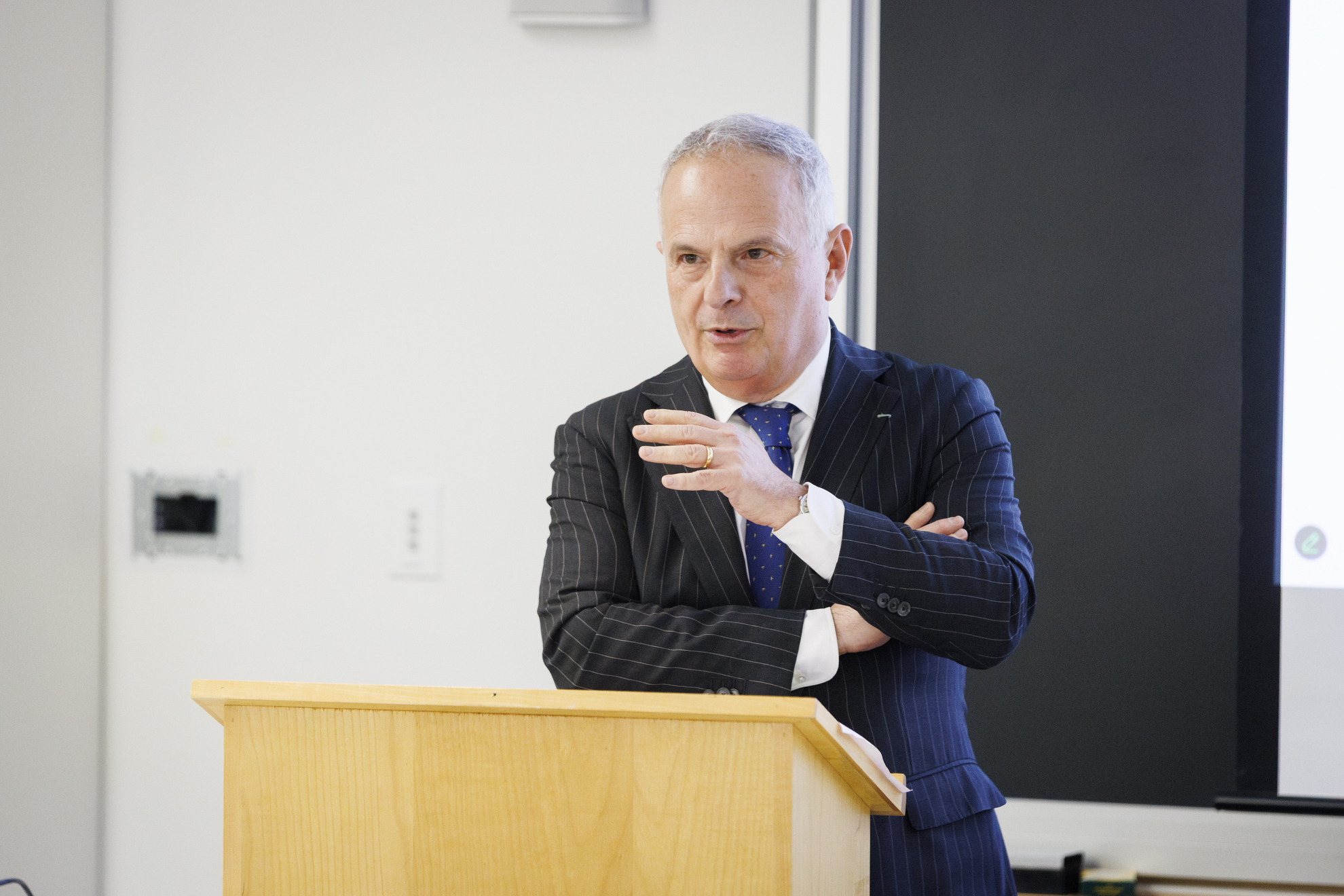
Kenneth Weinstein, a specialist in the region, contends that the primary challenge in the Indo-Pacific is economic rather than military. He acknowledges both actual and perceived challenges in the U.S.-Japan alliance. While some question the U.S.’s reliability as an ally, Weinstein, who is the Japan chair at the Hudson Institute, firmly believes the U.S. remains committed to the region. He emphasizes the need for Tokyo and Washington to develop a comprehensive deterrence strategy against China, extending beyond mere security concerns.
Weinstein highlighted the economic aspect of deterrence during a seminar at the Weatherhead Center for International Affairs, stressing the significance of alliances between the U.S., Japan, and the broader Indo-Pacific. He spoke about the Free and Open Indo-Pacific (FOIP) strategy, initiated by former Japanese Prime Minister Shinzo Abe in 2016, as a flexible diplomatic approach that fosters connectivity, resilience, security, and prosperity.
According to Weinstein, the adaptability of FOIP is vital in countering China’s Belt and Road Initiative, which invests in infrastructure and development abroad. FOIP includes not only Japan’s allies and direct partners but also non-democratic states and countries that aren’t formally aligned with China or Japan and the U.S. This flexibility aids U.S. policy across different administrations, from Trump’s terms to Biden’s tenure.
Weinstein commended Japan for increasing its military expenditures and being a key U.S. military ally and a significant defense exporter. However, he emphasized Japan’s economic value in the region, citing the importance of tangible investments in energy grids, transportation, and Coast Guard support. He believes that while the U.S. provides hard-power credibility, Japan offers development experience and acts as a bridge to nations hesitant to openly support the U.S.
Weinstein noted Japan’s diplomatic role in Subic Bay, where it facilitated U.S. investments and reduced Chinese influence. He attributed the range of possibilities partly to the personalities of Japanese and American leaders. Donald Trump, he said, is skeptical of limited policy frameworks, which leads to unconventional approaches. Meanwhile, Japanese Prime Minister Sanae Takaichi is described as a strategic thinker who balances hard power with economic influence.
During a Q&A moderated by Christina L. Davis, Weinstein emphasized that U.S. and Japan’s regional strategy is not to isolate China but to prevent it from leveraging dependence for strategic purposes. He argued for engaging China, a principle understood by Shinzo Abe. Weinstein also anticipated that ASEAN’s neutrality would persist barring military provocations, which he suggested would more likely occur around Scarborough Shoal than Taiwan.
Original Source: news.harvard.edu