





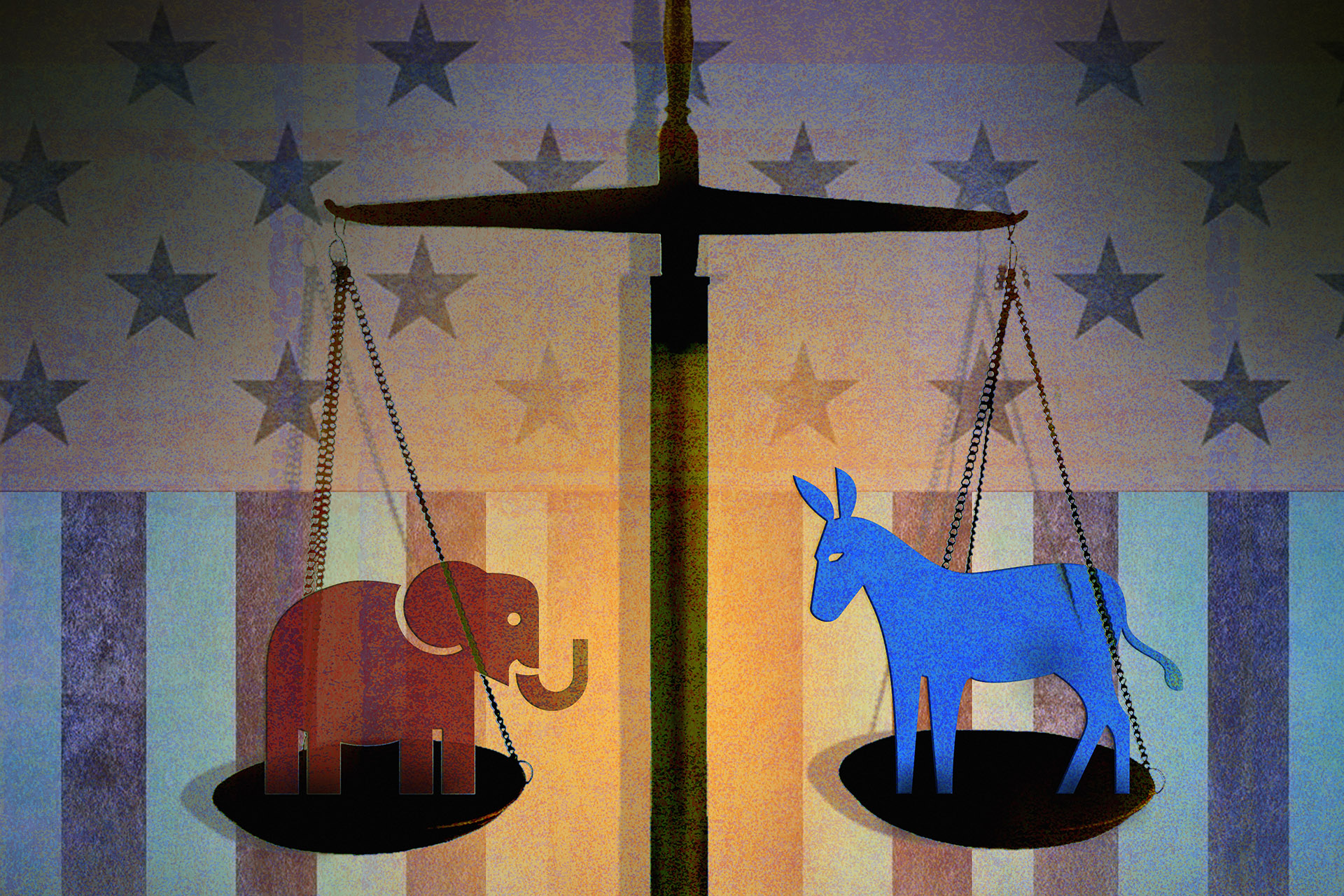
The U.S. Supreme Court’s recent ruling on campaign finance is unlikely to cause significant changes for political parties, according to Nicholas Stephanopoulos, a professor at Harvard Law School. However, it might enable wealthy donors to more easily circumvent individual giving limits.
Fifty years ago, the Supreme Court in Buckley v. Valeo struck down spending limits, citing First Amendment rights. This and subsequent rulings, such as Citizens United in 2010, have gradually relaxed campaign finance restrictions. Stephanopoulos discussed the latest decision, which removes caps on how much parties can coordinate spending with candidates, noting its potential pros and cons.
The ruling isn’t as significant as past cases since it only affects coordinated expenditures, which aren’t substantial in size. It allows parties to coordinate more spending with candidates, but the risk is that it could facilitate more money being funneled through parties by corrupt donors.
Justice Elena Kagan, dissenting, expressed concerns about increased political corruption. She argued that the decision could allow donors to channel larger sums to candidates via parties, potentially leading to more quid pro quo arrangements.
The notion that “money is speech” has underpinned campaign finance law since the 1970s, contending that financial contributions enable political speech protected by the First Amendment. Despite its controversy, this doctrine remains influential in court decisions.
Comparing this ruling to Citizens United, Stephanopoulos noted that the latter dealt with independent spending by various entities and had a broader impact. The current decision is narrower, focusing only on political parties.
The court’s shift towards a more conservative stance since Justice Sandra Day O’Connor’s retirement in 2006 has led to a series of rulings against campaign finance regulation, including this latest decision.
This ruling might slightly favor Republican Party committees with more funds, as they have recently raised more money than their Democratic counterparts. However, Stephanopoulos does not foresee a major imbalance resulting from this change.
Looking ahead, while the decision may offer some short-term advantages, Stephanopoulos believes that strengthening political parties could be beneficial, as they are more stable institutions compared to super PACs and dark money groups.
Original Source: news.harvard.edu