




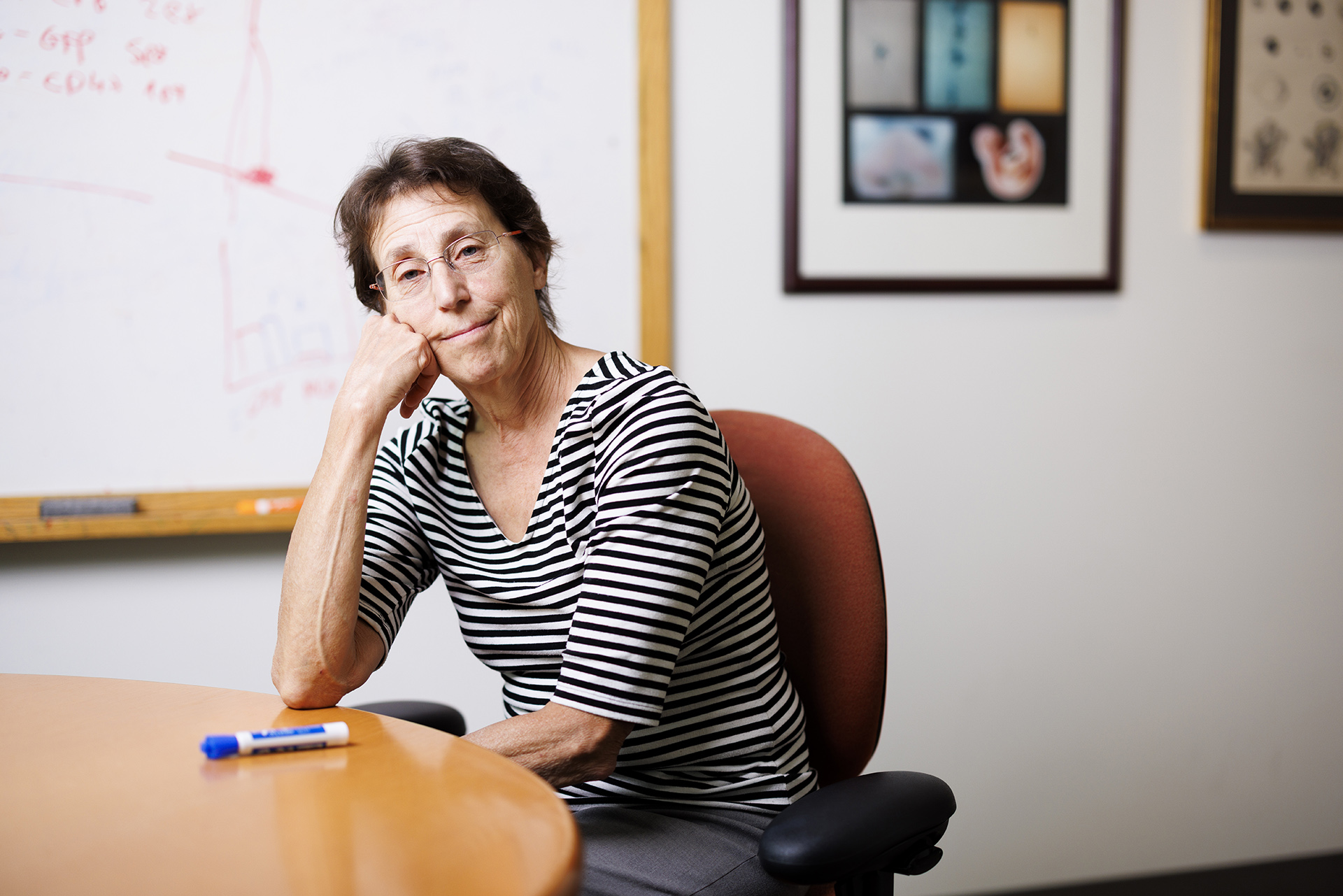
Renowned biologist Connie Cepko, recognized for her contributions to vision-related disease research, is handing over her scientific endeavors to a new generation of researchers. Cepko, who holds the title of Bullard Professor of Genetics and Neuroscience at Harvard Medical School, will retire on July 31, motivated by a desire to provide opportunities for younger scientists amid federal funding challenges.
Cepko has significantly advanced gene therapies for diseases like retinitis pigmentosa and age-related macular degeneration, impacting millions. An investigator at the Howard Hughes Medical Institute since 1994, Cepko has received honors such as the Bressler Prize in Vision Science and the Friedenwald Award in ophthalmology.
Initially focused on retinal development, Cepko’s breakthrough came in the 1980s when she used retroviral vectors to map retinal cell lineage. This work led to a deeper understanding of the 120 cell subtypes involved in human vision, which paved the way for therapeutic research following an unexpected call from Alan Schwartz, who inquired about blindness research after his grandson was diagnosed with Leber congenital amaurosis.
Schwartz’s inquiry prompted Cepko to consider therapeutic applications. Her lab discovered genes linked to blindness, leading to a gene-agnostic strategy to address the environmental factors affecting cone photoreceptors, crucial for vision, which are often impacted by conditions like retinitis pigmentosa.
Cepko’s team identified seven genes for insertion into the eye using AAV vectors to address oxidative stress and inflammation, requiring years of testing to validate their gene-agnostic nature. Grant Zimmermann from Harvard’s Blavatnik Medical Accelerator praised Cepko’s thorough research methodology, noting her dedication to verifying experimental results through multiple variations.
While promising, Cepko’s therapies still need years of testing for human safety and efficacy. She remains engaged as a consultant and follows the careers of her trainees, such as Emma West and Ryan Delgado, who continue to advance in the field. Cepko’s scientific legacy is evident in her protégés’ achievements and her personal lineage, including her daughters and grandchildren.
Xiang Ma, a long-time colleague, commended Cepko’s nurturing environment for fostering independent scientific growth. Former postdoc Yunlu Sawyer Xue highlighted Cepko’s scientific rigor and humility, expressing optimism about the lab’s potential impact on visually impaired patients in the near future.
Original Source: news.harvard.edu