




A conference at Harvard’s Enterprise Research Center on May 14 examined the history of antisemitism and its presence on university campuses. Scholars agreed that while universities mirror societal biases, this does not offer a clear strategy for addressing antisemitism. They emphasized the need for higher education leaders to tackle the issue decisively, with the symposium marking a significant move in that direction.
Noah Feldman, Harvard’s Arthur Kingsley Porter University Professor, opened the event by stating that academic conferences aim to explore and enhance understanding, focusing on truth and welcoming diverse perspectives. The “Antisemitism and Universities” conference drew participants from multiple institutions and was backed by Harvard’s Center for Jewish Studies, Harvard Law School, and the Office of the President and Provost.
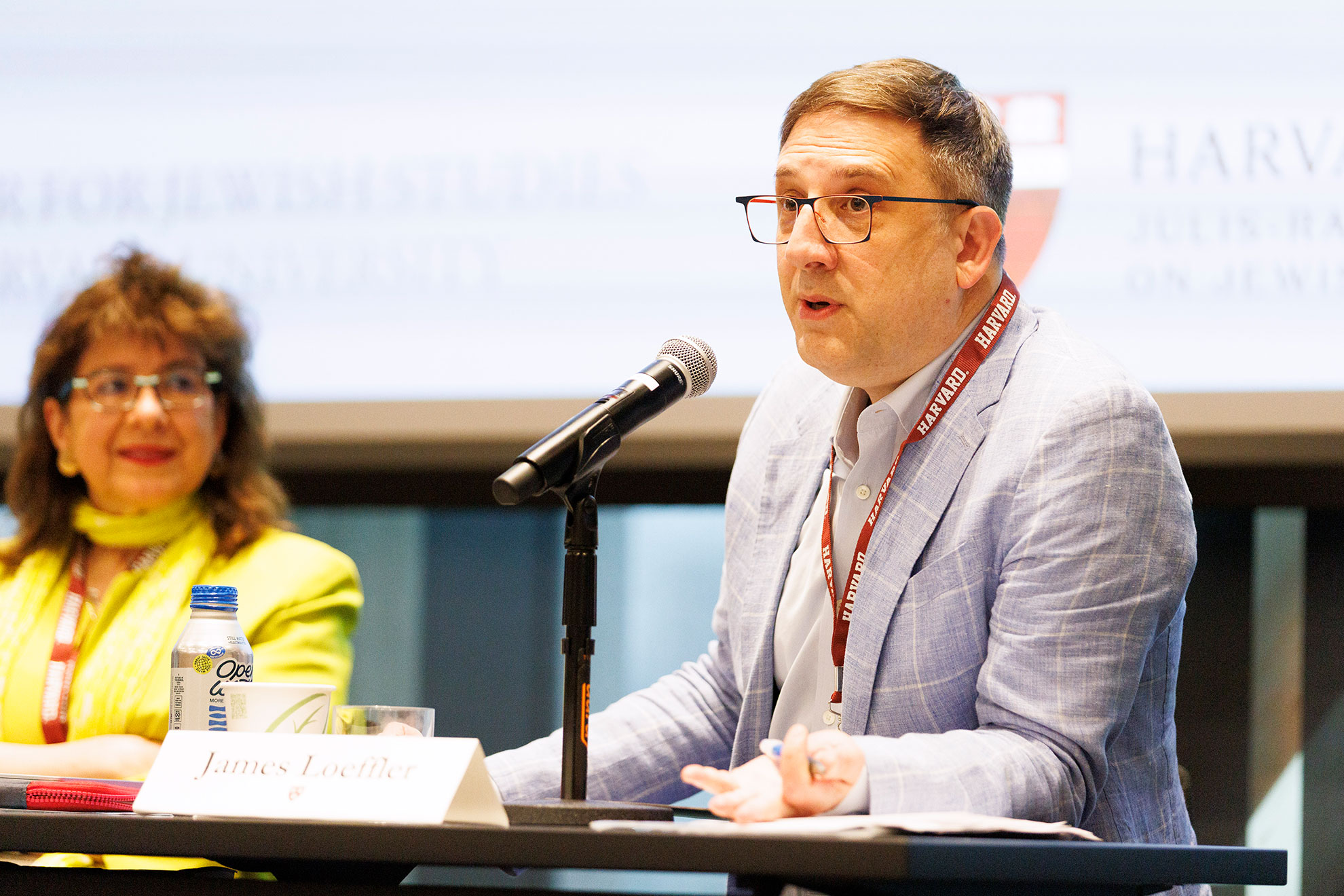
Discussions at the conference covered antisemitism’s impact in the arts, academia, and its relationship with Christian-rooted universities, as well as its role in discussions about place. James Loeffler from Johns Hopkins University highlighted the history of Jews experiencing “occlusion” and “extrusion” in universities, recalling the 2017 Charlottesville rally where antisemitism was notably unaddressed by university leaders.
Loeffler expressed surprise at the lack of dialogue on antisemitism in the aftermath, noting the university community’s familiarity with addressing racism but difficulty in discussing this form of hatred. Feldman noted that while antisemitism at Harvard has decreased since the mid-20th century, grappling with evolving circumstances remains challenging.
Eric Nelson, a Harvard professor, shared his experience of privilege and noted the tension between the perception of Jewish privilege and the historical trauma of antisemitism. He emphasized that, despite personal privilege, many Jews are closely connected to a painful history.
Susannah Heschel from Dartmouth addressed the need for actionable responses to antisemitism, criticizing the focus on definitions over solutions. She stressed the importance of providing hope to students and finding meaningful messages in Jewish studies that resonate with them for the future.
Original Source: news.harvard.edu