









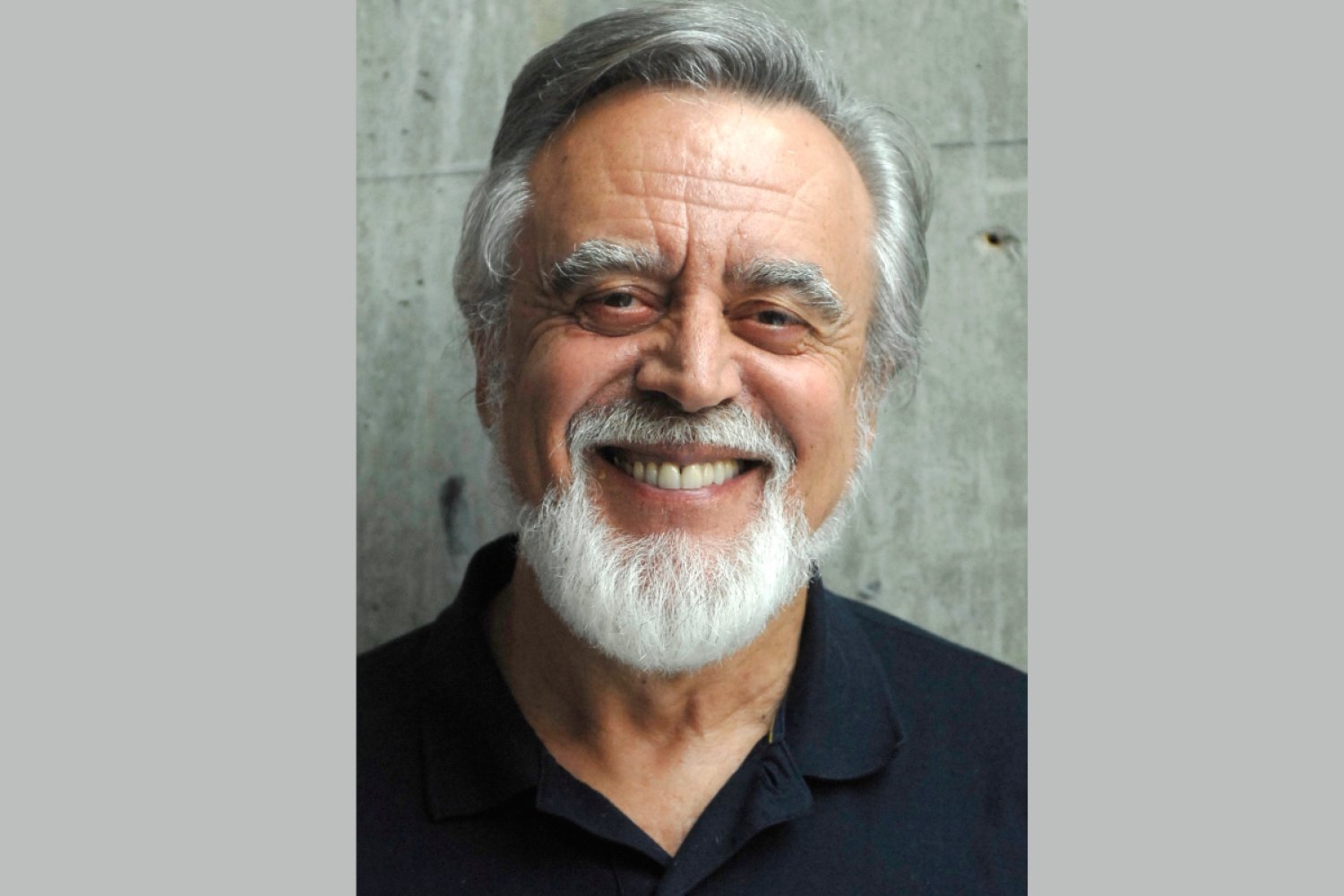
Dimitri Bertsekas PhD ’71, a prominent figure in computer science and an esteemed author, passed away at 83 on June 3 at his residence in Belmont, Massachusetts. Bertsekas held the title of Jerry McAfee (1940) Emeritus Professor in Engineering at MIT’s Department of Electrical Engineering and Computer Science, was a principal investigator at the Laboratory for Information and Decision Systems (LIDS), and served as the Fulton Professor of Computational Decision Making at Arizona State University. His research significantly impacted optimization, control, large-scale computation, reinforcement learning, and artificial intelligence.
Bertsekas consulted for various private firms, edited several scientific journals, founded Athena Scientific publishing company, and was the chief scientific advisor at Bayforest Technologies, a London-based investment firm. His legacy is notably marked by his authorship and co-authorship of more than 20 influential publications, as well as his extensive network of students, mentees, and collaborators. He received his undergraduate degree from the National Technical University of Athens, Greece, and completed his MS in electrical engineering at George Washington University in 1969, followed by a PhD in system science at MIT in 1971.
His academic journey included faculty positions at Stanford University and the University of Illinois at Urbana-Champaign before returning to MIT in 1979, where he remained until 2019. At MIT, Asu Ozdaglar, head of the EECS department, credits Bertsekas with having a transformative impact on her career. Former student Jinane Abounadi, now executive director of the MIT Sandbox Innovation Fund Program, fondly recalls learning from Bertsekas about optimization and dynamic programming.
During his time at the University of Illinois, Bertsekas impressed student Steven E. Shreve with his nonlinear optimization course. Shreve recalls being asked to proofread a draft manuscript by Bertsekas, which became the book “Dynamic Programming and Stochastic Control.” This collaboration led to their co-authored book “Stochastic Optimal Control: The Discrete Time Case,” a project through which Shreve learned the art of clear research presentation.
Bertsekas’ writing style, characterized by clarity and elegance, became his educational signature. Robert Gallager, professor emeritus of electrical engineering at MIT, praised Bertsekas for his ability to organize complex subjects into comprehensible wholes. Bertsekas’ writing, according to colleague Munther Dahleh, was distinguished by his intuition and clarity, with his book on neuro-dynamic programming with John Tsitsiklis being particularly influential in the fields of reinforcement learning and dynamic programming.
John Tsitsiklis remembers the collaborative writing process with Bertsekas as a blend of craftsmanship and creativity. Bertsekas explored the nature of creativity in his essay “Academia, Art, and Life,” categorizing creative work into technician, craftsman, and artist roles. His artistic talent extended beyond writing, as he created illustrations for his textbooks and captured artistic photographs during his travels.
David Castañón, a professor at Boston University, recalls Bertsekas as a Renaissance man with a passion for algorithmic ideas and new technologies. Bertsekas’ artistic talents were evident in his publishing venture, Athena Scientific, where he produced elegantly crafted educational volumes. Tsitsiklis adds that for Bertsekas, research was about uncovering the right way to view a subject and conveying it clearly through his writing.
Original Source: news.mit.edu