









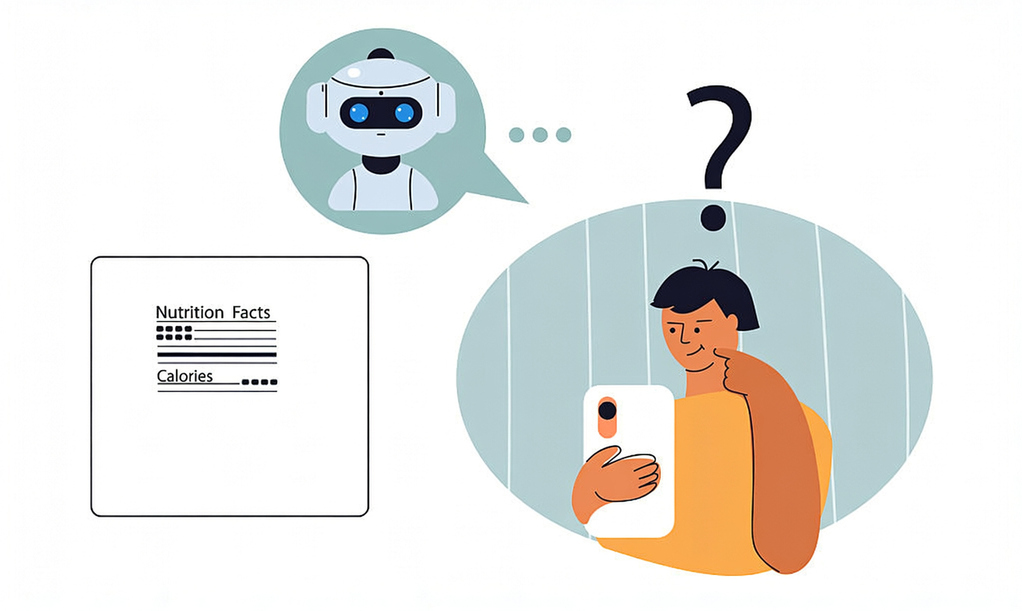
In the late 1970s, the United States experienced a pivotal realization. For many years, the food industry thrived on convenience and variety, largely without strong public health oversight. The 1977 McGovern Report officially highlighted the long-term costs of diets based on processed foods. The food sector responded by focusing on marketability. When the public was told ‘fat is bad,’ companies quickly produced ‘low-fat’ products, often adding extra sugar to maintain taste. The real issue was not calories but unhealthy trade-offs that were not clearly communicated. Lacking a deep understanding of nutritional science, the public embraced these products, unaware of their unhealthy choices. It took years of advocacy to bring about the 1990 Nutrition Labeling and Education Act, providing consumers with a standardized tool to navigate dietary choices. This situation parallels the current state of generative artificial intelligence.
Generative AI offers an enticing mix of speed, ease, and instant gratification, much like the snack industry did decades ago. It appears to solve immediate problems, from drafting emails to creating syllabi. However, just as early convenience foods prioritized taste over nutrition, many AI tools today emphasize speed and efficiency over intellectual depth and human insight. The danger arises when convenience surpasses understanding. Currently, the average faculty member or student knows as much about AI’s inner workings and long-term effects as a 1960s consumer did about trans fats or high-fructose corn syrup. We are consuming AI without understanding the risks.
The most perilous hidden element in AI is the loss of cognitive friction. As AI becomes more widespread, there is concern that human intelligence could decline. Over-reliance on AI might lead to passive information consumption, stifling original thought, creativity, and critical thinking. Our ability to synthesize information and generate new ideas, data, and code could weaken, reducing us to mere readers rather than creators of understanding.
The prevailing perception of AI suggests it will displace jobs, creative work, and even human thought. This narrative is reinforced by the term “artificial intelligence,” which implies a fabricated, inferior imitation, casting AI as a competitor rather than a potential ally. However, a well-informed public narrative can steer the technology toward augmentation, using AI to enhance rather than replace human cognition. Educators must promote this message, shifting the focus from “artificial” limitations to “augmented” potential.
Instead of using AI merely to summarize books, it should be employed to debate arguments, identify assumptions in texts, or explore complex theories. AI becomes a powerful partner, not a shortcut. In scientific discovery, AI should multiply a researcher’s capacity for insight, allowing humans to focus on novel hypotheses. For creativity, humans remain the visionaries and editors of AI output, using it to quickly iterate and test ideas before finalizing a vision.
We cannot afford to repeat past mistakes with our mental inputs. AI literacy must become a public health campaign on campuses and in schools, ensuring students and colleagues understand the trade-offs involved. To achieve this, education must focus on failure and process, teaching not just how AI tools work but how they fail and what biases they introduce. Intellectual reverse-engineering is necessary to understand AI’s decision-making logic. Faculty should demand transparency from AI tool vendors regarding training data sources and known failure modes.
Educators must prioritize asking whether AI tools make students smarter, rather than just faster at less meaningful tasks. The snack food industry prioritized convenience over health due to a lack of understanding. We have a chance now, before current AI models become deeply ingrained, to prevent a similar crisis of cognitive decline.
Jim Wentworth, Associate Director of Educational Innovation at the University of Illinois Urbana-Champaign, oversees instructional development and design teams at CITL. His colleagues are developing the next generation of academic professionals to support course design and teaching across various modalities.
Original Source: facultyfocus.com