



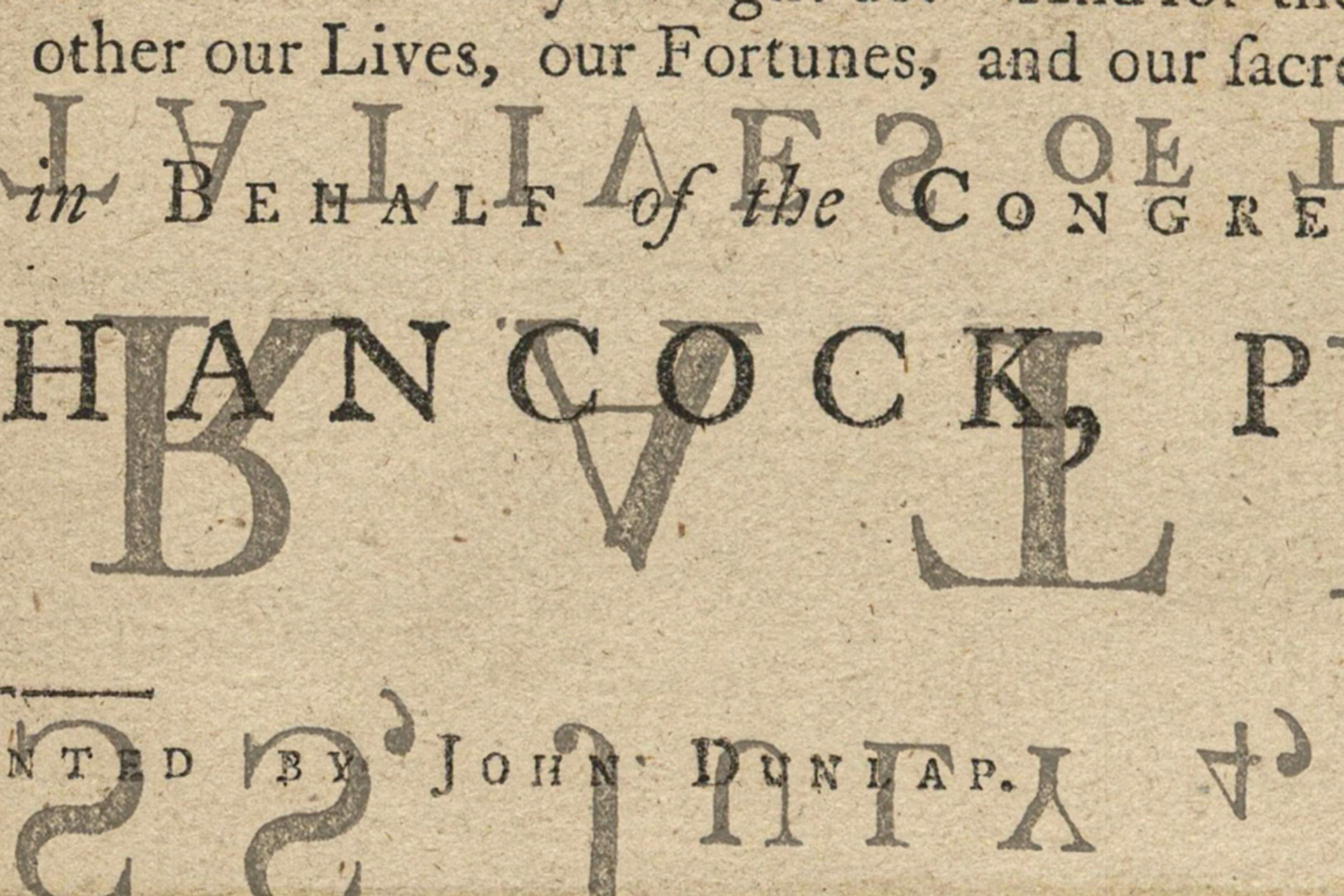
Nearly 250 years ago, John Dunlap’s print shop in Philadelphia worked overnight to fulfill a rush order from the Continental Congress: printing the first copies of the Declaration of Independence. Of the approximately 200 original copies, only 26 are confirmed to exist today, according to the Library of Congress. One such copy is displayed at Harvard’s Houghton Library this summer, commemorating the Declaration’s 250th anniversary.
This document, created to recognize and justify a rapidly developing series of events, was intended for widespread distribution, not preservation. Its purpose was to reach Continental army camps, restless cities, and potential allies during the ongoing war for independence. Historian David Armitage noted that after serving its purpose, the Declaration faded from immediate attention, as focus shifted to future battles and state constitutions.
Many original copies were lost over time, a phenomenon Armitage attributes to the “shipwreck of history,” where much evidence from the past is destroyed or discarded. He considers it a privilege to provide students firsthand access to such a significant document, which is featured at the entrance of the “War of Words” exhibit at Houghton Library.
Curator John Overholt aims to humanize the history of the American Revolution through this exhibit, showcasing the Declaration as a product of real people, not just historical figures like those on Mount Rushmore. The exhibit also features a 1775 appeal from King George III to American colonists, warning them of the dangers of rebellion, illustrating the contentious atmosphere of the time.
The Declaration’s creation involved a diverse coalition of individuals, including Thomas Paine and John Adams, who pushed for independence despite differing views. A 1976 analysis revealed that many Dunlap broadsides show signs of hasty production, such as ink stains and torn folds, indicative of its rushed printing process.
Harvard’s copy is part of a broader narrative set in a society rich with print media, a fact highlighted by historians who argue that the proliferation of reading material eroded traditional British authority. Print shops like Dunlap’s, connected to prominent figures such as Benjamin Franklin, played a crucial role in disseminating revolutionary ideas and news.
Despite limited details on the exact process of the Declaration’s printing, it’s clear that the Congress and its Committee of Five, including figures like John Adams and Benjamin Franklin, aimed to produce enough copies to saturate the media landscape. The Declaration’s concise format was designed for easy public display.
As part of the exhibit, the Dunlap broadside is accompanied by a letter from John Hancock to General Artemas Ward, emphasizing the importance of making the Declaration known to the entire army. By mid-August, the document had been widely circulated along the eastern seaboard, cementing its role in American history.
Original Source: news.harvard.edu