







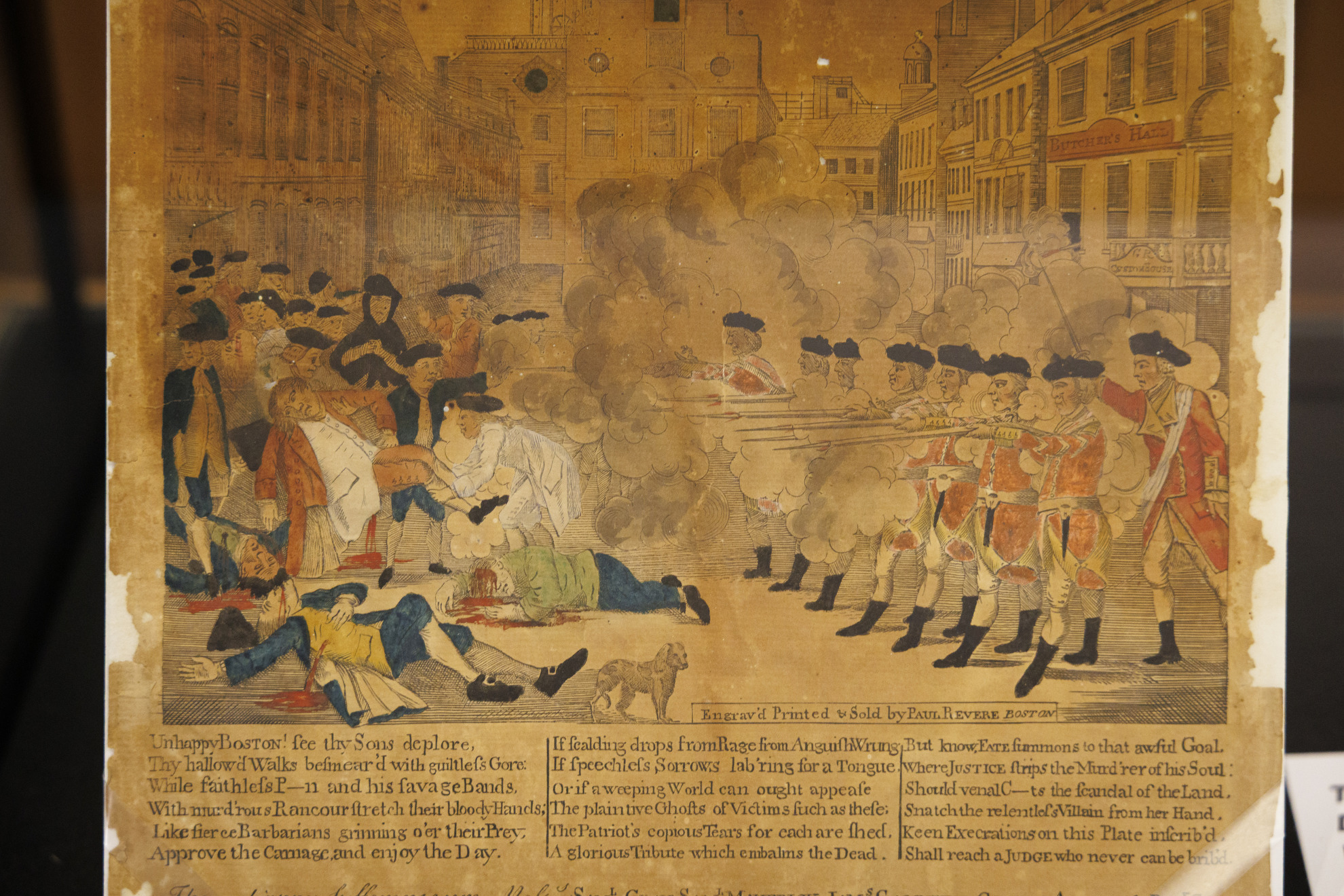
John Overholt, a curator at Houghton Library, described a Paul Revere illustration of the Boston Massacre as “one of the most powerful propaganda images of the whole Revolution.” This image is part of an exhibit showcasing various media pieces related to the American Revolution, providing insight into how ordinary people at the time learned about events as they unfolded.
In the 18th century, information spread much slower than today, especially during the American colonies’ struggle against a formidable invading force. To commemorate the 250th anniversary of the United States’ founding, Houghton Library is presenting an exhibit titled “War of Words: A Citizen’s Eye View of the Revolution.” This display includes important historical media, such as one of the 26 surviving copies of the Declaration of Independence printed on July 4, 1776.
According to John Overholt, the focus of the exhibit is on pamphlets, newspapers, and posters that informed people of the Revolution’s causes and events. Among the items is a letter from John Hancock to General Artemas Ward, instructing him to read the Declaration of Independence to the troops, emphasizing the significance of informing people about their new nation’s independence.
The exhibit also features a British illustration depicting a tax collector being tarred and feathered by colonists, reflecting the British perspective on the colonists’ actions. Overholt noted that including British views provides a fuller picture of how the Revolution was perceived on both sides of the Atlantic.
Another notable item is a full-color Paul Revere illustration of the Boston Massacre, which Overholt considers a vivid and impactful piece of propaganda from the Revolutionary period. The exhibit includes eight cases of materials that explore various aspects of the war, such as its early battles, economic conditions, and the emerging Continental currency.
A section titled “dissenting voices” delves into responses from both British citizens and Americans who were not wholly supportive of the Revolution. This includes a sermon by Lemuel Haynes, the first African American minister in the new nation, criticizing the Declaration’s claim of equality while slavery persisted.
Houghton Library last showcased these artifacts during the bicentennial in 1976. Overholt aims for the current exhibit to convey both Harvard’s role in the Revolution and the experience of living through that historical era. The library is open to visitors from Monday to Friday, 10 a.m. to 5 p.m.
Original Source: news.harvard.edu