








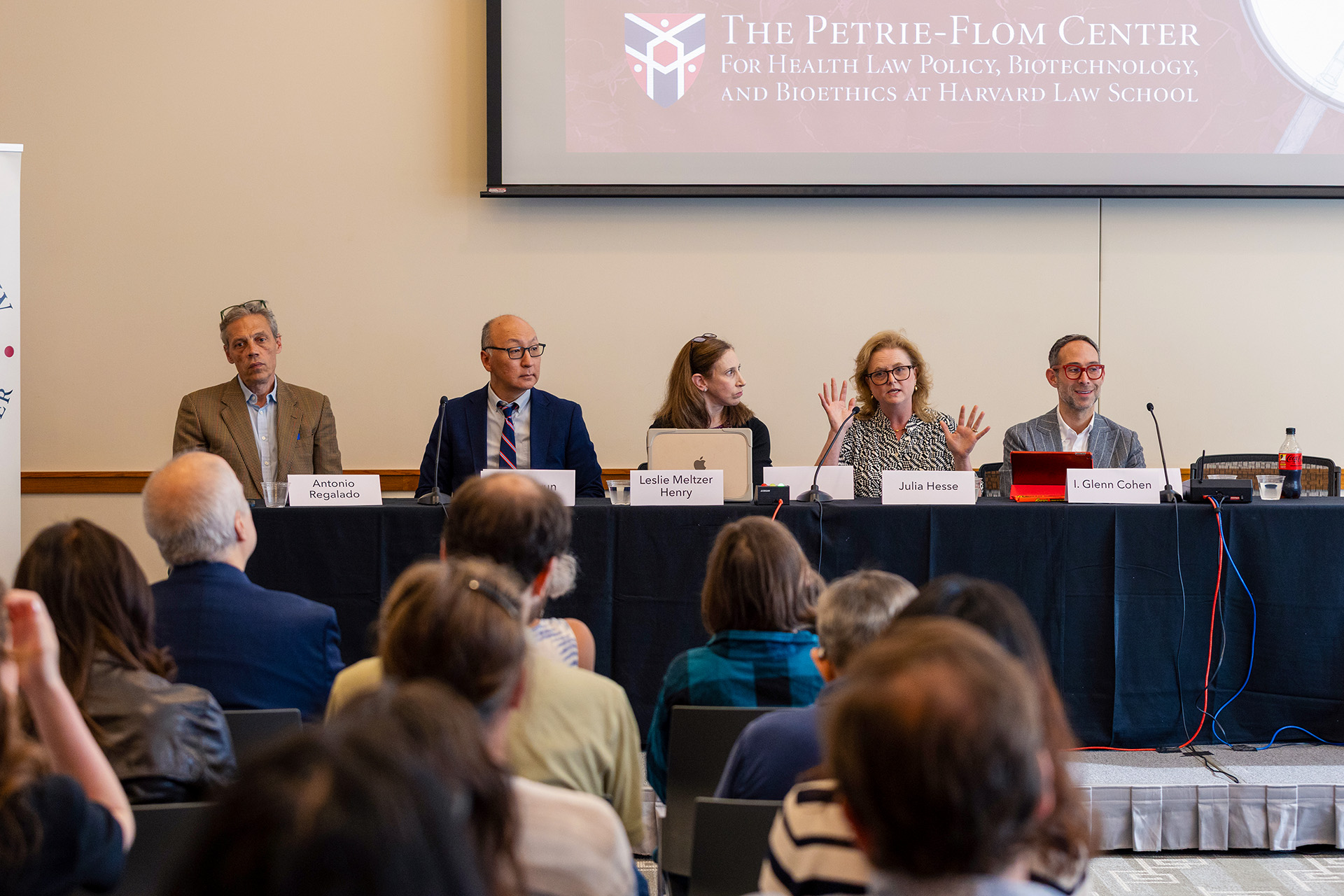
In the United States, over a million frozen embryos exist, sparking numerous ethical and legal questions. Experts discussed these complex issues during a Petrie-Flom Center event on embryo law and ethics. Leslie Meltzer Henry, a law professor, noted that since 1980, more than 500 cases involving frozen embryos have been brought to state courts, often due to disputes between intended parents after changes like divorce. Despite rulings from the highest courts in nine states, a unified legal standard is lacking, leading to emotionally taxing litigation and uncertainty for both parents and fertility providers.
Julia Hesse, a partner at Holland & Knight, highlighted the challenges fertility clinics face due to unclear laws and limited insurance coverage. Unlike other medical fields protected by tort reform, fertility clinics risk financial ruin from embryo-related mishaps. She suggested implementing laws with a 10-year storage limit to address issues when clients lose contact or stop payments, noting, “You can’t operate a business where the liability is unlimited but the amount they’re charging for long-term storage is $500 or $1,000 a year.”
Antonio Regalado, a senior editor at MIT Technology Review, discussed philosophical debates on using embryos for science, mentioning Jacob Hanna’s work on synthetic embryo models for tissue harvesting. This research intersects with longevity science, where some wealthy individuals aim to live indefinitely, with cloning seen as a solution. “They’re darn serious about not dying,” Regalado remarked.
Insoo Hyun, director at the Museum of Science, pointed out that ethical issues around stem-cell use echo past debates. Despite discussions on human cloning, current technology does not allow lab-grown embryos to develop into humans. Legal decisions continue to influence this field, with Judith Daar noting a shift in court dynamics post-Dobbs decision, which removed the constitutional right to abortion.
Audience members considered how defining embryos as people might affect decisions to freeze them. Hesse expressed concern that laws requiring every embryo to be carried to term could deter people from pursuing fertility treatments. Henry also worried about potential legal obligations to carry pregnancies. Regalado urged consideration of a future where thousands of embryos are created to select an ideal child, a notion entertained by some in Silicon Valley.
Original Source: news.harvard.edu