








When Professor Kripa Varanasi of MIT’s mechanical engineering department arrived in New Delhi for a conference in June 2024, he was met with sweltering heat of 104 degrees Fahrenheit. He noted, “This was June, and it was crazy. It was so hot for the whole meeting that I never left the hotel,” with temperatures approaching 122 F during the day. Reflecting on his childhood in India, Varanasi remarked, “When I grew up in India, it was not like this,” which motivated him to take action.
Using a grant from the MIT Climate Project, Varanasi developed a prototype for a wearable personal cooling system. This grant was part of a Critical Cooling initiative, which funded four projects last year with a total of $450,000. These projects, now completed, demonstrated potential and are exploring further development.
Yet-Ming Chiang, another MIT researcher and Kyocera Professor of Materials Science and Engineering, explored subsurface wells with heat-absorbing materials. These wells aim to provide cooler air in spaces compared to peak ambient temperatures, using less energy than traditional heat pumps. This system could be applied in small buildings and homes in India and other parts of the Global South.
Asegun Henry, the George N. Hatsopoulos Professor in Thermodynamics, investigated an energy-efficient air conditioning method that eliminates hydrofluorocarbon refrigerants. His approach uses rubber as a caloric material for cooling, utilizing water as a heat transfer fluid. The system is intended for homes and apartment buildings but could also serve data centers.
Gang Chen, the Carl Richard Soderberg Professor of Power Engineering, focused on creating air conditioning units that do not use greenhouse gas-emitting refrigerants. His design uses a novel chemical refrigerant with no environmental impact.
Christoph Reinhart, the Terri and Alan Spoon Professor of Architecture and Climate, led the seed fund initiative. He explained that the term “critical cooling” resulted from a collaboration between MIT’s Sustainable Design Lab and Harvard’s Human Rights Entrepreneurs Clinic. The initiative addresses the increasing heat fatalities caused by climate change, especially among vulnerable populations without access to cooling.
In collaboration with the Abdul Latif Jameel Poverty Action Lab (J-PAL), a workshop was organized involving the World Bank, Global South leaders, and industry representatives to share ideas. Liana Frey, managing director at the MIT Climate Project, noted the progress and initial prototypes achieved by the teams, with plans to continue developing these ideas.
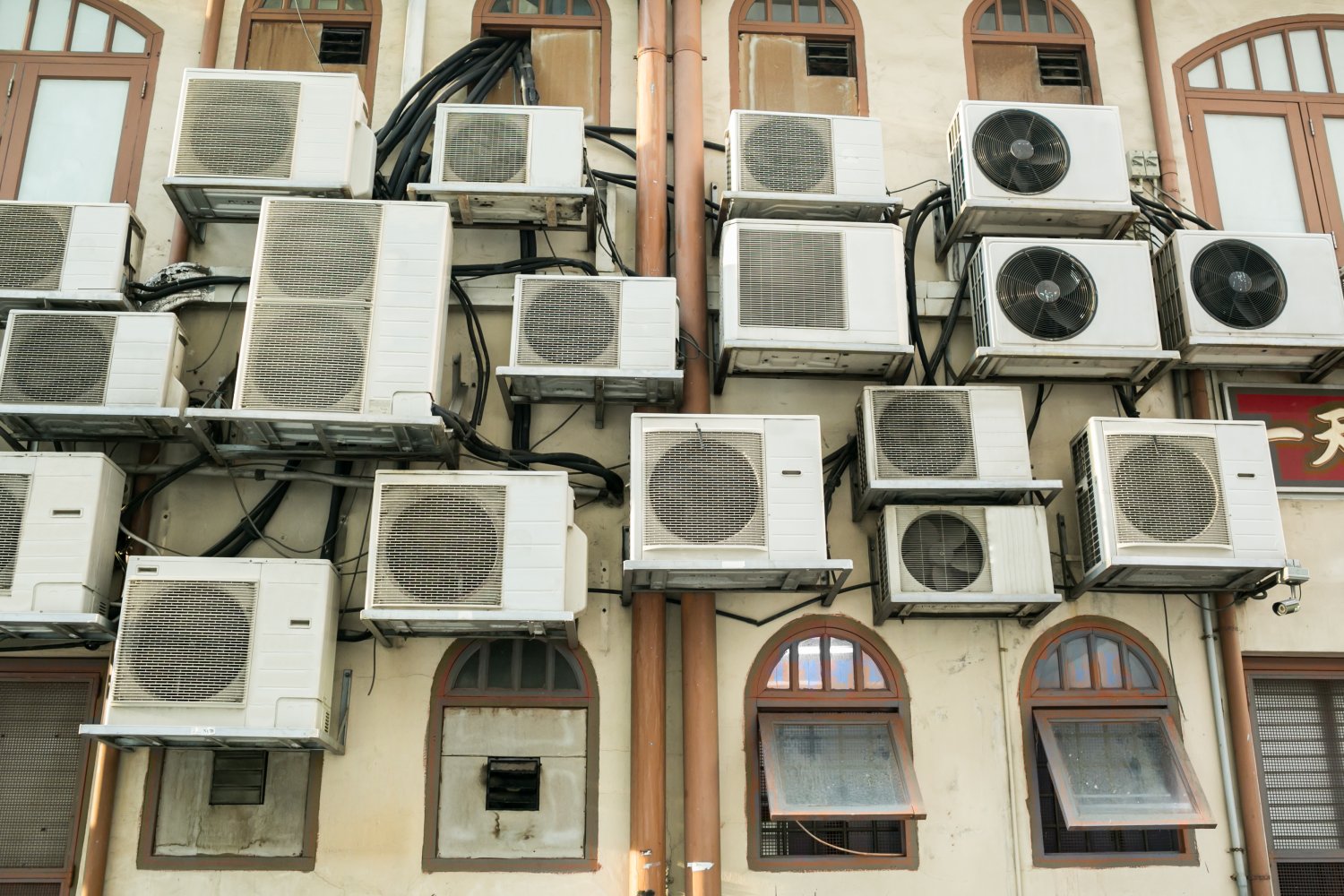
Gang Chen added that only about 8 percent of the global population currently has access to air conditioning, which contributes significantly to global warming emissions. As the demand for air conditioning rises in warming regions with limited access to power, the market for air conditioners is expected to expand, increasing their environmental impact.
Varanasi highlighted the personal cooling device’s efficiency, drawing inspiration from how elephants use their ears to dissipate heat. The device uses only 33 watts compared to the 1,000 watts of a typical room air conditioner. Priced at $20 in the U.S., it could be produced for under $1 in India using local materials.
These cooling garments could be distributed by the government, with local entrepreneurs establishing charging stations and businesses to manufacture the systems. Varanasi’s prototype used a simulated foot to demonstrate its cooling effect, showing promise as a viable solution.
Varanasi is considering other applications for the cooling material, such as in sleeping bags. The material is widely available but requires a unique treatment they developed. “It was a fundamental science bottleneck that we were able to overcome,” he said. He is exploring commercialization, emphasizing the importance of a sustainable business model. “It has to be a good business and a sustainable business,” Varanasi stated.
Frey noted the urgency of addressing heat-stress issues, stating, “There are a lot of people interested in this heat-stress question. It’s just becoming more and more urgent.”
Original Source: news.mit.edu