





MIT Researchers Reprogram Materials by Rapid Atomic Rearrangement

Thirty-seven years ago, scientists first managed to move single atoms, opening up the potential to design materials atom by atom to tailor their properties. Today, several methods exist that allow researchers to manipulate individual atoms to endow materials with unique quantum features and deepen our understanding of quantum phenomena. However, current methods are limited to…

Read More

MIT Chemists Isolate New Boron-Oxygen Molecule

Oxygen plays a crucial role in chemistry due to its effectiveness in forming organic molecules that constitute our environment. Peroxides, a class of oxygen-based compounds, are noted for their high reactivity, functioning like oxygen transport vehicles that transfer atoms to other molecules. This process is vital for applications ranging from drug development to industrial production….

Read More

MIT researchers develop enhanced cancer vaccine boosting T cell response

MIT engineers have introduced a novel method to enhance T-cell responses in mRNA vaccines, potentially resulting in more potent cancer vaccines and improved defenses against infectious diseases. Typically, vaccines stimulate antibodies and T cells by activating antigen-presenting cells like dendritic cells. This research, however, fortified the T-cell response using a new vaccine adjuvant. These adjuvants…

Read More

MIT Researchers Enhance Circuit Reliability for Quantum Computers

Quantum computers hold the potential to tackle complex issues beyond the reach of classical machines, such as simulating intricate molecular interactions for drug and materials development. However, creating a superconducting quantum computer suitable for practical use requires scientists to engineer thousands of circuits with minimal error rates. To aid in this, MIT and Lincoln Laboratory…

Read More

MIT Researchers Develop Technique to Shrink Devices for Light-Based Computing

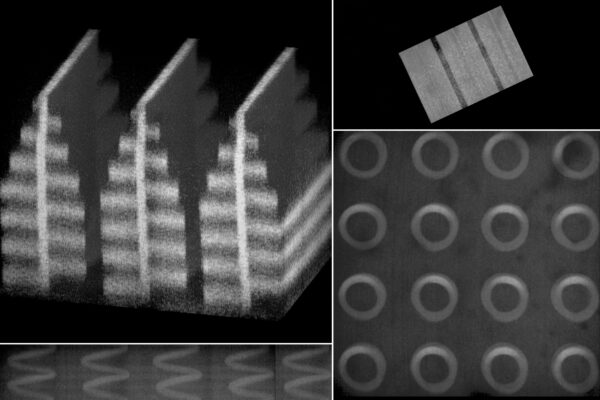
MIT researchers have developed a new technique called “implosion carving” that creates vacancies in materials, reducing them to approximately 1/2,000 of their original size. This advancement in nanotechnology could lead to devices for optical computing and visible light manipulation. The method utilizes photopatterning in a hydrogel, achieving features smaller than 100 nanometers, allowing the devices…

Read More