



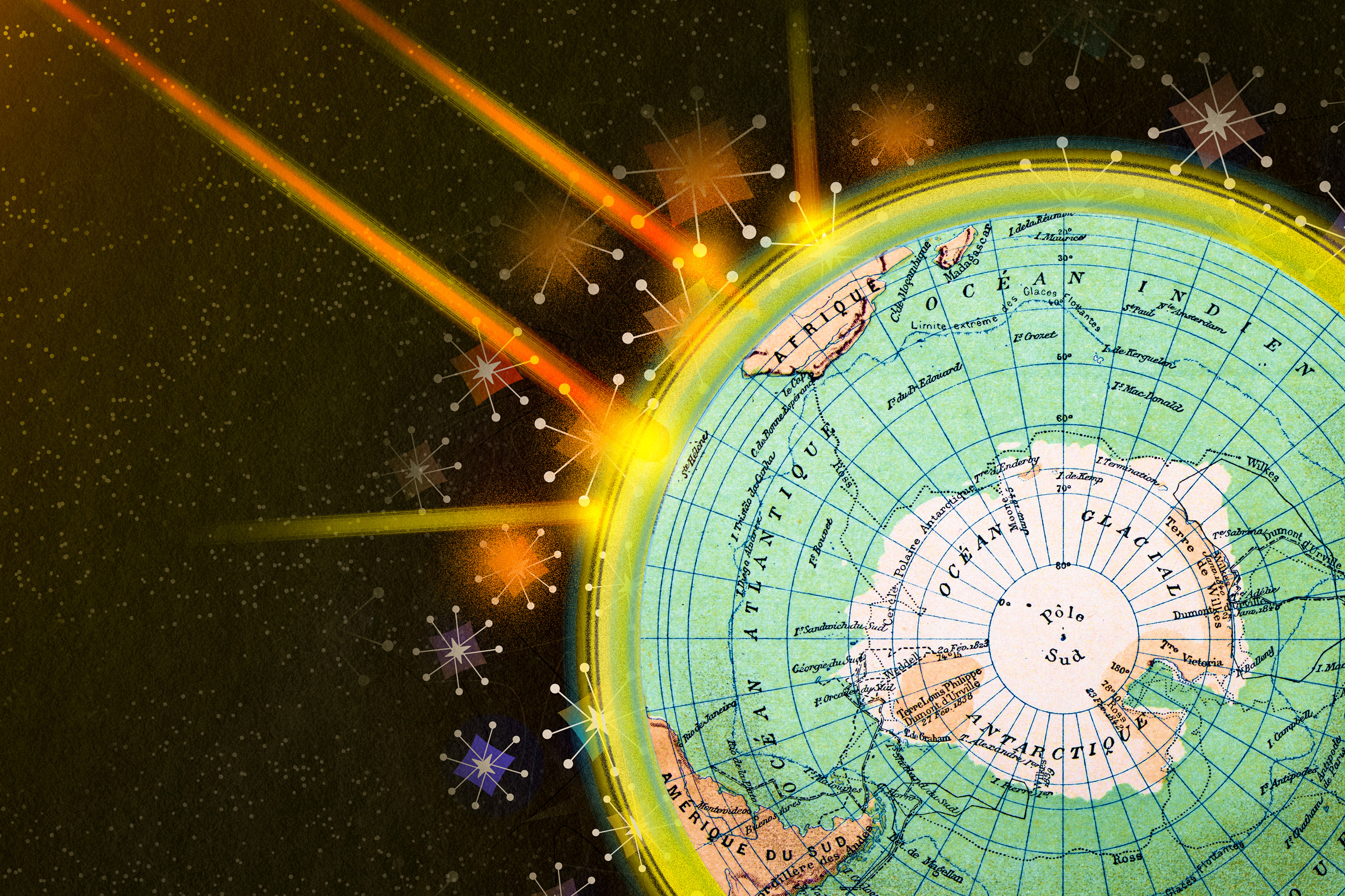
The Antarctic ozone hole, identified in 1985, was a result of significant depletion in the Earth’s stratospheric ozone layer. This depletion was primarily caused by chlorofluorocarbons (CFCs), which were common in products like refrigerants and solvents. Global efforts to eliminate CFCs have helped the ozone layer begin to recover, particularly over Antarctica. The discovery was aided by the measurement tools available at the time, and advancements in these tools, alongside satellites and other technologies, have helped scientists monitor the ozone’s recovery.
Researchers at MIT, led by atmospheric chemist Susan Solomon, conducted a thought experiment envisioning the availability of modern atmospheric monitoring throughout the last century. They simulated historical atmospheric chemistry to identify when and where the earliest signs of ozone depletion would have been detectable. Their study, published in the Proceedings of the National Academy of Sciences, indicates that ozone depletion signs emerged as early as 1957, about three decades before the ozone hole’s discovery, occurring in the upper stratosphere over the tropics. Surprisingly, this early depletion was linked to carbon tetrachloride, not CFCs.
Jian Guan, the study’s lead author and an MIT graduate student, found it unexpected that a different compound than CFCs caused early ozone depletion. Solomon, an expert in atmospheric ozone effects who first linked CFCs to Antarctic ozone erosion, was shocked by the findings. “The fact that ozone depletion would have happened as early as the late 1950s, which is much earlier than I would have thought, just absolutely blew my mind,” Solomon remarked. The study underscores the importance of ongoing atmospheric monitoring for understanding atmospheric recovery.
The study involved collaboration with MIT co-authors Peidong Wang, Yaowei Li, and Kane Stone, as well as researchers from the University of East Anglia, University of Washington, National Center for Atmospheric Research, Climate Modeling and Analysis LLC, and the Spanish National Research Council. Ozone naturally occurs in the atmosphere and acts as a shield against harmful ultraviolet radiation. In the late 1980s, Solomon’s research expeditions confirmed CFCs as the key agent of Antarctic ozone destruction due to elevated chlorine dioxide levels.
Solomon’s measurements and MIT chemist Mario Molina’s hypothesis demonstrated that CFCs released chlorine atoms in the stratosphere, which then destroyed ozone molecules. This discovery was critical in achieving the Montreal Protocol, signed globally to phase out CFCs and other ozone-depleting chemicals. Recent observations show signs of ozone recovery due to these efforts. “We know what we have now, and ozone is starting to recover,” Solomon stated. “But no one has ever really documented where and when and why the first ozone depletion would have happened.”
The study used a “what-if” approach, considering if past monitoring had today’s capabilities to detect human-induced ozone depletion. Current tools can distinguish between human-induced signals and natural “noise” like weather variations. The team simulated atmospheric conditions and incorporated industrial and ice core data to identify when ozone loss due to human activity first became apparent. Their models showed a clear signal of human-induced ozone loss as early as 1957, primarily in the tropics.
Original Source: news.mit.edu