









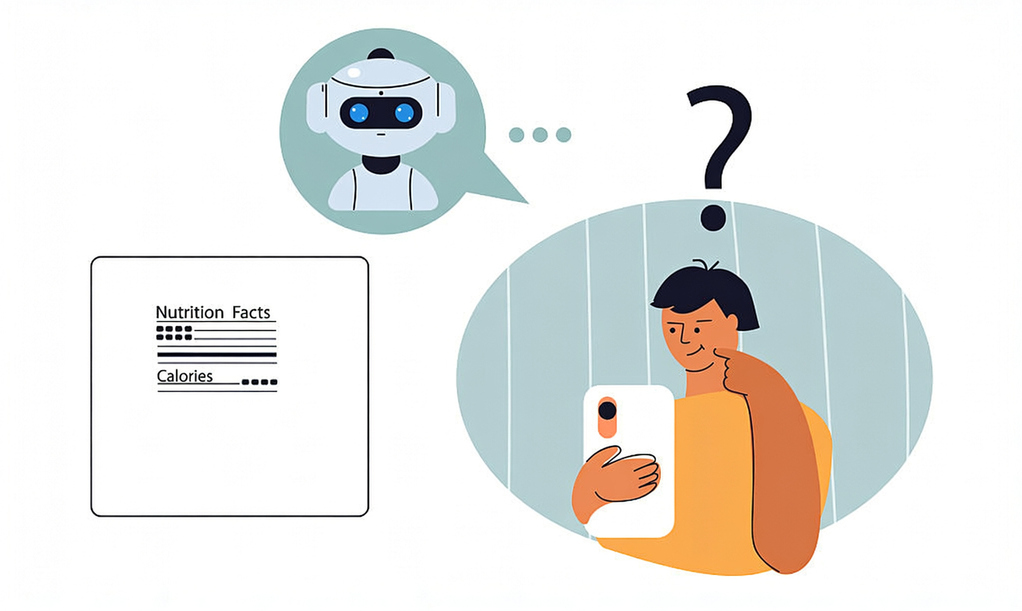
In the late 1970s, the United States experienced a widespread realization. For years, the food industry thrived, offering convenience and variety but lacking strong public health guidance. The 1977 McGovern Report highlighted the long-term health costs of a diet heavy in processed foods. The industry’s response focused on marketing; when ‘fat is bad’ became the message, companies introduced ‘low-fat’ products often high in sugar to maintain taste. The issue was not just calorie content but the uncommunicated unhealthy trade-offs. Without understanding nutritional science, consumers unknowingly made poor dietary choices. It wasn’t until the 1990 Nutrition Labeling and Education Act that consumers received standardized guidance.
This historical scenario mirrors today’s situation with generative AI. Similar to snack foods, AI offers speed, ease, and instant gratification, solving minor tasks like drafting emails or creating syllabi. However, these AI tools often prioritize quick results over intellectual depth and human insight. The danger arises when convenience outpaces understanding. Currently, faculty and students understand AI’s mechanics and risks as little as 1960s consumers knew about trans fats. People are using AI without fully grasping the potential downsides.
The most concerning aspect of AI is the reduction of cognitive friction. As AI becomes more common, there’s fear that human intelligence could decline. Over-reliance on AI might result in passive information consumption, limiting creativity, critical thinking, and the ability to synthesize new ideas. This could turn us into passive consumers rather than active creators of knowledge.
AI is often seen as a threat that could replace jobs and human thought. The term ‘artificial intelligence’ suggests an inferior imitation, framing AI as a competitor rather than a collaborator. However, a well-informed public can steer AI toward enhancing, not replacing, human cognition. Educators should shift the narrative from ‘artificial’ to ‘augmented,’ emphasizing AI’s potential to amplify human capabilities.
Instead of using AI for simple tasks like summarizing books, it should be used to enhance critical thinking by debating arguments or exploring complex theories. In scientific discovery, AI should augment researchers by handling data, allowing humans to focus on new hypotheses. In creativity, humans should remain the visionaries, using AI to accelerate idea development before finalizing them.
We missed the opportunity once with our diets; we must not repeat this with our minds. Immediate action is needed to treat AI literacy as a public health initiative on campuses, ensuring that students and educators understand the trade-offs involved in AI use. This includes teaching not only how to use AI but also how to understand its failures and biases.
Reverse-engineering AI is crucial for understanding its ‘ingredients.’ By examining AI’s training data and objectives, we can gain insights into its decision-making processes. Faculty and students should view AI outputs as data points that reveal the system’s problem-solving strategies.
Transparency from AI tool vendors is essential, and educators should prioritize understanding the benefits versus the speed of AI. The snack food industry prioritized convenience over health due to a lack of public understanding. We have the chance now to prevent a similar issue with AI before it becomes deeply embedded.
Jim Wentworth, Associate Director of Educational Innovation at the University of Illinois Urbana-Champaign, emphasizes the importance of integrating instructional teams to support course design and teaching. His team is working on creating the next generation of academic professionals.
Original Source: facultyfocus.com