




Students Overlook Feedback: Strategies for Improvement

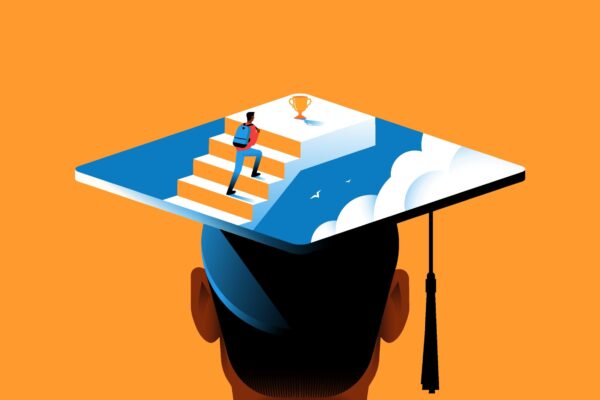
Mather and Scheepers (2025) highlight that feedback is crucial in education. Despite instructors dedicating substantial time to detailed comments, students frequently disregard feedback. Written feedback is often ignored, misused, or misunderstood. This raises the question: why do students not engage with feedback, and how can teachers modify their methods? Here are some reasons students might…

Read More

Preparing Students for the Future Workforce: Insights from Faculty Focus on AI Integration

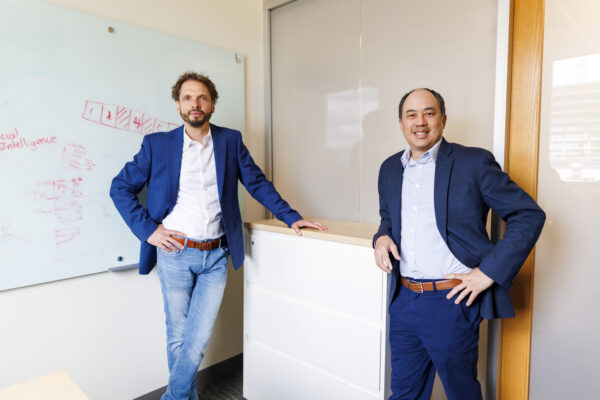
Artificial intelligence (AI) is set to transform the job market, prompting higher education institutions to adjust in order to equip students for a new professional environment. Business leaders are acknowledging the significant changes on the horizon, including shifts in job roles and the automation of mundane tasks. The core challenge is that AI will replace…

Read More

Higher Education Must Prioritize Meaning Over Modality, Experts Say

Educators in various fields are trying out new teaching methods like flipped classrooms, active learning, and flexible assessments to boost student engagement. However, many still find that students participate without truly owning their learning. This indicates that the issue might not be the teaching methods themselves, but rather when meaning is introduced into the learning…

Read More

Harvard Experts Call for Unified AI Cybersecurity Regulations by Government and Business Leaders

Cybersecurity experts, including Fred Heiding, Josephine Wolff, James Mickens, and Robert Knake, have stressed the urgent need for government and business leaders to establish regulations for AI cybersecurity. The rise of agentic AI models presents both opportunities and threats, with the potential for misuse by cybercriminals. During a Berkman Klein Center discussion, experts highlighted the…

Read More

Harvard News Highlights Broader Issues in Higher Education

Harvard President Alan Garber expressed concerns about the potential for the United States to experience a brain drain similar to post-war Europe, during a discussion with Wall Street Journal Editor-in-Chief Emma Tucker. The event, titled “Universities, Democracy, and the American Future,” took place at 92NY in New York. Garber highlighted the parallels between today’s America…

Read More

Harvard Professor Michael Sandel Anticipated Current Events

Michael Sandel engaged in a conversation with Chrystia Freeland. Sandel, a professor known for his work on justice, accepted the Berggruen Prize for Philosophy & Culture, highlighting the importance of philosophy in addressing significant questions. In his 1996 book “Democracy’s Discontent,” Sandel foresaw how globalization might reinforce divisions and prompt a politics focused on reclaiming…

Read More

Harvard Study Explores How Super-Agers Maintain Youthful Brains

Some older adults, dubbed “super-agers,” maintain mental acuity akin to individuals several decades younger, offering potential insights into improved aging for everyone, researchers suggest. “Super-agers are a biological contradiction,” said Alexandra Touroutoglou, a Harvard Medical School associate professor. These individuals, over the age of 65, exhibit brains with youthful traits, said Touroutoglou, who is also…

Read More

Study finds youth more vulnerable to carcinogen in contaminated water and certain drugs

Research from MIT indicates that a carcinogen present in certain medications and polluted drinking water may pose a greater threat to children than adults. The study on mice revealed that young mice exposed to this compound, NDMA, in drinking water exhibited significantly higher DNA damage and cancer rates compared to adults. This might clarify the…

Read More