



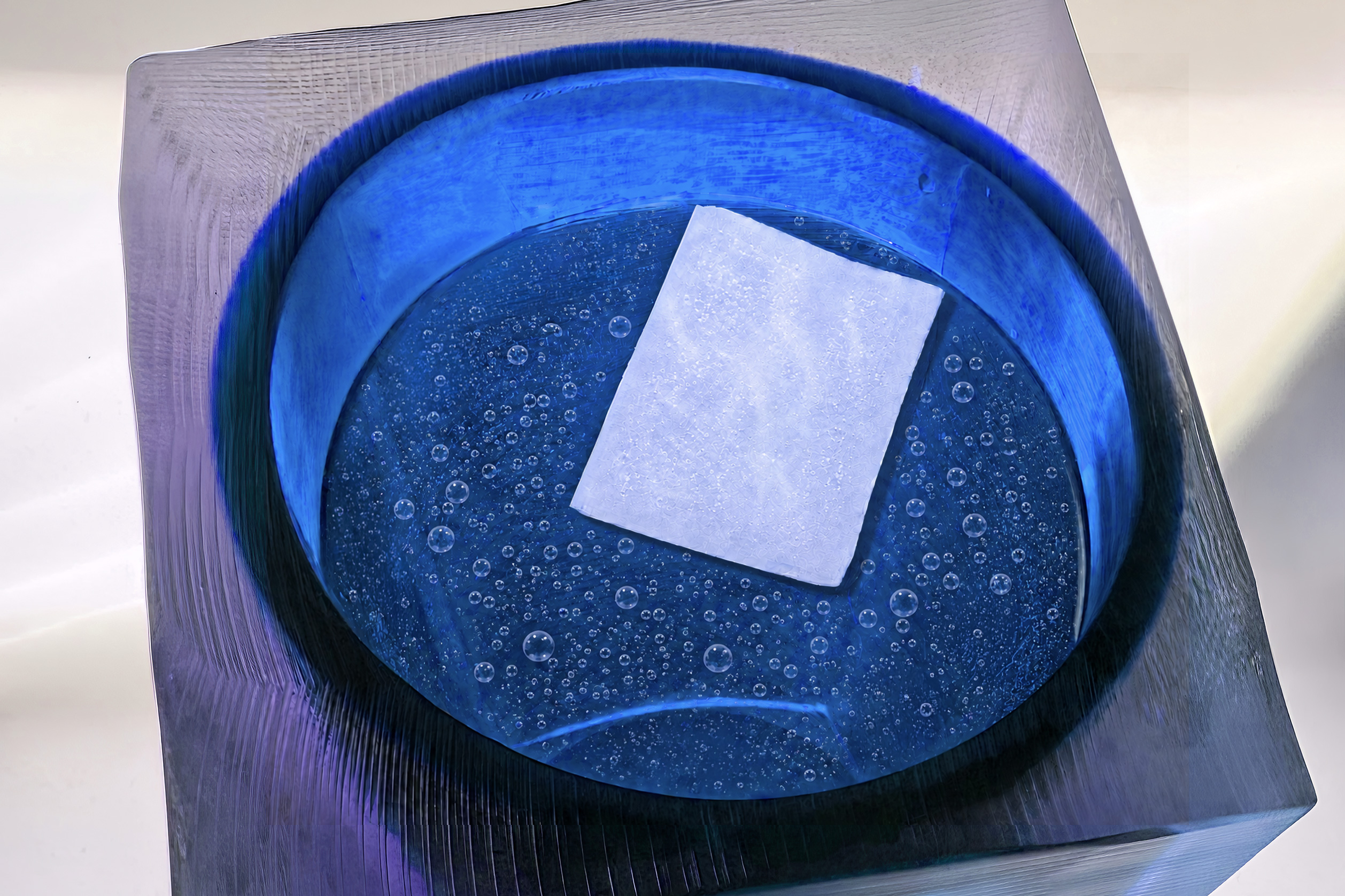
Hydrogels, which are soft, water-rich materials with some polymer content, are commonly used in medical applications like patches, sprays, and glues. These can attach to the skin or be implanted to cover wounds, secure implants, and release medication gradually. Despite their benefits, traditional hydrogels are not breathable, which can lead to moisture build-up and skin irritation when used for extended periods.
MIT engineers have developed a new hydrogel that allows air to pass through while retaining its hydrated state. This innovative material remains as flexible and durable as existing hydrogels but includes a network of tiny air channels. As a result, it can be worn longer without causing irritation and reduces sweat accumulation, even during physical activity.
In trials, participants used wireless heart monitors attached with the new breathable hydrogel. After exercising regularly over a span of 10 days, the volunteers experienced no skin irritation, and the monitors consistently delivered clear readings. Reported in the journal Nature, these findings could lead to the creation of longer-lasting hydrogel items like breathable bandages, face masks, and improved health monitors.
Xuanhe Zhao, a professor at MIT, notes the importance of integrating air into hydrogels for expanding their applications. Zhao collaborated with several MIT researchers, including Xiao-Yun Yan and Shucong Li, and others from different institutions on this project.
Typical hydrogels consist mainly of water, making it difficult for air to permeate. Co-lead author Xiao-Yun Yan compares hydrogels to Jell-O, which does not allow air passage. Previous attempts to create breathable hydrogels involved either puncturing holes or adding air-permeable polymers, but each had limitations.
Zhao’s team aimed to create an air-permeable hydrogel without sacrificing its water content. They succeeded by using viscoelastic phase separation, a process similar to mixing oil and water. A small amount of silica aerogel particles, which are hydrophobic, was added to the hydrogel, creating a network of air channels.
These silica particles, akin to “solid-form” air bubbles, formed interconnected tunnels through which air could flow. This network was stabilized by cross-linking the gel, allowing it to maintain breathability even after extensive stretching and compression tests.
In additional experiments, the breathable hydrogel maintained strong ECG signals during exercise, unlike conventional hydrogels that showed signal fluctuations. The network of air channels remained intact after 10,000 cycles of stretching, with only a minor decrease in oxygen permeability, ensuring durability for everyday activities.
Zhao believes this discovery offers a new method for creating multifunctional and breathable hydrogels, with potential applications beyond those demonstrated. He regards this as a foundational technology with wide-ranging possibilities.
Original Source: news.mit.edu