





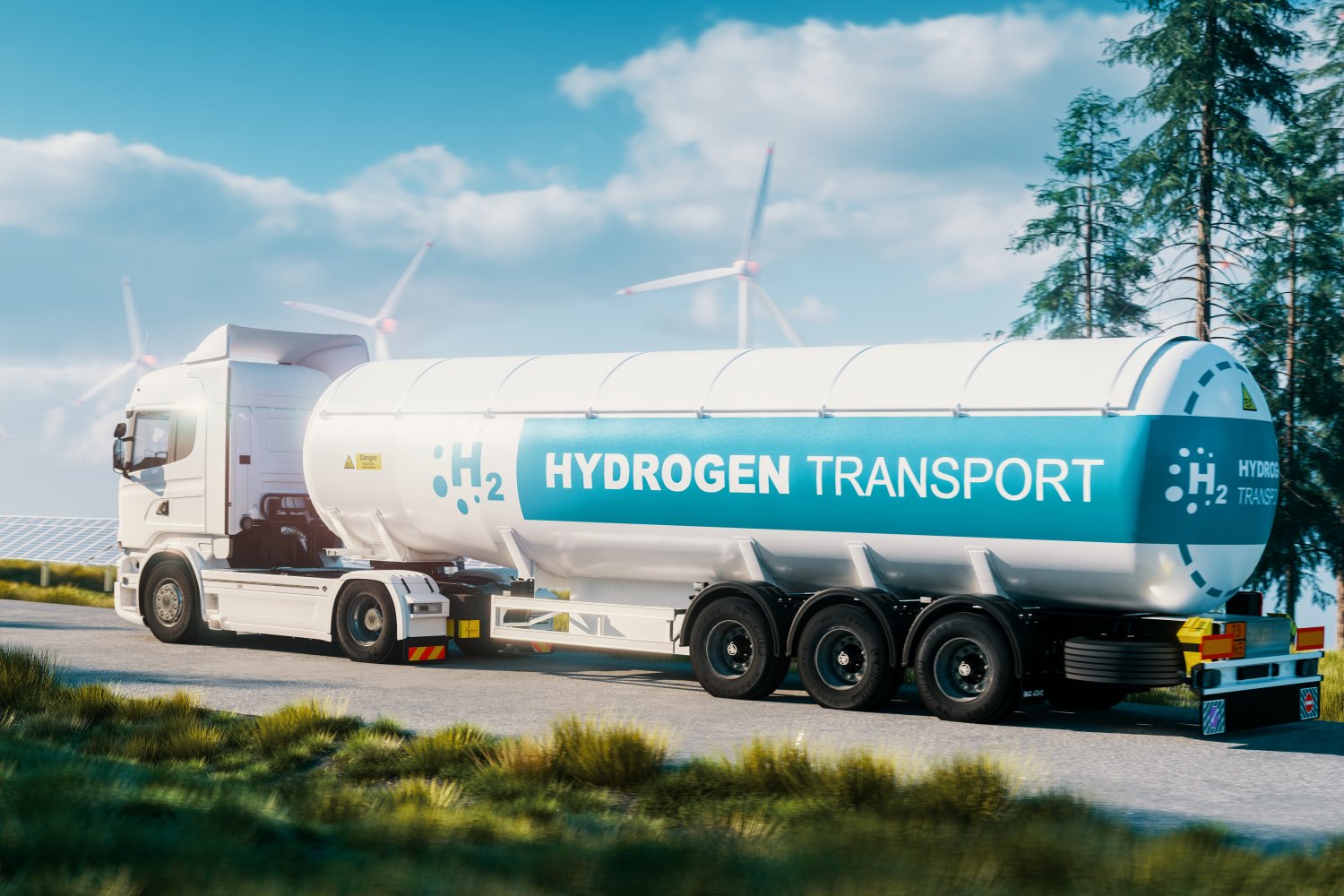
Hydrogen is frequently called “the fuel of the future” and is anticipated to aid in decarbonizing the global economy. Burning hydrogen or using it in a fuel cell generates energy without carbon emissions, only water. It can substitute fossil fuels or serve as a chemical feedstock in difficult-to-decarbonize industrial processes like steel and cement production. However, two obstacles need to be tackled for hydrogen to reach its potential. Researchers globally are focused on the first challenge: developing a method to produce pure hydrogen that is both affordable and low in carbon emissions.
Equally crucial is finding an effective way to transport and store hydrogen. A team at the MIT Energy Initiative (MITEI) is working on this less-discussed yet vital issue. Since hydrogen production sites are likely distant from consumption locations, transporting it is essential but challenging. Hydrogen’s properties pose a problem: it is the lightest gas with low energy density per volume, requiring a tightly sealed container to prevent escape. Transporting gasoline is simpler, and without effective storage and transport solutions, hydrogen’s potential as a clean fuel remains unfulfilled.
In 2024, with funding from ExxonMobil Technology and Engineering Co. through MITEI, a team of MITEI researchers and Exxon colleagues began exploring different hydrogen transportation methods. Their research concluded there is no single solution; costs and carbon emissions vary by location. Thus, the team developed a tool for users to assess and select the best option for their specific needs. This study and the tool are detailed in a new paper published in the journal Fuel.
The research was led by former MITEI postdocs Gasim Ibrahim, now an R&D engineer/scientist at Honeywell, and Guiyan Zang, who is now an associate professor at Washington State University. Additional contributors include former postdocs Bosong Lin, Jacqueline Garrido, Woojae Shin, and Haoxiang Lai. The team’s initial assumption was that hydrogen, to be a feasible fuel, must be transported over long distances, such as overseas or across continents, ideally in liquid form due to hydrogen gas’s properties.
Existing methods can convert hydrogen to a liquid, but their costs and carbon emissions vary. “There hasn’t been much focus on these questions,” says Ibrahim. While some studies exist, their findings are inconsistent due to location-based cost and emission differences and limited data on large-scale hydrogen transport. To address this, the team created an adaptive tool allowing users to perform their assessments, which can be easily updated.
The Hydrogen Carrier Analysis Tool, or HyCAT, concentrates on transportation and storage issues, not how hydrogen is produced or used post-delivery. It calculates costs and greenhouse gas emissions during transportation. HyCAT features a user-friendly interface and presents analysis results in bar charts with detailed tables.
Ibrahim explains that HyCAT’s analysis boundary is “incoming hydrogen to outgoing hydrogen,” allowing users to input local factors like production carbon intensity and cost. This affects the final values in a HyCAT analysis, explaining result variability. Based on user input, HyCAT calculates costs and greenhouse gas emissions at five supply chain steps: converting hydrogen into a liquid at the export terminal, storing the liquid, shipping it, storing it at the import terminal, and releasing it as usable gas.
The key decision in analyzing hydrogen transport costs and emissions is how to liquefy gaseous hydrogen and recover the gas at the destination. One method is to cool gaseous hydrogen until it liquefies, though this requires significant energy. Proper insulation is essential to prevent re-gasification and escape during storage and movement. Hydrogen liquefaction doesn’t involve chemical reactions.
Another method involves using a hydrogen “carrier.” Some liquid compounds can absorb hydrogen atoms and release them under certain conditions. This approach requires two chemical reactions: one to bind hydrogen to the carrier and another to release it. In their tests, researchers evaluated three potential hydrogen carriers, each with known pros and cons.
One carrier involves adding hydrogen to toluene, though the process is not well-studied and relies on toluene from the oil and gas industry, which has high carbon intensity. Additionally, toluene loss over time necessitates replenishment. Another carrier is “synthetic methane,” created by reacting hydrogen with carbon dioxide, which consumes atmospheric CO2 but results in water, causing hydrogen loss. The final option they analyzed is ammonia, offering another path for hydrogen transportation.
Original Source: news.mit.edu