





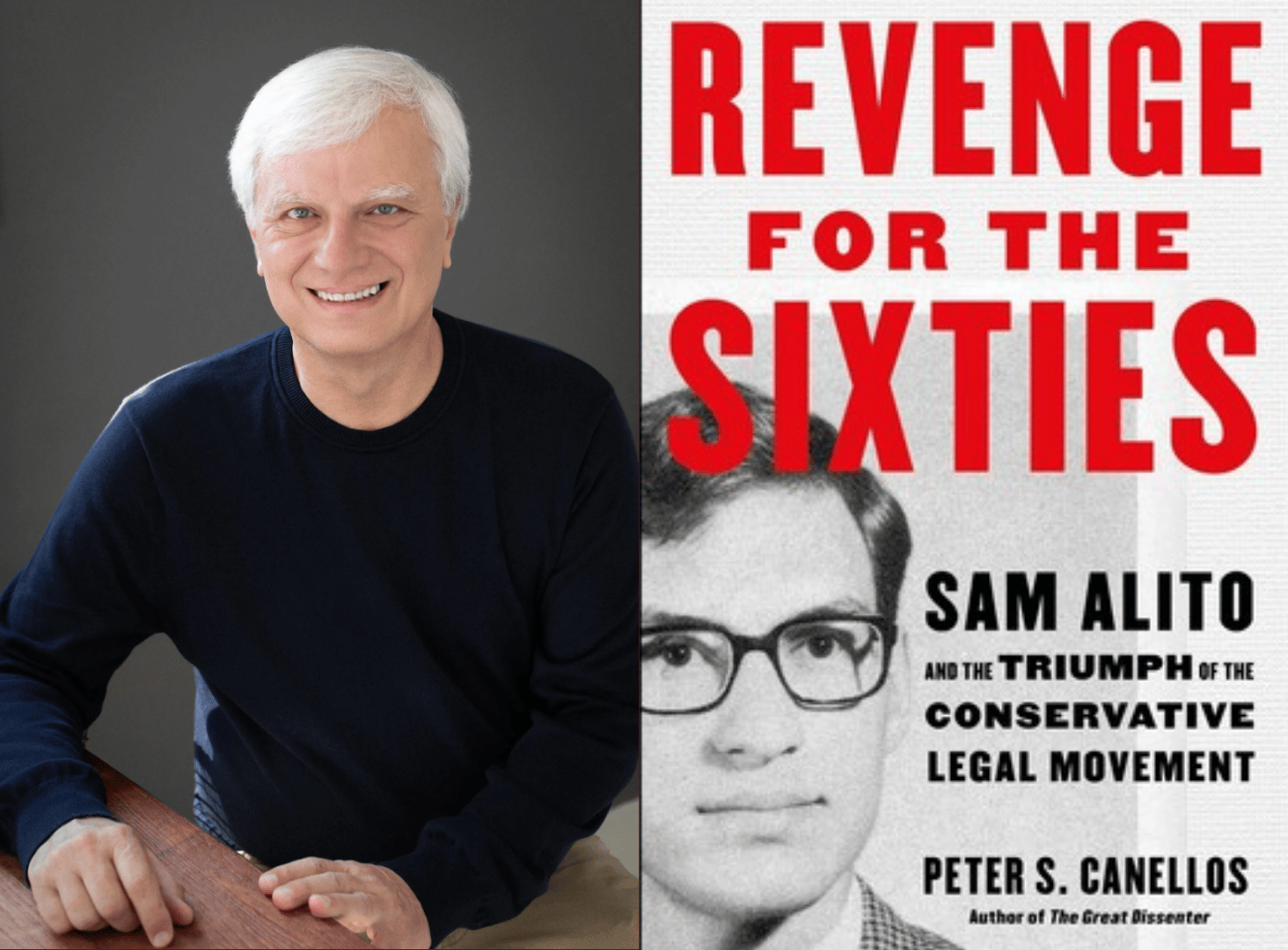
A new book by Peter S. Canellos, titled “Revenge For the Sixties: Sam Alito and the Triumph of the Conservative Legal Movement,” explores the conservative efforts to reshape the U.S. judiciary. This shift culminated in the Supreme Court’s 2022 decision in Dobbs v. Jackson Women’s Health Organization, which overturned Roe v. Wade. Justice Samuel Alito, who authored the Dobbs opinion, viewed this as the fruition of a decades-long conservative legal project.
Canellos, a former editor for Boston Globe and Politico, discusses how a progressive intellectual push at Harvard Law School in the 1970s prompted conservatives to form influential groups like the Federalist Society. These groups aimed to counter what they perceived as a liberal stronghold on the legal system. The tension within legal academia during the ’60s and ’70s was between radicals and the mainstream, which was considered New Deal-style liberalism at the time.
Harvard and Yale Law Schools were dominated by mainstream professors who upheld the Warren Court’s legacy, which they believed adapted the Constitution to address social change. However, radicals argued that the system needed more profound reforms due to its outdated precedents. This ideological clash led to the emergence of Critical Legal Studies, advocating for legal education that included diverse perspectives.
The Federalist Society was founded in 1982 as a reaction to the perceived excesses of the Warren Court and fears of radical legal changes. Conservatives worried that the courts could be used to expand welfare rights, a concept they associated with judicial overreach. Mortan Blackwell, a key organizer for the Young Republicans, advised the society to focus on placing the right individuals in judicial positions and using college campuses as recruitment grounds.
Canellos notes that the conservative legal movement had both academic and political dimensions. Critics of Roe v. Wade, like John Hart Ely, believed the Supreme Court imposed its views through open-ended constitutional interpretations. The Lewis Powell memo, issued before his Supreme Court tenure, urged conservatives to form networks to counter liberal attacks on free enterprise. While not a strict blueprint, Powell’s memo emphasized the judiciary’s role in societal change.
Powell’s memo highlighted concerns about increasing regulation and court intervention, prompting calls for conservative mobilization. Despite later voting for Roe v. Wade, Powell is seen as a foundational figure in the conservative movement. The movement embraced a pragmatic political approach, differing from Critical Legal Studies, which prioritized ideological purity.
Original Source: news.harvard.edu