



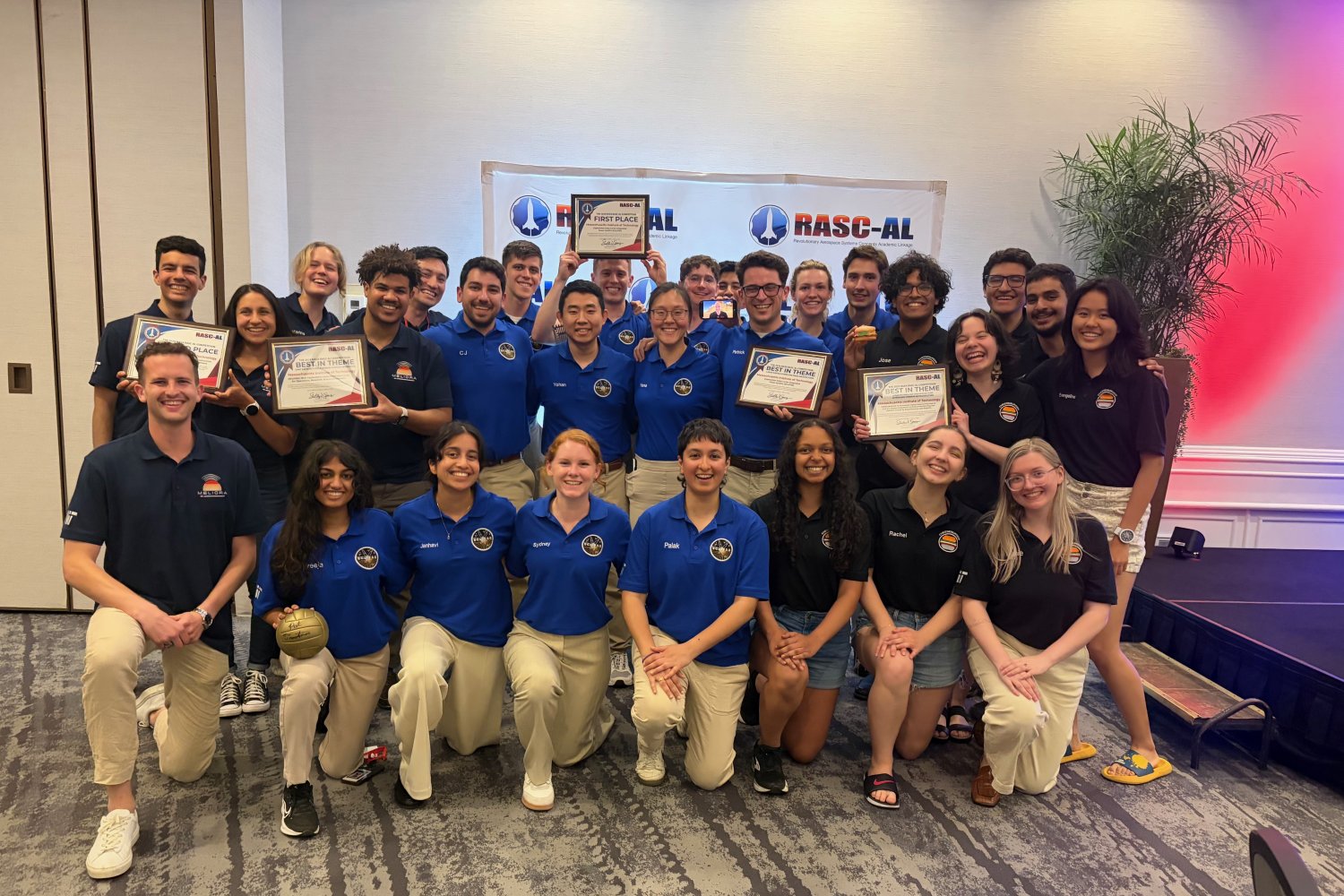
Since the fall of 2025, three teams consisting of 35 students from eight MIT departments and Wellesley College have been working on designing essential early infrastructure for a moon base. In June, their projects were honored with five awards at NASA’s 2026 Revolutionary Aerospace Systems Concepts — Academic Linkage (RASC-AL) Forum. Out of 75 submissions and 14 finalists, the MIT teams secured first and second place overall, along with three best-in-theme awards.
The Exploration-Class Lunar Integrated Power SystEm (ECLIPSE) team took first place overall and in the lunar surface power category. The MELIORA team, focused on communications and navigation, won second place overall and first in the Mars communications theme, presenting a plan to test their design on the moon. The CHEESEBURGER team, aiming to mine and process lunar regolith, won first in the lunar technology demonstrations theme.
“NASA has been outlining the necessary early infrastructure for their permanent moon base,” said George Lordos, a research scientist and lecturer at MIT who co-advised the teams. He noted that over 30 MIT students spent the academic year designing systems for power generation, positioning, navigation, and communication, as well as experimenting with essential technologies for sustainable living on the moon.
A critical challenge for NASA’s moon base is maintaining power, as life-support power failure could be catastrophic. ECLIPSE is a lunar grid design intended to ensure uptime for over 99.995 percent of the year. This involves solar masts and buried microreactors called CARROT, ensuring minimal shielding mass and proximity for crews. The design also includes laser-equipped rovers for remote power delivery.
MELIORA acts as a relay and GPS for the base. Although the competition focused on Mars, the team proposed testing their design on the moon first. Their constellation grows from three to 23 satellites, providing high-speed data links and precise positioning. The Mars design includes relay satellites that maintain communication during solar conjunction.
The CHEESEBURGER campaign, essential for lunar base sustainability, involves five robotic payloads to process lunar regolith into oxygen, metals, and bricks. These payloads, whimsically named with food themes, demonstrate a complete lunar industry supply chain, with each acronym representing a specific task.
More than 30 students from multiple MIT departments and Wellesley College participated, with several faculty members advising the teams. The teams’ designs are interconnected, with ECLIPSE powering CHEESEBURGER’s processes, and all projects aligned for potential Mars missions. The teams were guided by professors including Olivier de Weck, Kerri Cahoy, Jeffrey Hoffman, Koroush Shirvan, and George Lordos, with PhD students providing mentorship.
“The winning teams showcased how academic innovation can succeed in critical space infrastructure, setting a precedent for future missions,” said an advisor. The outcomes from these projects are expected to influence future space endeavors, potentially shaping missions to Mars.
Original Source: news.mit.edu