



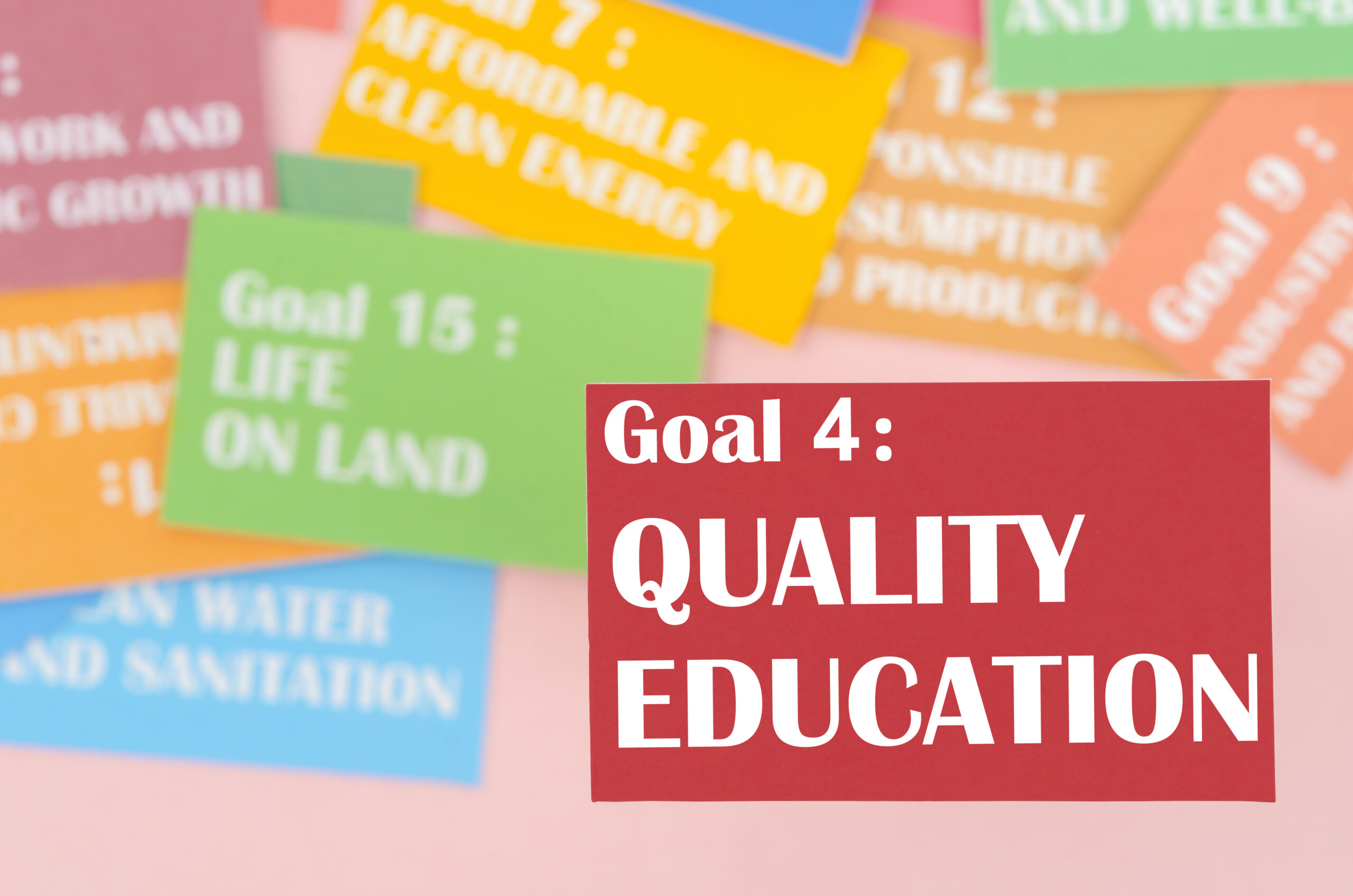
Educators in higher education are increasingly acknowledging the importance of incorporating the UN Sustainable Development Goals (SDGs) into their teaching. Many hesitate, believing it necessitates a significant curriculum overhaul or expert knowledge in sustainability. However, effective integration can be straightforward, practical, and compatible with existing teaching methods like active learning and Competency-Based Education (CBE).
In my postgraduate finance course, International Financial Statement Analysis (ACCT 510), I introduced SDGs during a structured learning session in Week 9. Students assessed companies using the Triple Lens Ratio Framework, focusing on Profit, People, and Planet. This approach can be tailored to various disciplines with minor, deliberate changes in teaching.
Below, I present three practical strategies to help faculty integrate SDGs without major course redesign, supported by educational research and examples tested in the classroom.
CBE highlights demonstrable skills such as systems thinking, ethical reasoning, and problem-solving, which align well with SDGs by connecting course content to societal issues and fostering long-term thinking. Studies indicate that students learn more effectively when their education is linked to meaningful, real-world problems. Many students are already interested in topics like climate change, inclusion, and sustainability, making SDG-related learning more engaging and relevant.
Embedding SDGs with a competency-based perspective is a natural extension of effective teaching practices.
Step 1 involves mapping 2–3 SDG-related competencies to existing course outcomes without creating new ones. For instance, in my finance course, learning outcomes such as analyzing financial statements are connected to SDG 8 (Decent Work & Economic Growth), SDG 12 (Responsible Consumption & Production), and SDG 13 (Climate Action). This constructive alignment links outcomes, activities, and assessments into a cohesive teaching model.
This mapping is applicable across various fields, such as Engineering, Humanities, Health, and Business/IT, by focusing on two or three SDGs to maintain clarity and depth.
Step 2 suggests modifying a single assignment instead of redesigning the entire course. Research shows that small changes in assessment can enhance learning outcomes. For example, the original assignment of analyzing a company’s financial performance was expanded to include sustainability performance using financial, environmental, and social ratios.
Students applied financial, environmental, and social indicators, broadening their perspective from short-term profits to include environmental and social impacts.
Step 3 involves using brief in-class activities to make SDG thinking visible. Classroom studies confirm that short, active learning activities improve understanding and performance. In Week 9, I implemented mini-activities adaptable for any faculty member.
Activities included SDG mapping, a Triple Lens Dashboard, ESG acronym matching, micro-debates, and career connection reflections, fostering systems thinking, ethical awareness, and intrinsic motivation through purpose-driven learning.
Week 9 demonstrated that integrating SDGs helps students link financial analysis to long-term risks, global challenges, and ethical decision-making, enhancing both technical skills and understanding of sustainable finance’s impact on real corporate behavior.
Adel Ahmed, a professor at Amity University Dubai, specializes in sustainability integration and competency-based curriculum design. He leads the Sustainable Finance Workgroup at the UAE Universities Climate Network and develops innovative teaching methods linking ESG metrics and SDGs to financial decision-making.
Original Source: facultyfocus.com