









In the U.S., children typically receive a polio vaccine via injection, which effectively prevents the disease but is less efficient at halting virus transmission compared to the oral version. Poliovirus commonly spreads through contaminated food or water, initially affecting the gastrointestinal (GI) tract. The oral vaccine induces a mucosal immune response in the GI tract, making it more effective at stopping viral spread. However, due to a small risk of the oral vaccine becoming infectious, many nations have discontinued its use.
MIT researchers have now developed a method to enhance the injectable polio vaccine, prompting a mucosal immune response. This modified vaccine could support polio eradication efforts while minimizing the oral vaccine’s risks. “People vaccinated with the injectable form may help the virus circulate. Mucosal immunity could reduce or eliminate that shedding,” says Ana Jaklenec from MIT’s Koch Institute for Integrative Cancer Research.
The new vaccine combines the current injectable, inactivated polio vaccine (IPV) with a nanoparticle-based adjuvant to direct immune cells to the intestinal mucosa. In rat studies, this formulation increased the necessary antibodies for mucosal immunity by 20 times compared to IPV alone. Jaklenec and Robert Langer, a professor at MIT, are senior authors of this study published in Science Advances, with MIT postdoc Behnaz Eshaghi as the lead author.
While polio is rare globally due to vaccination, it remains endemic in Pakistan and Afghanistan. Although most cases arise from unvaccinated individuals, some are linked to mutations in the live viruses from the oral vaccine. The virus can also spread via vaccinated individuals who may not show symptoms but can shed it in their stool, potentially infecting others.
To assist in eradicating polio, it is ideal to use a vaccine that avoids evolving into an infectious form, like IPV, while also inducing mucosal immunity like the oral version. MIT researchers, collaborating with Harvard Medical School, used a vitamin A derivative adjuvant shown to direct immune cells to the GI tract. However, its effectiveness requires multiple daily injections, which is impractical.
To address this, the team created a nanoparticle formulation enabling slow adjuvant release over days. They identified lipid nanoparticles (LNP) as the most effective. “The nanoparticle ensures a sustained release of the cargo over several days,” Eshaghi explains, overcoming the need for multiple injections.
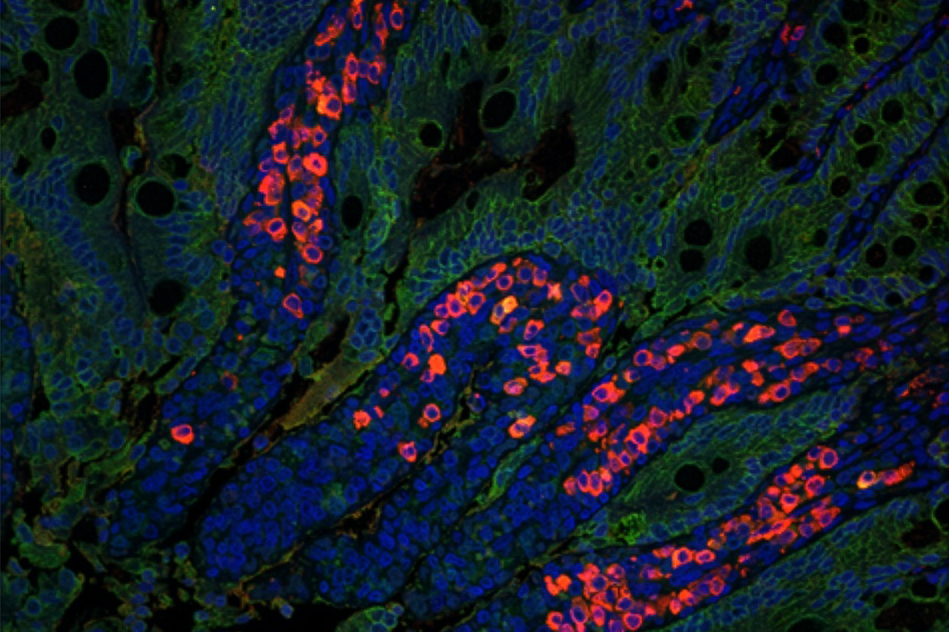
In rat experiments, the team administered an inactivated polio vaccine with Am80 in LNPs. A series of booster shots followed every four weeks. The nanoparticles reach lymph nodes, interacting with B and T cells that produce signals directing them to the GI tract. This interaction leads to the production of IgA antibodies, which protect mucosal surfaces, and IgG antibodies in the bloodstream.
“IPV is safe but doesn’t create mucosal immunity. OPV does but isn’t as safe,” Eshaghi notes. “By adding Am80 to LNPs, we combine IPV’s safety with an adjuvant that induces mucosal immunity.” Future tests in larger animal models will mix the vaccine and adjuvant.
Using Am80 or similar adjuvants might also enhance vaccines for other GI tract pathogens or diseases affecting the lungs or reproductive systems. “Potentially, it can be added to any injected vaccine,” Jaklenec says. “This work shows directing cells to the gut boosts mucosal immunity, though its effect on respiratory or vaginal mucosa remains uncertain.” The Gates Foundation funded this research.
Original Source: news.mit.edu