









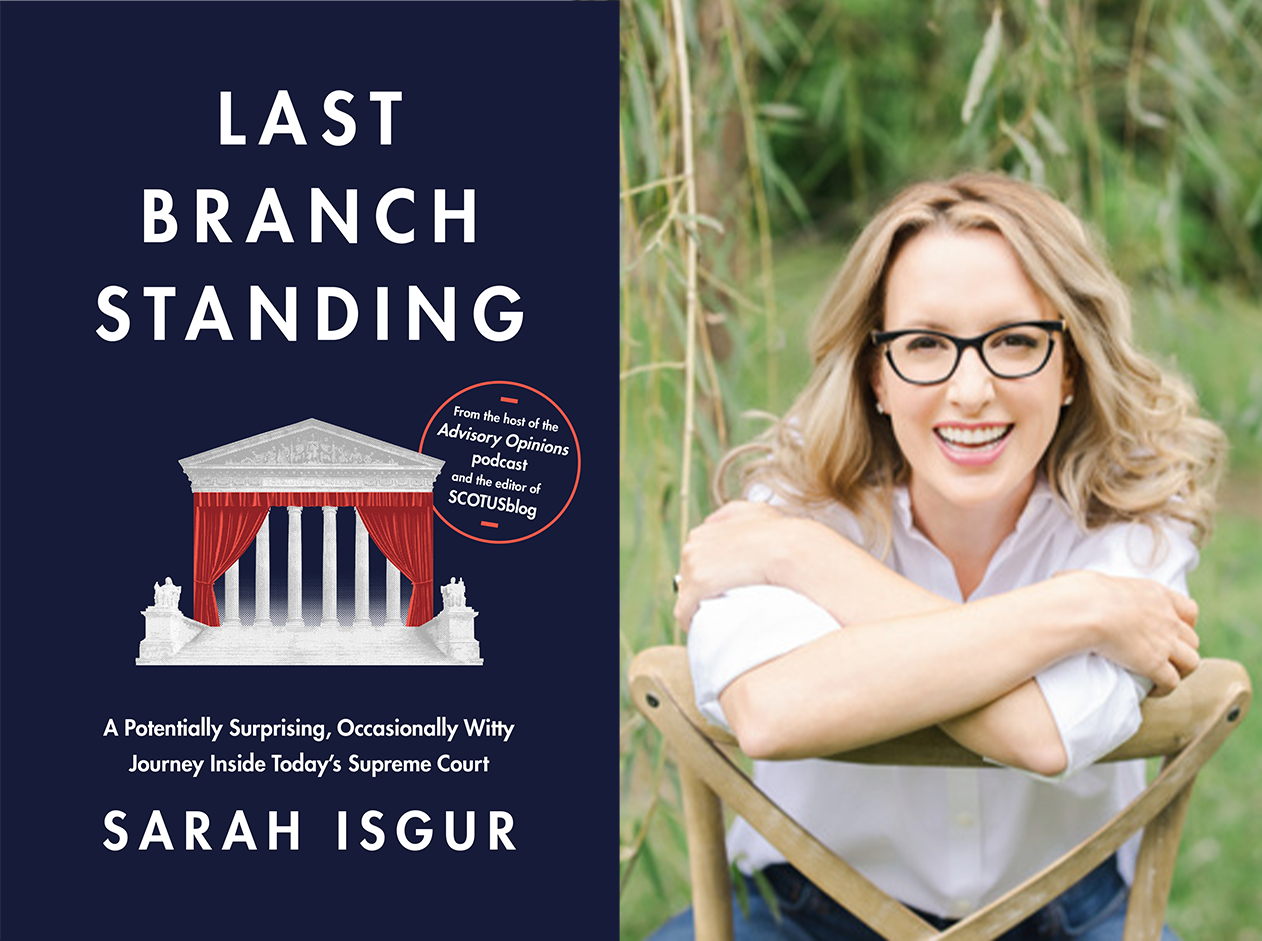
Sarah Isgur, in her book “Last Branch Standing: A Potentially Surprising, Occasionally Witty Journey Inside Today’s Supreme Court,” discusses how the increasing distrust of Supreme Court justices reflects more on societal tribalism than on any fundamental change within the judiciary itself.
Back in January 2000, 69 percent of Americans were satisfied with the country’s direction. By 2024, satisfaction dropped to 22 percent. Confidence in major institutions has dwindled, with fewer than half of Americans expressing trust in the police, medical systems, or schools. Trust in Congress has plummeted to under 10 percent.
The Supreme Court used to stand out as an exception to this trend, with approval ratings climbing from 48 to 70 percent between 2016 and 2020. However, since 2023, more Americans have viewed the Court unfavorably than favorably, marking a historic shift.
This shift is attributed by some to perceptions that President Trump unfairly claimed a judicial seat meant for President Obama, or to beliefs that certain justices act unethically or politically. Such views lead many to treat the Court with the same skepticism or hostility seen in political debates.
Tribalism, deeply rooted in human nature, has fueled both historical atrocities and advancements. It has been responsible for both the rise and fall of fascism and is credited with milestones like the moon landing and American independence from Britain.
In the realm of politics, partisans often find it easier to demonize opponents than to engage with their arguments. This dynamic permeates media narratives, which often simplify complex issues into binary conflicts of good versus evil.
The current political climate in the United States tends to define opposition through a political lens rather than traditional identifiers like religion or ethnicity, highlighting the nation’s unhealthy political state.
The dysfunction in Congress, which hasn’t completed the appropriations process on time since 1996, and an increasingly powerful executive branch, leaves the Supreme Court as the last functioning branch as originally envisioned by the Founders.
Partisans on both sides express frustration with the Court’s independent legitimacy, with some on the left calling for structural changes and some on the right advocating for disregarding its decisions.
Critics often misunderstand the distinction between judicial philosophy and partisan politics. Justices, unlike political figures, have unpredictable voting patterns, which defy simplistic ideological categorization.
In June 2025, each liberal justice authored opinions for unanimous decisions on cases traditionally championed by conservatives. These unexpected outcomes challenge the critics’ assumptions about predictable ideological divides.
The overlooked aspect is the existence of another axis — the y-axis of judicial philosophy, which focuses on the justices’ views on institutional decision-making and the consequences of their rulings.
Original Source: news.harvard.edu