





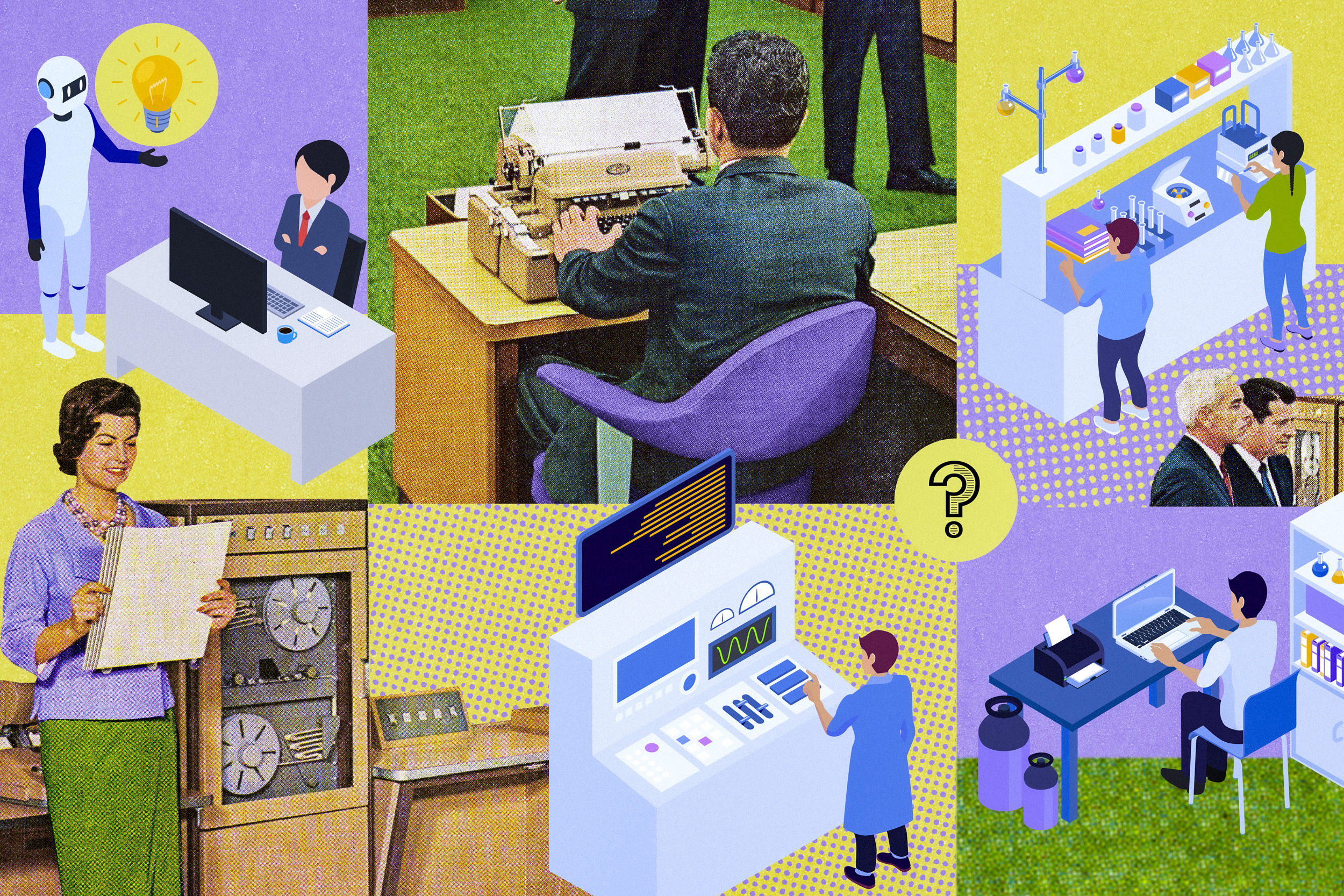
Technology influences employment by both replacing and creating jobs. While machines may take over roles like farming, they also pave the way for new professions such as aeronautical engineering. A study led by MIT’s David Autor investigates who benefits from these new jobs. It reveals that in the U.S. postwar era, young college graduates, especially those under 30 in urban areas, are the primary beneficiaries.
Autor notes that innovation-based job creation is often driven by demand. For instance, government-backed research and manufacturing expansions during World War II led to significant job creation and new expertise. “New investments lead to new specializations,” Autor explains, highlighting opportunities for specialized knowledge.
The study, titled “What Makes New Work Different from More Work?” will be published in the Annual Review of Economics. Co-authors include Caroline Chin, Anna M. Salomons, and Bryan Seegmiller. The research examines the link between new work and artificial intelligence, though Autor believes it is too early to predict AI’s impact on jobs.
Autor acknowledges concerns about AI-based automation eroding specific tasks, but emphasizes that this is not synonymous with job loss since jobs consist of multiple tasks. The study builds on previous research showing that 60% of jobs from 1940 to 2018 were in new specialties developed since 1940. The current study uses data from the U.S. Census Bureau to analyze who fills these roles.
In 1950, about 7% of workers had jobs created after 1930, compared to 18% in the 2011-2023 period for jobs introduced since 1970. New roles tend to emerge in urban areas, with young people under 30 gaining the most. College graduates are more likely to secure these positions, which initially offer higher wages until the expertise becomes widespread.
Autor points out that what was once specialized knowledge, like driving or using word-processing software, eventually becomes commonplace. The research also highlights how demand-driven innovation during World War II led to significant job creation, with 85 to 90% of new work from 1940 to 1950 being technology-driven.
The study suggests that the demand side, not just supply, plays a crucial role in innovation. Autor asserts that innovation is intentional and cumulative, requiring momentum to succeed. Regarding AI, its impact on job creation depends on implementation, particularly in sectors like health care, where tech-driven roles could emerge.
Autor mentions that AI in health care could either automate jobs or enable varied expertise levels to perform different tasks, with the latter being more beneficial socially. Government-driven demand might leverage AI to enhance productivity and create jobs, especially since over half of U.S. health care funding comes from public sources.
Original Source: news.mit.edu