





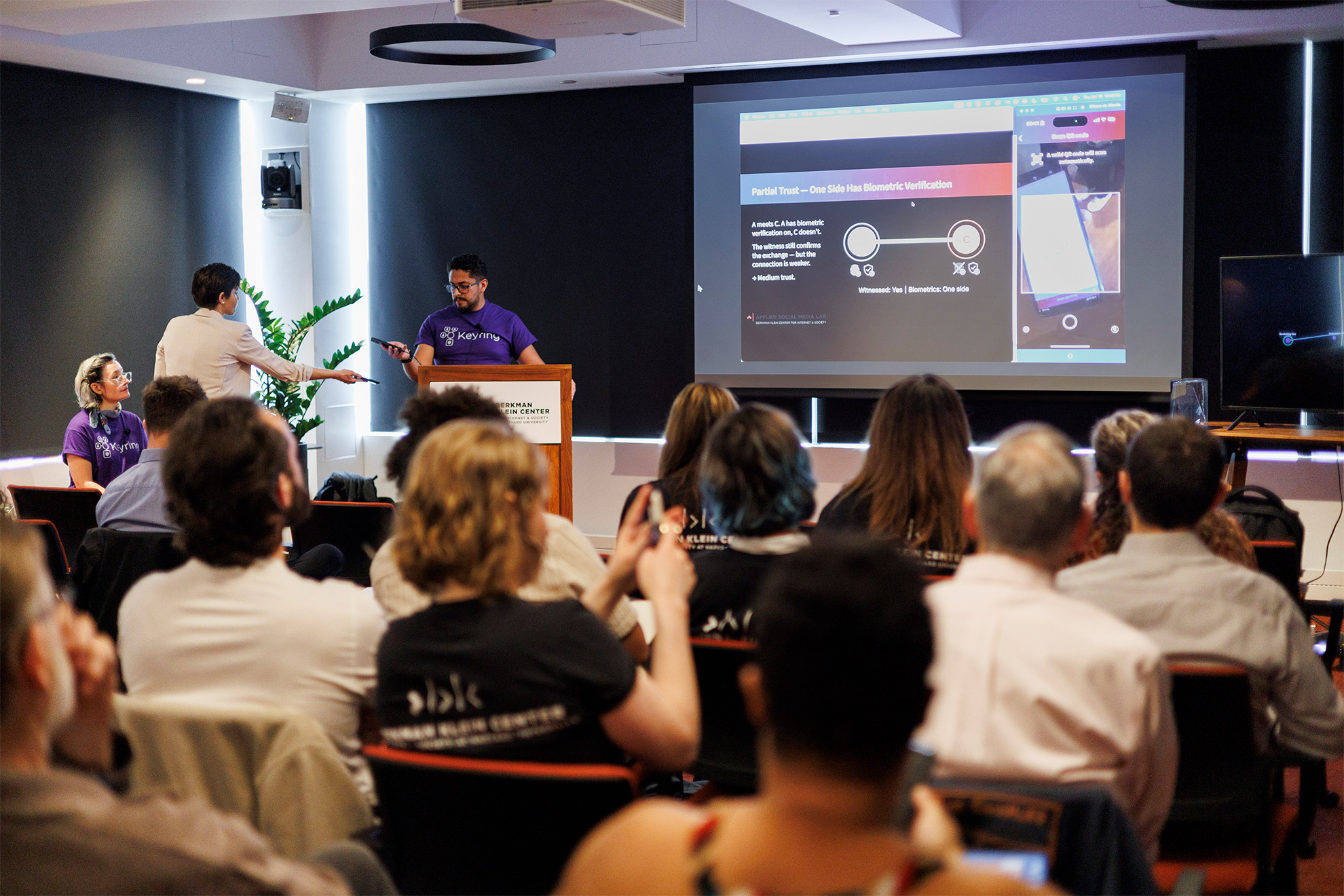
Alberto Leon, a senior engineer for Keyring wallet, showcases the app in a photo by Grace DuVal. Researchers from the Berkman Klein Center for Internet & Society have introduced a tool that allows users to verify their identity while controlling the data they share and where it is stored. This announcement comes amidst growing concerns about online privacy.
As people manage over 100 online accounts, the requirement to provide personal data like email addresses and birthdates raises privacy risks. The Applied Social Media Lab at Berkman Klein warns that the current system increases vulnerability to identity theft. During an April digital identity symposium, ASML engineers launched Keyring, an open-source tool that keeps personal information on mobile devices, sharing only essential details for identity verification.
James Mickens, ASML principal investigator and Harvard professor, emphasized the personal nature of data such as age and location, which belong to the user, not companies. Nicole Brennan, a senior UX designer, highlighted the challenge of creating a user-friendly system without existing templates.
Researchers at the symposium discussed flaws in the digital identity ecosystem, noting the excessive and insecure spread of personal data across numerous accounts. Meg Marco of ASML cited the 2022 LastPass breach, where hackers accessed millions of users’ encrypted data, as evidence of these risks.
Developed with the Linux Foundation’s Decentralized Trust Graph Working Group, Keyring allows users to share limited identity aspects, like age without birthdate, using biometric verification stored on their phones. It supports secure in-person verification without third-party involvement, building a decentralized trust graph.
Principal engineer Brendan A. Miller stated that this trust graph could address social media challenges, such as differentiating users from AI and verifying content origin. Nicole Brennan noted Keyring’s focus on user-friendliness, while Yajaira Gonzalez highlighted the challenge of getting institutional buy-in, as entities currently profit from controlling user data.
Gonzalez expressed hope for grassroots efforts advocating for more user control over data, despite potential technological solutions and misaligned incentives for institutions to join this model.
Original Source: news.harvard.edu