



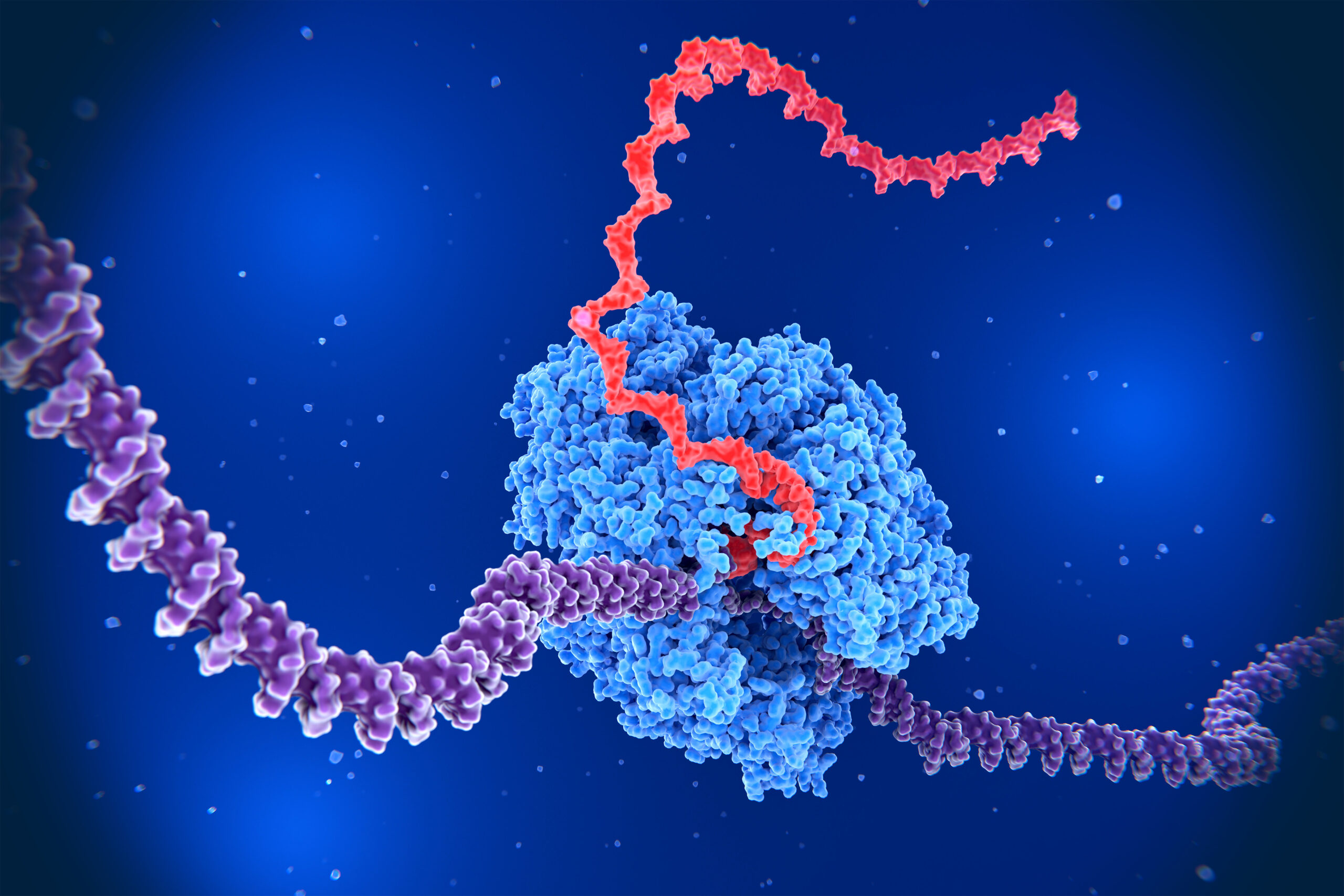
Activating a gene within a cell can trigger a ripple effect along the DNA, altering its physical structure, according to research from MIT. This study reveals that these ripples can either enhance or suppress adjacent genes. The winding or unwinding of nearby DNA, influenced by the gene sequence order, usually activates genes upstream and inhibits those downstream.
The findings suggest new ways to manage synthetic gene circuits by modifying gene order, or “gene syntax,” allowing for maximized output or alternating gene expression. “We can now coordinate gene expression in previously impossible ways,” says MIT’s Katie Galloway, emphasizing the potential for dynamic circuits. Galloway, the study’s senior author, collaborated with lead author Christopher Johnstone and others from MIT and international institutions on the paper published in Science.
DNA must be unwound when a gene is transcribed into messenger RNA, enabling RNA polymerase to access the strand. This unwinding causes structural changes: looser DNA upstream and tighter DNA downstream, affecting RNA polymerase’s binding ability. Galloway and Johnstone’s earlier computational modeling explored these effects across tandem, divergent, and convergent gene arrangements.
The modeling indicated that divergent arrangements likely lead to high expression of both genes, while tandem arrangements suppress downstream genes. The current research validated these predictions in human cells, showing amplified gene expression in divergent circuits and suppression in tandem ones, with effects visible up to 2,000 base pairs apart.
Using Region Capture Micro-C, the team observed tightly twisted downstream DNA structures, hindering RNA polymerase binding. They engineered cells with a novel STRAIGHT-IN Dual system, allowing the insertion of two genes into one DNA strand. This system is detailed in a separate Nature Biomedical Engineering paper.
The discoveries could refine synthetic gene circuit design, traditionally based on biochemical interactions, by incorporating biophysical methods to control gene expression. Galloway notes that the physical construction of gene components will now influence their biochemical interpretation.
As a practical application, the researchers created synthetic circuits with genes for a yellow fever antibody, resulting in higher antibody production using divergent syntax. Galloway’s team has also optimized synthetic gene circuits for potential gene therapy and cellular reprogramming.
This approach could develop diverse dynamic circuits like toggle switches or oscillators, essential for precise gene expression control. “Understanding the syntax will enable programming dynamic behaviors,” Galloway asserts. The research received funding from multiple organizations, including the National Institutes of Health and the National Cancer Institute.
Original Source: news.mit.edu