



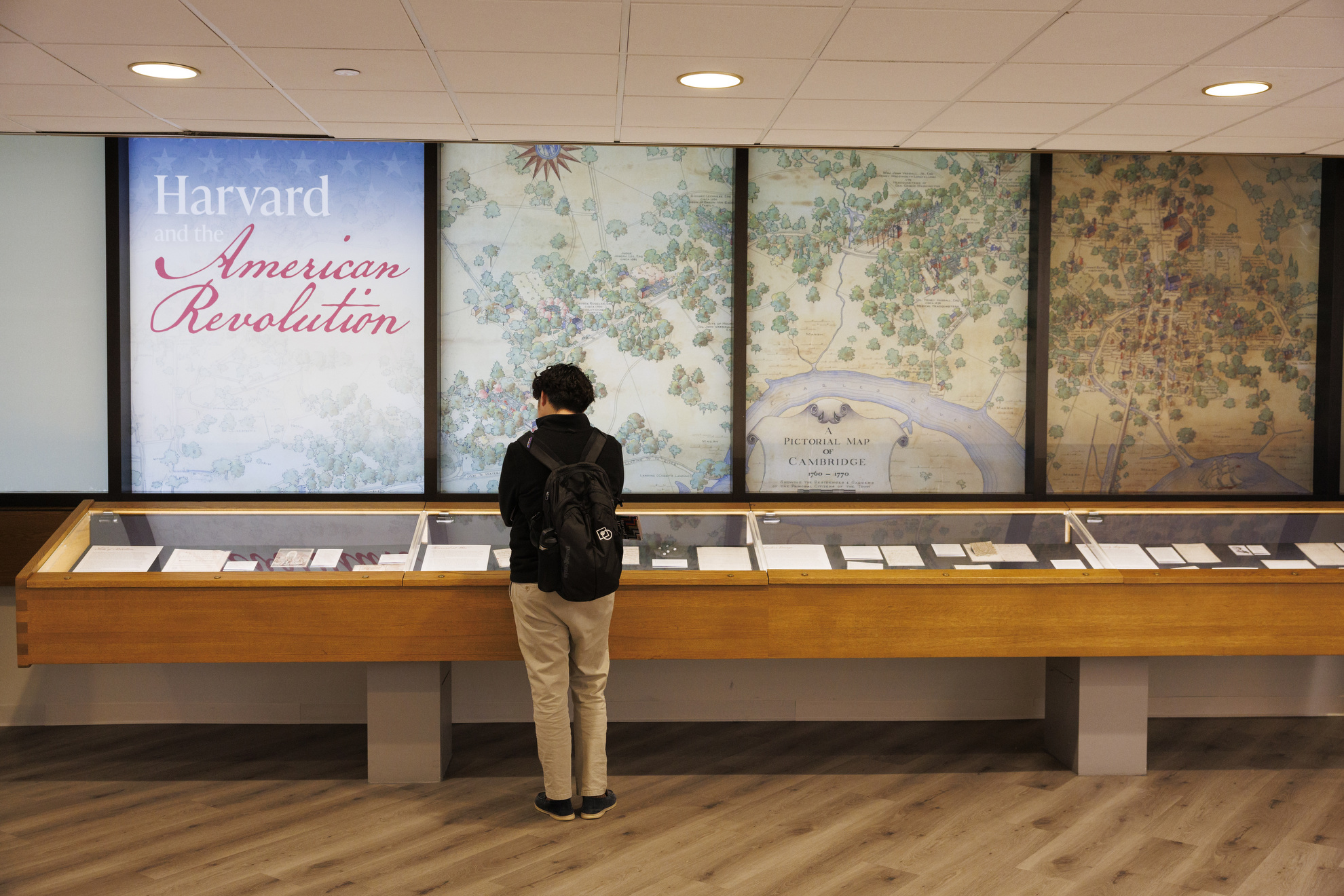
A visitor examines items featured in an exhibit at Pusey Library, highlighting Harvard University’s influence in America’s founding. The display, titled “Harvard and the American Revolution,” includes documents from the Harvard University Archives and will be available both in-person and digitally until December 18.
Minutes from a 1775 faculty meeting reveal uproar over students objecting to India tea at breakfast, reminiscent of the Boston Tea Party of 1773. An official report requests compensation for damages incurred by the Continental Army’s occupation. A 1766 annotated almanac by Professor John Winthrop and his wife celebrates the repeal of the Stamp Act.
Sarah Martin, associate University archivist for community engagement, explained that the exhibit offers insights into Harvard’s role during the revolutionary era, examining events leading up to the Revolution and its lasting impact on the campus. The exhibit begins with the years 1760-1775 when Harvard fostered revolutionary ideas, producing influential figures like Samuel Adams and John Hancock, who opposed British rule.
The display includes a 1758 broadside mentioning John Adams and his master’s thesis on civil government. Winthrop’s almanac documents the Battle of Bunker Hill and interactions with George Washington. A letter from Harvard tutor Caleb Gannett to Professor Edward Wigglesworth highlights disruptions caused by the Siege of Boston.
After the Revolution, eight Harvard alumni signed the Declaration of Independence. The exhibit also focuses on buildings used during the war, such as Massachusetts Hall and Hollis Hall, which housed over 1,500 soldiers. A walking tour linking these historical sites is being planned, according to Martin.
Martin expressed hope that the exhibit will connect visitors to the past, encouraging them to explore Harvard’s historical roots and understand the significance of the ground they walk on today.
Original Source: news.harvard.edu