






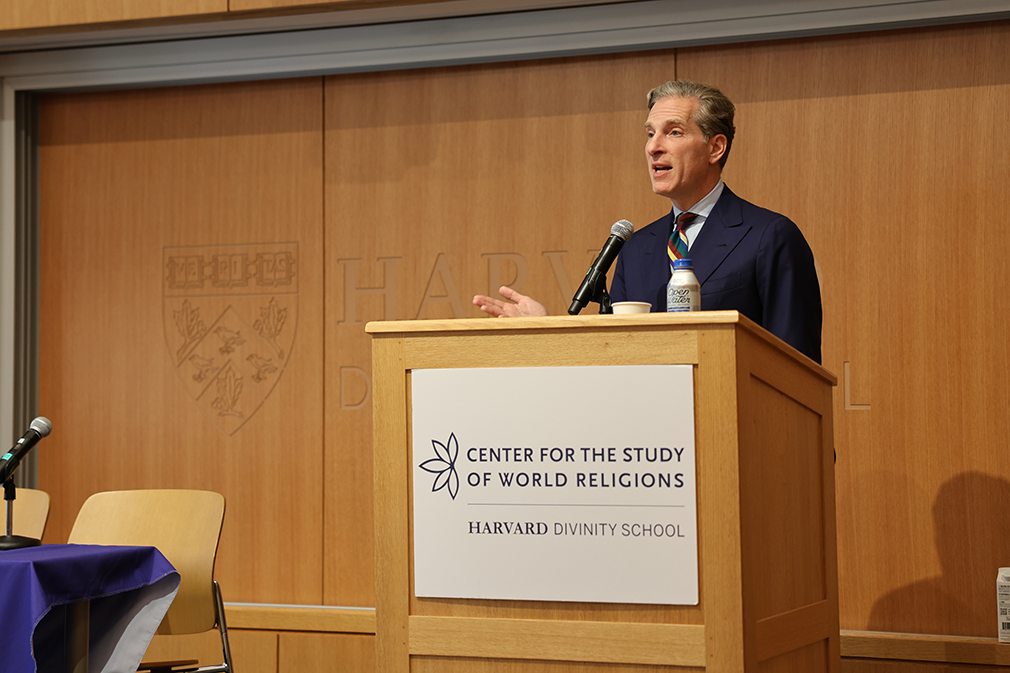
Noah Feldman, Arthur Kingsley Porter University Professor at Harvard Law School, contends that both universities and psychedelic experiences can facilitate the quest for truth. Speaking at the Psychedelic Intersections Conference at Harvard Divinity School, Feldman suggested that the fields of law, religion, and the humanities could benefit from studying psychedelics, though he did not advocate for their use.
Feldman noted the resistance to such interdisciplinary study, stating, “the diagnosis is necessary in order to prescribe the cure.” In the United States, the DEA classifies most psychedelics as Schedule I substances, restricting medical research despite initial evidence of their therapeutic benefits for mental health issues. Feldman explained that some advocates seek religious exemptions for studying and using psychedelics, but the law is cautious about granting too many exceptions.
Other proponents argue that bans on psychedelics infringe on cognitive liberty, which concerns legal scholars. Feldman highlighted the taboo surrounding the humanistic and spiritual exploration of psychedelics. He posed two key questions: “What is a university good for?” and “What is psychedelic experience good for?” To the first, he cited Harvard’s motto, Veritas, emphasizing the pursuit of truth. To the second, he proposed that psychedelic experiences could also uncover multiple truths through various experiences.
Feldman, who directs the Julis-Rabinowitz Program on Jewish and Israeli Law, referenced medieval Islamic philosophers who viewed prophecy as an imaginative exercise. He suggested that psychedelic experiences similarly engage the imagination and could be interpreted in legal, religious, and humanistic terms. Feldman also mentioned a paper by Columbia Law School scholars Jeremy Kessler and David Pozen, which framed psychedelic experiences as a form of epistemic discovery.
He argued that the law, along with religion and the humanities, is dedicated to uncovering truth. A humanistic perspective on psychedelics would consider both phenomenological reports and cultural products that explore philosophical questions about consciousness. Feldman connected these inquiries to the broader questions about consciousness posed by artificial intelligence, noting the persistent philosophical challenge of understanding consciousness and its significance.
Feldman concluded by expressing optimism about the future collaboration between law, religion, and the humanities in studying psychedelics. He believes that the pursuit of truth is essential for improving life, affirming that truth is beneficial. The Psychedelics Intersections Conference is organized by the Center for the Study of World Religions at Harvard Divinity School, the Mahindra Humanities Center, and the Petrie-Flom Center for Health Law Policy, Biotechnology, and Bioethics at Harvard Law School.
Original Source: news.harvard.edu