




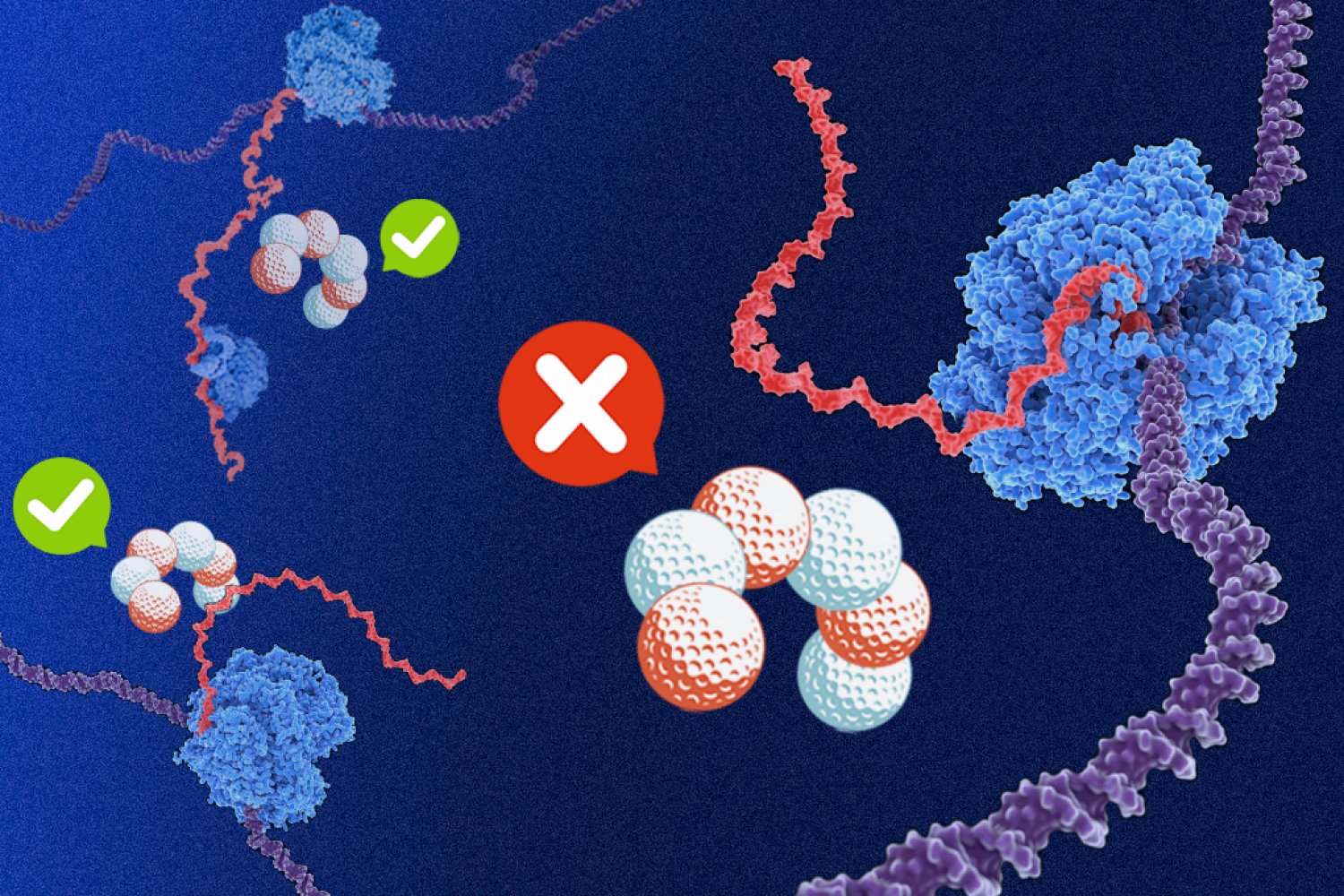
In bacterial studies, it was long assumed that RNA polymerase and ribosomes operated in close coordination, almost as if they were connected. This tandem operation, crucial for gene expression, allowed ribosomes to protect emerging gene products from the quality-control protein Rho. However, in bacteria like Bacillus subtilis, which experience runaway transcription, RNA polymerase moves ahead without ribosome protection, yet Rho primarily targets noncoding RNA. Recent research from the Department of Biology shows that Rho’s specificity is linked to the nucleotide sequence of DNA coding strands.
Julia Dierksheide, a PhD student in the Li Lab, found that sequence composition alone could protect genes in the B. subtilis genome from Rho, a surprising discovery. Rho acts as a termination factor to prevent resource wastage by terminating unneeded RNA transcripts. In bacteria, genetic information is encoded in DNA’s double helix, where purines such as guanine and adenine are paired with pyrimidines like cytosine and thymine. The study revealed that coding DNA strands in some bacteria have higher purine content, which protects mRNA from Rho termination.
Dierksheide enjoys analyzing complex datasets to find biological meaning, suggesting Rho has influenced the evolution of B. subtilis genomes. Bacteria that lost Rho over time do not show this purine bias. Rho also regulates bacterial activities like motility, biofilm formation, and sporulation, essential for survival. The purine bias may protect against foreign DNA insertion, such as during bacteriophage infections. Understanding gene expression details is crucial for understanding bacterial survival strategies, according to Dierksheide.
Though Rho’s exact specificity mechanism is unclear, the study uncovers a code in bacterial genome composition. Dierksheide hopes to study Rho’s specificity in Escherichia coli, which evolved separately from B. subtilis around two billion years ago and still pairs transcription with translation. Comparing E. coli and B. subtilis Rho could reveal how strict specificity evolved. This knowledge is vital for engineering bacteria for various applications, including therapeutic production. B. subtilis might serve as an ideal model due to its secretion pathways, facilitating large-scale protein production.
Gene-Wei Li, associate professor and lead author, notes that their findings highlight a key criterion for sequence design in expression engineering. He states that the genome holds many cryptic messages, like the purine bias, and researchers are just beginning to decode them.
Original Source: news.mit.edu