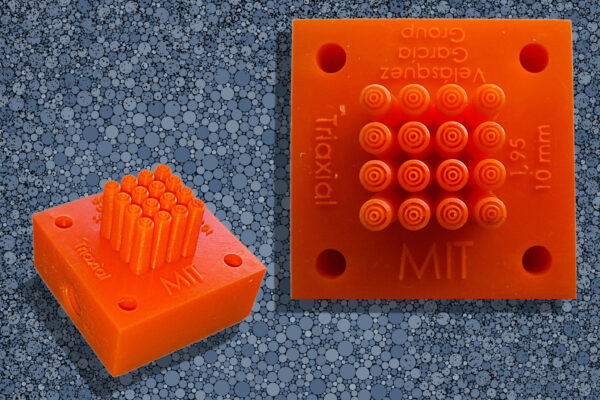






MIT Researchers Develop 3D-Printed Devices to Enhance Drug-Delivery Microparticle Production

MIT scientists have devised a low-cost method for crafting specialized electronic nozzles known as triaxial electrospray emitters. These devices could efficiently produce time-release drug-delivery particles or self-healing materials on a large scale. Triaxial electrospray emitters use electricity to precisely dispense three liquids from tiny nozzles, creating a continuous stream with three separate fluid layers. The…

Read More

Harvard Study Explores How Venom Can Kill and Lead to Medical Breakthroughs

Mandë Holford, a scientist specializing in marine mollusks, investigates how their venom operates with precise effectiveness. She recalls being astonished as a graduate student by a video showing a snail using venom to capture a fish. This experience inspired her to merge chemistry and biology to study venom’s potential medicinal uses. Holford, now a professor…

Read More

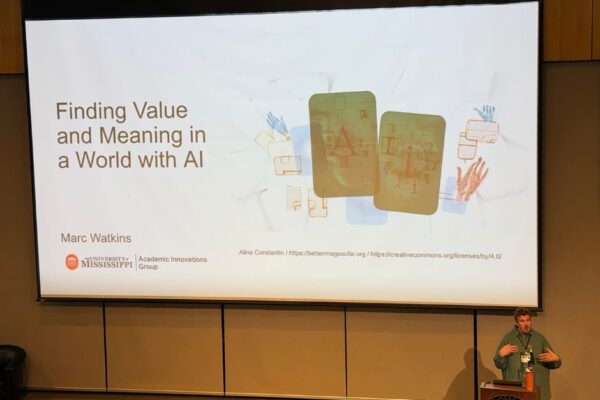
Marc Watkins Explores Value and Meaning in AI-Driven World on Teaching in Higher Ed

Marc Watkins recently delivered a keynote at the (Re)Imagining Liberal Arts & STEM Education in the Age of GenAI Conference at Harvey Mudd, discussing the significance of finding value and meaning in a world increasingly influenced by AI. His presentation built on previous insights shared on the Teaching in Higher Ed podcast, providing deeper exploration…

Read More

MIT researchers enhance high-power electronics performance

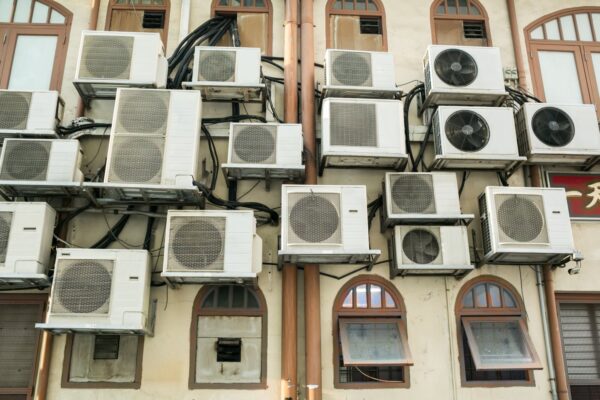
The silicon used in most computer chips faces limitations in power handling, affecting the speed and energy efficiency of wireless systems. A potential solution lies in using gallium nitride transistors, which can meet the speed and energy demands of applications like 6G and satellite communications. However, these transistors generate significant heat, and when densely packed…

Read More

Storytelling Techniques Enhance STEM Education: Faculty Focus Highlights Five Strategies

Teaching in the STEM field often involves a passion for the subject that educators hope to share with their students. However, it can be disheartening when this enthusiasm is met with disinterest. Student motivation is crucial for achieving learning objectives, yet it is often lacking because STEM instructors may not place their lessons within the…

Read More

AI Enhances Faculty Workflows for Sustainable Academic Practices

Today’s faculty workload includes both apparent and hidden elements. Visible tasks encompass courses, syllabi, scheduled advising, and committee meetings. Hidden tasks involve facilitating discussions, managing student emails, providing late-night feedback, and dealing with cognitive fragmentation due to digital availability. In online teaching, work quietly and continuously expands, leading to blurred boundaries. This often results in…

Read More