




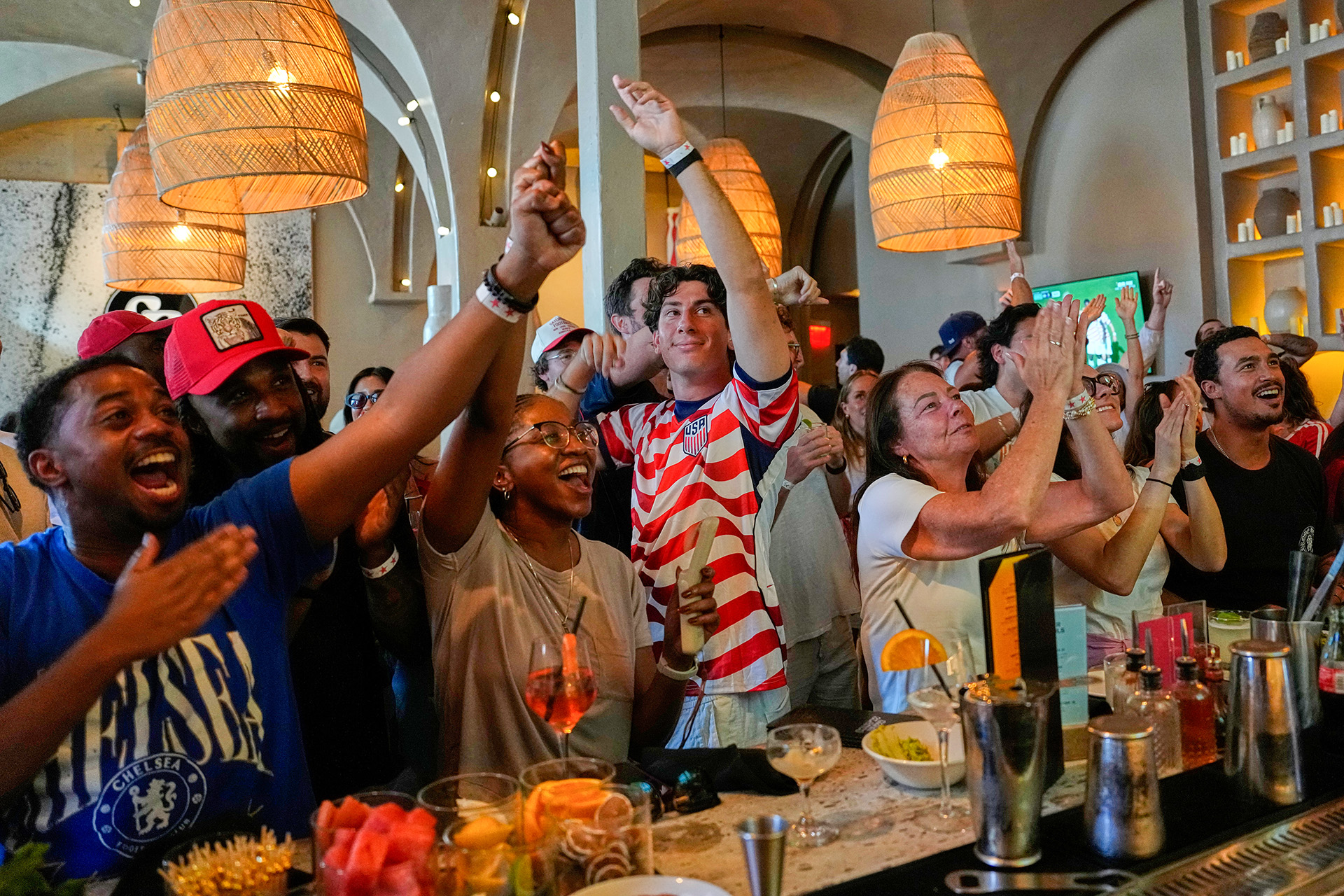
In Los Angeles, soccer enthusiasts gathered at a bar on July 1 to watch the World Cup match between the U.S. and Bosnia. The Harvard Kennedy School is exploring how sports fandom might help address social divisions. Two researchers, Professor Todd Rogers and doctoral student Audrey Feldman, are leading a project to study this phenomenon, with initial findings expected soon.
In the U.S., about 75% of people follow a professional sports team, with many seeing it as a key part of their identity. Globally, 51% are soccer fans, though only 27% of Americans share this passion. Despite its popularity, sports receive minimal academic focus, as demonstrated by the scarcity of related articles in top social science journals.
Rogers and Feldman’s Fandom and Social Connection Initiative, funded by FOX Sports, seeks to change this by examining fandom as a form of social infrastructure. Feldman was inspired to join HKS to explore how behavioral science could enhance lives, eventually realizing a shared interest in sports with Rogers.
The initiative aims to reframe sports fandom, which is often underestimated. A survey found that non-fans typically rated sports fans low on the “ascent of man” scale. Rogers argues fandom is a vital social infrastructure, bridging divides across race, economy, and politics. Unlike Congress, where states often have one-party delegations, sports fanbases are more politically diverse.
Rogers and Feldman used game theory to study how shared team allegiance affects interactions with political opponents. They found that shared fandom often outweighed other commonalities like race or education in fostering connection. Sports fandom, like religion, is an elective and active identity marker.
Rogers highlights the social benefits of sports fandom, referencing the book “Fans Have More Friends” and insights from Daniel Wann, a psychology professor. Shared fandom acts like a common photo album, where fans share experiences and synchronize emotionally during games.
Rogers and Feldman are still exploring why sports are effective in social interactions, noting that sports are engaging and generally safer topics than politics. Feldman shared how even rival fans can find mutual respect through shared sports interests.
Rogers and Feldman are already applying their research in real-world settings. They co-authored a TIME op-ed advocating for embracing NFL fandom as a remedy for loneliness. Their work in this area continues to develop.
Original Source: news.harvard.edu