




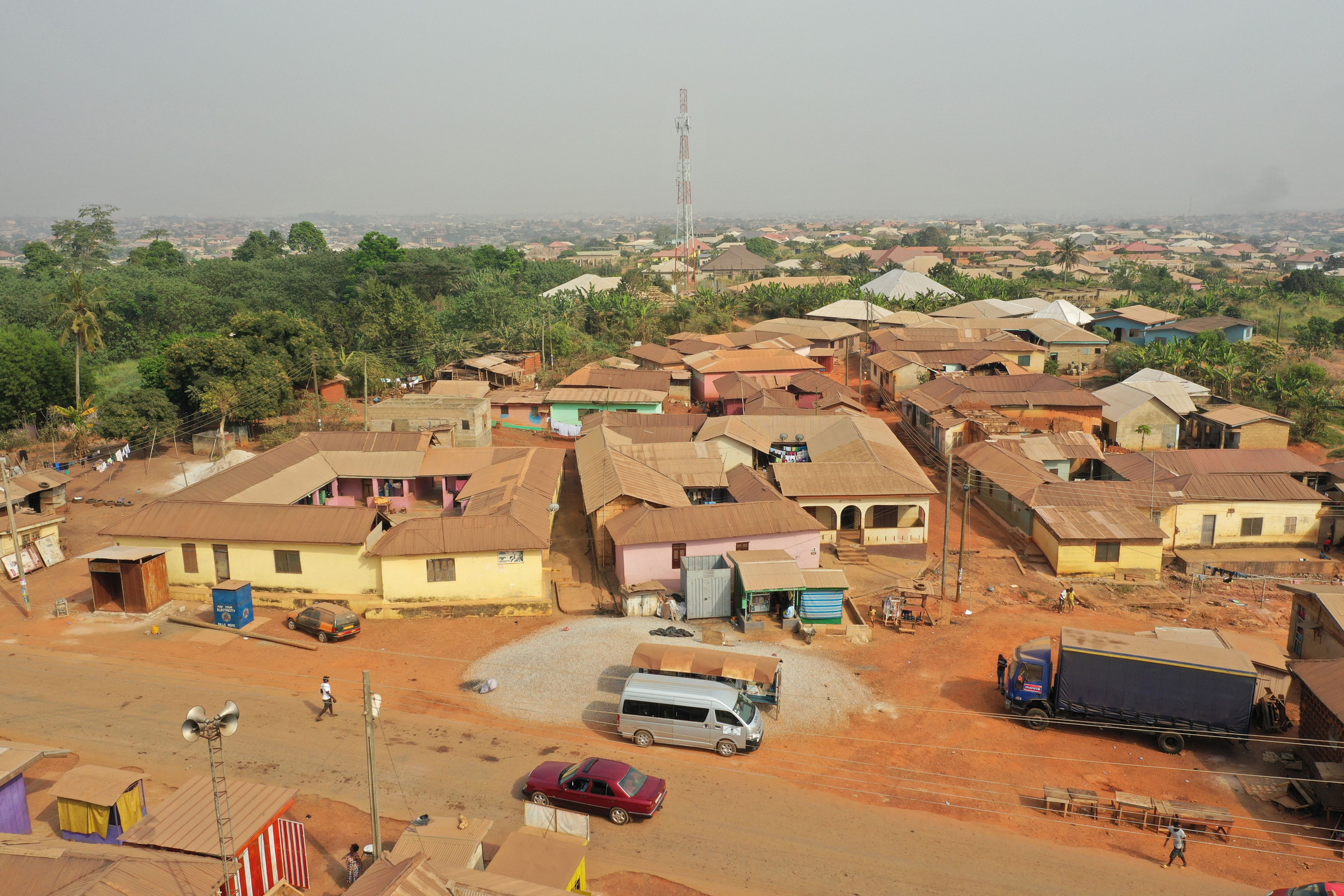
Could the design of your home impact your political engagement? A study by MIT researchers suggests it can, especially in Accra, Ghana. In this city, many residents live in “compound houses,” which feature shared spaces like kitchens and bathrooms while maintaining private bedrooms. The study reveals that those in compound houses are more active politically, participating in voting, rallies, and campaigns more than those living in more isolated housing types.
“Our findings show significant differences in political actions when comparing compound house residents to those in single-family homes or self-contained apartments,” explains Noah Nathan, an MIT political scientist and co-author of the study. “People in compound houses tend to vote more and engage in other political activities, such as attending rallies and contacting politicians.” Although other factors could influence these behaviors, the study suggests architecture plays a crucial role.
The researchers examined floor plans of compound houses and found that the location of residents within these structures affects their political information and social ties—key predictors of political activity. “We demonstrate that social interactions and the exchange of political information vary based on people’s specific locations within their homes,” Nathan notes, supporting the idea that architectural design influences political participation.
The open-access paper, “Vernacular Architecture and Grassroots Urban Politics: How Politics Is Embedded in Residential Design,” appears in the American Political Science Review. Nathan collaborated with Paige Bollen, an assistant professor at Ohio State University. Compound houses, common in Ghana and parts of West Africa, typically house lower-income individuals using affordable local materials. The study highlights how the design of living spaces can shape political engagement.
“Cities should be evaluated by their built forms and designs,” says Nathan. “Space affects politics because it dictates how people interact. It’s not just about proximity but how designs encourage interaction and information exchange, influencing political actions and cooperation.” The study used various data sources, including administrative and electoral records, surveys, and mapping, to assess the political impact of compound houses.
Findings show that polling stations in areas with more compound houses have higher electoral turnout. The original survey of 1,272 residents across 391 compound houses in Accra revealed that living in more socially exposed areas within these homes increases social network ties and political information access. Changes in residents’ centrality within compound houses had a greater impact on political engagement than other factors like employment or socioeconomic status.
“We demonstrate that even within compound houses, people with more neighbor exposure have different social ties and information than those in more private areas,” Nathan states. Although these architectural effects are not fixed and depend on the political environment, the study suggests that in Ghana’s democratic context, this leads to increased political participation.
“In an authoritarian regime, living in an architecture that exposes you may have the opposite effect,” Nathan says. However, in Ghana’s democracy, where political participation costs are lower, the effects lean toward greater involvement. Nathan and Bollen’s research interests overlap in exploring urban forms and politics in Ghana and other African cities. Nathan is developing a book on the subject, while Bollen’s PhD research focused on public spaces in Ghana and South Africa.
Although the effects of building design on behavior have been studied in fields like sociology and management, few political scientists have tackled it empirically. Nathan believes such studies might yield unexpected results. “Cities are often seen as anonymizing,” he says. “But in urban Ghana, people know each other well, partly because of non-anonymizing architectures.”
Original Source: news.mit.edu