





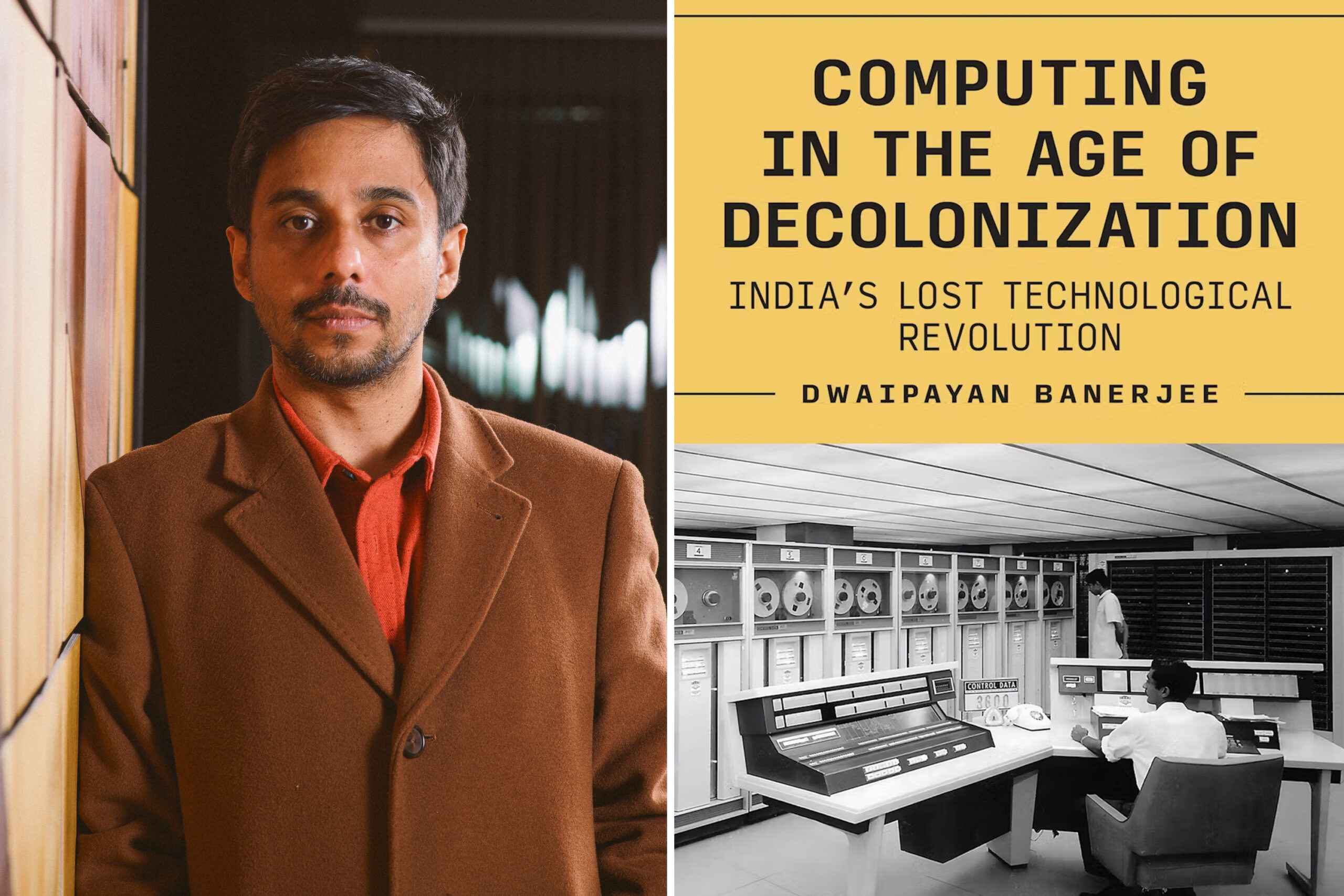
In 1960, engineers at the Tata Institute of Fundamental Research (TIFR) in India developed the nation’s first computer, named the “Automatic Calculator.” Equipped with ferrite-core memory similar to IBM’s advanced machines, this device, known as TIFRAC, was a significant achievement despite limited resources. “The engineers hadn’t seen an operational computer before,” says Dwai Banerjee, an associate professor and author of a book on India’s computing history. “It was remarkable that they built such a cutting-edge machine with so few resources.”
However, TIFRAC was never replicated or mass-produced. The creators envisioned India as a self-reliant computing powerhouse, producing its own technology. Instead, TIFRAC became a technological dead end, and the country shifted toward exporting talent rather than hardware. Banerjee’s new book, “Computing in the Age of Decolonization: India’s Lost Technological Revolution,” examines the quest for technological independence and the global influences that reshaped this vision. Banerjee notes that India became a leader in outsourcing and offshoring services, missing out on lucrative advancements in research and manufacturing.
“The book explores how the current technological landscape developed and the uneven distribution of computing power worldwide,” Banerjee says. “Understanding the mid-20th century historical conditions is key to understanding today’s computing world.” After gaining independence in 1947, Indian leaders believed technology-driven industrialization was crucial to overcoming colonial underdevelopment. Visionaries like nuclear physicist Homi J. Bhabha, who helped found TIFR, were instrumental in these efforts.
Initially, India sought collaboration with the U.S. and international bodies for technological progress, but Cold War politics hindered this. Computing was linked to defense, and India’s political stance didn’t always align with U.S. interests, limiting knowledge exchange. “It’s an external constraint story,” Banerjee says. “The U.S. guarded blueprints and working papers for a long time.” Despite these challenges, TIFR completed the TIFRAC, gaining national attention. “It’s astounding,” Banerjee emphasizes. “Running a computer in the U.S. was more expensive than operating the entire TIFR in India.”
As Banerjee details, TIFRAC was designed to expand, matching IBM’s speed and planning to import larger memory stacks. But when IBM introduced FORTRAN in 1957, it demanded more memory than TIFRAC had. The 1958 foreign exchange crisis further complicated matters, as loans were contingent on India opening its markets to Western capital, making imports unaffordable and rendering TIFRAC obsolete. “It’s about geopolitics of knowledge, not mistakes by Indian engineers,” Banerjee explains. “They weren’t aware IBM would transform software.”
Despite IBM’s advancements stalling TIFRAC, Indian advocates for computer manufacturing persisted. They sought partnerships to advance their tech industry. In 1978, India banned IBM due to its business practices, potentially paving the way for domestic computer manufacturing. However, private-sector services gained traction, overshadowing government-involved manufacturing. “For a moment, the vision seemed achievable,” Banerjee observes. “But by the late 1970s and 1980s, a new focus on quick profits through software services emerged.”
This shift toward private-sector services defined India’s tech industry trajectory. Instead of domestic manufacturing, India joined the global tech-services sector, with many engineers moving to Silicon Valley. Global tech firms promoted the idea of independent industries, diverging from the vision of India’s leaders and technologists. “It’s surprising because India uniquely expelled IBM,” Banerjee says. “This vision faded as government ambitions changed.”
Banerjee’s book aims to illuminate India’s early computing history and challenge the notion that the country naturally gravitated toward services and talent exportation. It also critiques the focus on individual innovators, emphasizing the role of global capital and geopolitics in technological development. “We often overemphasize stories of individual genius, but without institutional support, it means little,” Banerjee states.
Scholars have praised Banerjee’s book. Matthew L. Jones from Princeton University calls it a “scrupulous account of India’s failed efforts to achieve technological sovereignty post-independence,” adding it enriches our understanding of global computing and national trajectories during the Cold War. Banerjee hopes his book appeals to a broad audience and highlights the challenges of economic growth in various regions. “India represents many mid-20th century countries newly independent and seeking to catch up with industrialized nations,” Banerjee says. “Yet, power structures tied to technological advancement persisted.”
Original Source: news.mit.edu