





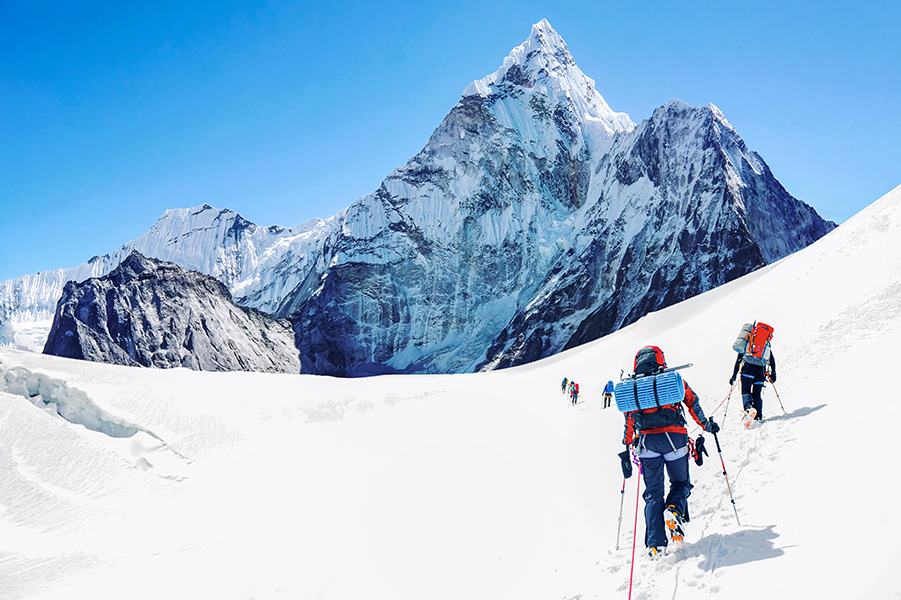
Climbing Mount Everest is becoming safer, according to a recent study, although the mountain remains perilous with nearly one in 100 climbers not returning. Paul Firth, a seasoned climber and associate professor at Harvard Medical School and Massachusetts General Hospital, spearheaded the research to enhance the safety of climbers by studying high-altitude fatalities since George Mallory’s 1921 attempt.
Firth’s initial study in 2009 revealed that cerebral edema was likely a significant factor in many high-altitude deaths, as it occurs in low-oxygen environments like Everest’s “death zone” above 26,200 feet. This condition causes fluid to leak into the brain, leading to symptoms such as headaches, fatigue, coordination issues, and impaired judgment, which are particularly hazardous in such extreme conditions.
The latest research, published in The Journal of Physiology in late April, indicates that the death rate on Everest has halved from 1.4 percent between 1921 and 2006 to 0.7 percent from 2007 to 2024. Firth attributes this decline to improved safety measures, including the use of fixed ropes on standard routes, better weather forecasting, enhanced communication systems, and advances in logistics, clothing, nutrition, hydration, and oxygen delivery systems.
“The data show fewer climbers are involved in falls or left isolated,” Firth explained. The study speculates that improved teamwork and the use of ropes have contributed significantly to this reduction, although other unmeasured factors may play a role.
Everest climbing has always posed significant risks. While Tenzing Norgay and Edmund Hillary were the first to successfully reach the summit in 1953, earlier attempts resulted in fatalities, including in 1921 and 1922. As of 2024, 426 climbers have died on Everest, with over half of these deaths occurring in the “death zone.” Improved weather forecasting has curbed fatalities directly linked to adverse weather.
The research also highlights the growing number of summits, with 1,921 recorded by 2006 and 9,823 since then. Despite a lower mortality rate, climbers continue to die almost annually. In 2004, seven climbers perished, including during an expedition led by Firth. His awareness of high-altitude physiology helped him identify equipment malfunctions and avert disaster for his team.
The study points out differences between climbers’ and sherpas’ deaths. While three-quarters of climber fatalities occur high on the mountain, sherpas typically die lower down while preparing routes. Firth, though disappointed not to have reached the summit, believes turning back was wise and feels his research offers a greater sense of accomplishment.
“This study gave me more satisfaction than climbing Everest,” Firth expressed. “It’s my personal Everest in research.”
Original Source: news.harvard.edu