








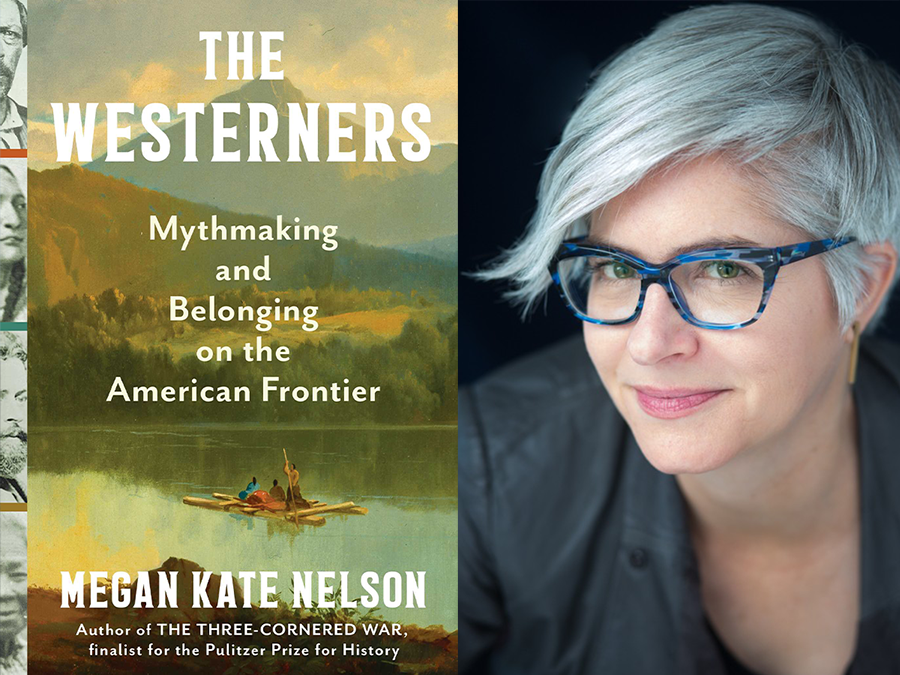
Megan Kate Nelson, a historian from Littleton, Colorado, has been often surprised by the misconceptions about the American West. Growing up in a family that traveled extensively, she had visited 45 states by the time she began college in 1990. Her classmates, unfamiliar with her suburban upbringing, would sometimes ask if she rode a horse to school. “I grew up in the suburbs!” she would reply, dispelling the myth. Over the years, Nelson realized that the traditional narrative of westward expansion, which credits white men with bringing American values to the frontier, was misleading.
In her latest book, “The Westerners: Mythmaking and Belonging on the American Frontier,” Nelson, a Pulitzer Prize-finalist, explores the stories of diverse individuals who moved west of the Mississippi as the U.S. expanded in the 19th century. The book features seven protagonists whose journeys intersect across American territories and beyond. Among them are well-known figures like Sacagawea, who assisted Lewis and Clark, and lesser-known ones like Maria Gertrudis Barceló, a saloon owner in Santa Fe.
Nelson highlights that Sacagawea’s life extended beyond her famous expedition, noting her extensive travels in the West prior to meeting Lewis and Clark. She later entrusted her son, Jean Baptiste Charbonneau, to William Clark, hoping to build ties between the Hidatsa people and Americans. Charbonneau himself became a key figure, meeting individuals like Jim Beckwourth, a fur trader and scout who connects many characters in the book.
Beckwourth, dubbed the “Forrest Gump of the 19th century” by Nelson, had a varied life, migrating west, joining the Rocky Mountain Fur Co., living with the Crow Nation, participating in the Gold Rush, and scouting for the Army. Nelson points out that despite the West’s vastness, its small population in the 19th century meant people frequently encountered each other.
Characters in Nelson’s book are constantly moving or affected by travelers. Barceló, for example, became a powerful figure in Santa Fe, influenced by traders, soldiers from the Mexican-American War, and settlers after the U.S. took control. The book challenges the gunslinger narrative of westward expansion, presenting a more racially and culturally diverse history.
Polly Bemis, a Chinese immigrant trafficked to San Francisco and later to Idaho, is another protagonist. Her presence in a predominantly Chinese town in Idaho surprises visitors, highlighting how Chinese individuals are often left out of frontier stories. Nelson’s work offers insights into how the American West developed into its current complex cultural and political landscape.
Original Source: news.harvard.edu