

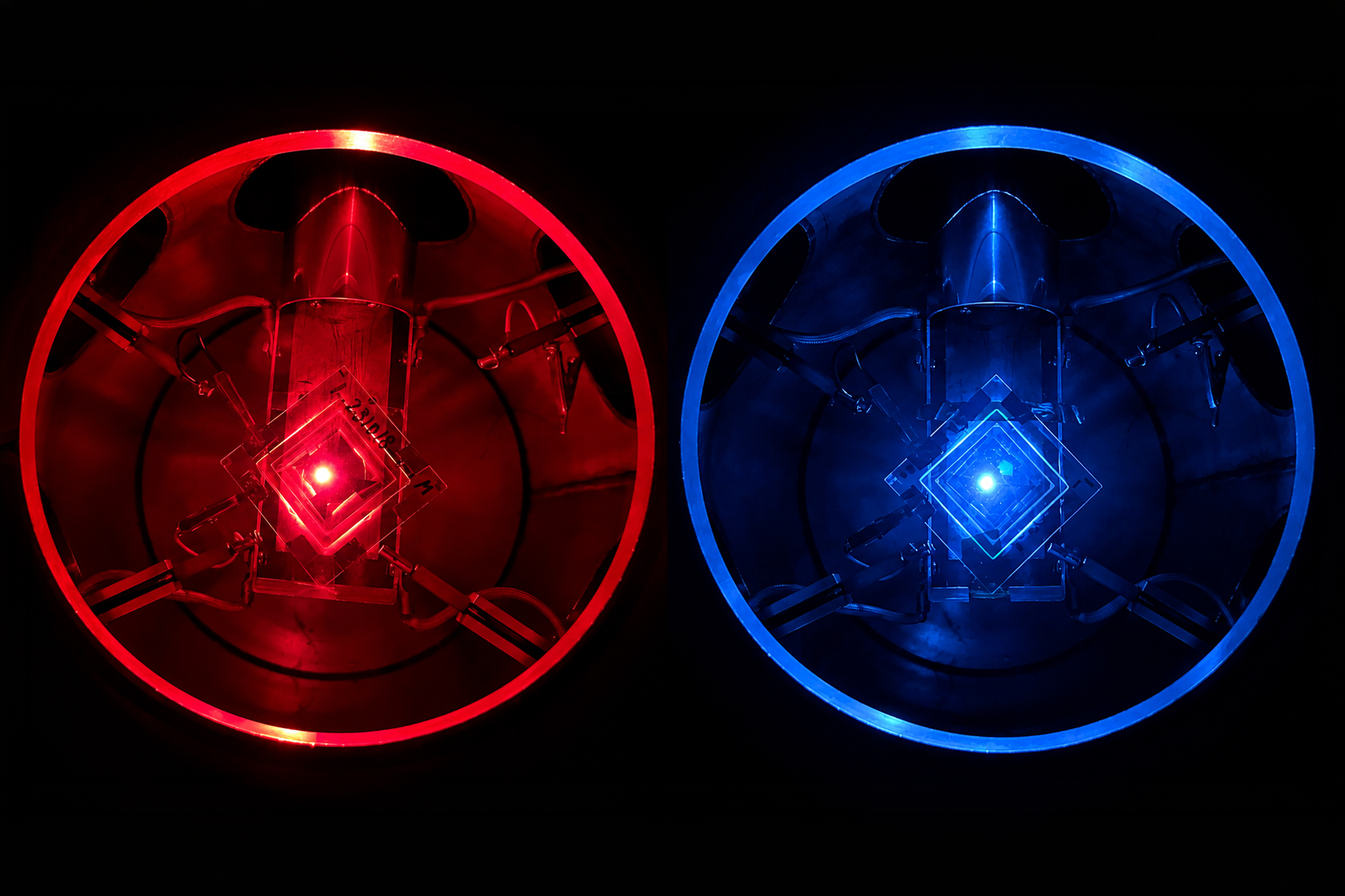
Researchers from MIT have uncovered a method that could lead to the creation of digital displays that are both brighter and more energy-efficient. These could be used in devices like flat-screen TVs, virtual and augmented reality headsets, smartphone screens, medical imaging technology, and large-area ambient lighting. The team, in partnership with Samsung scientists, examined the microscopic alterations in LEDs that use quantum dots, which are nanoscale semiconductor particles that emit pure colored light. Quantum dots currently enhance the picture quality of some computer and TV screens. The study suggests that if these quantum dots were electrically excited, as shown in quantum dot LED (QD-LED) structures over two decades ago, it could simplify the manufacturing process and boost efficiency. However, the limited lifespan of QD-LEDs has hindered their commercial use.
The research demonstrates that encapsulating QD-LEDs in an acrylate-based resin can prolong their lifespan by reducing physical wear during operation. This encapsulation, achieved through a straightforward, scalable method, significantly enhances the stability and performance of the devices. In certain cases, this approach improved the lifespan by 5,000 times. The study offers insights into the effectiveness of resin encapsulation. Vladimir Bulović, a professor of Emerging Technology at MIT and the study’s senior author, emphasized that understanding how QD-LEDs alter during use could solve commercialization challenges, offering a new type of light source that is pure in color and large in area. The team, including lead author Ruiqi Zhang and other MIT and Samsung researchers, published their findings in Science Advances.
This work builds on foundational research by Moungi Bawendi, a Nobel Prize winner in Chemistry for his quantum dot discoveries, and Bulović, who began working on efficient LED displays using quantum dots at MIT in 2000. Traditional LED displays use tiny light bulbs to produce red, green, and blue light, while more advanced OLED screens use electrically excited organic molecules. Bulović and Bawendi aimed to replace these with quantum dots for purer, more energy-efficient light emission. Their collaboration led to a series of inventions and the launch of QD Vision, a startup that commercialized displays with quantum dots, later acquired by Samsung for its QLED displays. Despite their potential, electrically excited QD-LEDs have not been commercialized due to the short lifespan of blue QD-LEDs, which are much less stable than their red and green counterparts.
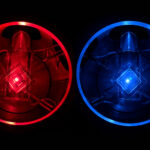
The research team developed a method to cut QD-LEDs into nanoscale slices to examine them under powerful microscopes. This allowed them to observe changes at a nanoscale level in red and blue QD-LEDs. They found that during operation, the key functional layers of blue QD-LEDs degrade, with changes in morphology and thickness, partly due to extra hydrogen and oxygen release. To combat this, they encapsulated QD-LEDs with acrylate-based resin, which reduced the release of these elements and improved device stability. Despite significant lifespan improvements, resin encapsulation did not eliminate all degradation sources. The researchers are now investigating additional layers to enhance QD-LED efficiency and lifespan, and they aim to apply these findings to other applications.
Bulović stated that this new version of quantum dot LEDs would surpass current technologies in simplicity, efficiency, and performance, potentially expanding their use beyond displays and lighting to include sensors and lasers. This research was funded by the Samsung Advanced Institute of Technology and utilized MIT.nano facilities.
Original Source: news.mit.edu