





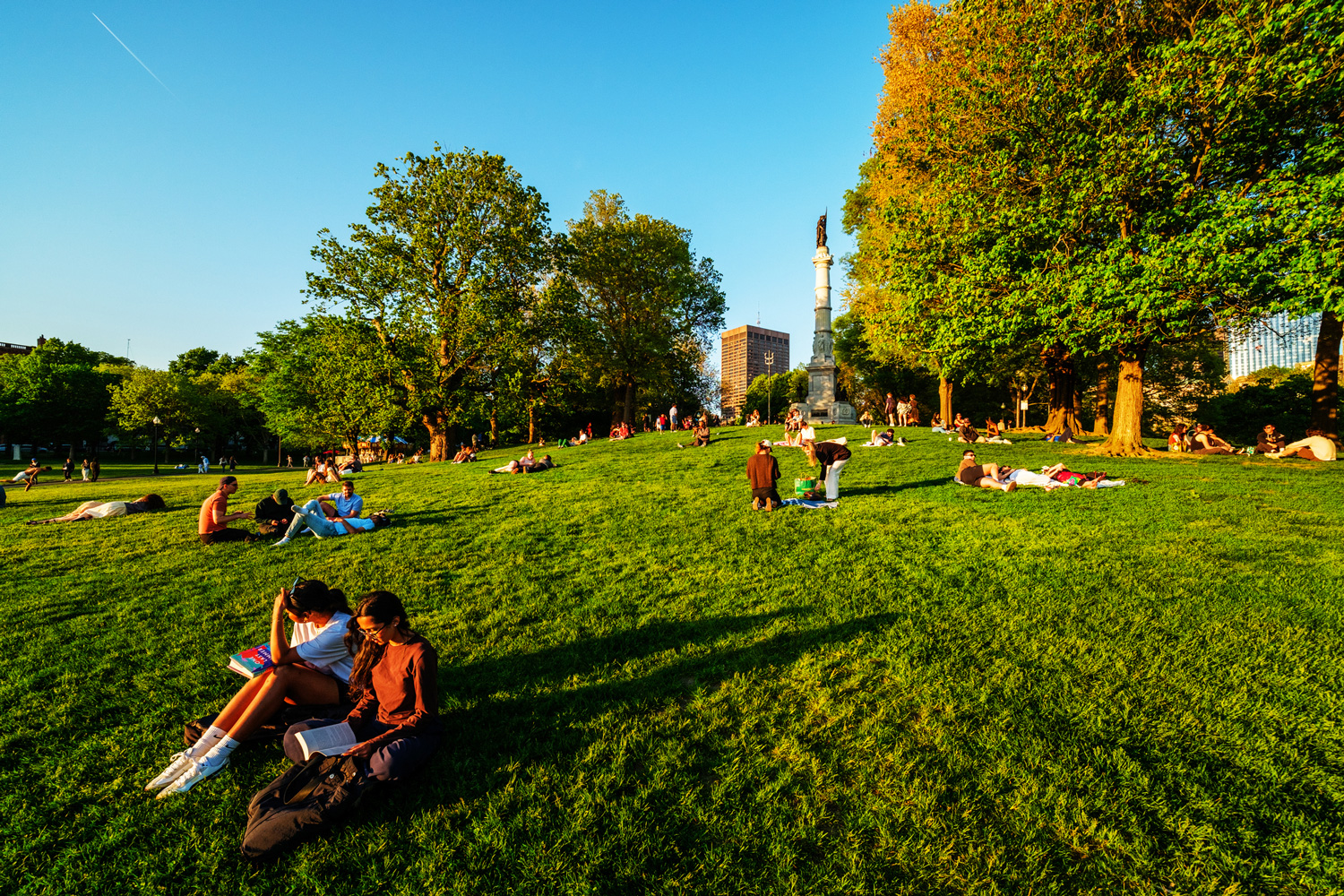
A recent analysis utilizing big data sheds light on how urban design can benefit the health of city dwellers in the U.S., particularly when cities facilitate walking, offer green spaces, and integrate streets with both commercial and residential uses. The study evaluates numerous urban census tracts across the country to identify the relationship between city features and health metrics, while also considering socioeconomic factors.
“On a large scale, the arrangement and availability of amenities in urban planning significantly influence public health outcomes,” notes Winston Yap, a visiting scholar at MIT Senseable City Lab and a postdoctoral researcher at Cornell University, who co-authored the study published in Nature Health. There isn’t a universal design applicable everywhere, but features like short, interconnected blocks and strategically located parks contribute positively to both physical and mental well-being.
“Physical health is usually the first consideration, but there is a strong link between well-designed spaces and mental health,” states Fabio Duarte, an MIT researcher and co-author. He highlights that increased walking not only improves physical fitness but also reduces isolation and promotes social interactions. The research paper, “Urban motifs associated with population health,” includes contributions from various scholars from institutions such as MIT, Imperial College London, and the National University of Singapore.
The researchers embarked on this analysis to address the overwhelming demands on health care systems and the growing need for preventive measures. “Health care systems globally are under stress,” Yap explains. “There’s a pressing need for prevention, not just treatment, for issues like obesity, high cholesterol, and mental health conditions.” The study used data from 28,323 census tracts, combining U.S. Census Bureau information with health statistics from the CDC, and incorporated over 8 million street view images to assess the link between urban form and health.
Open data accessibility is vital for planning healthier cities, emphasizes Carlo Ratti, director of MIT’s Senseable City Lab. The study applied a graph deep-learning model to identify key urban design factors linked to health outcomes. Findings suggest that certain city block shapes, such as those in Manhattan or Boston’s Back Bay, enhance wellness through diverse amenities and walking paths. Green spaces and tree canopies are also crucial for urban health.
Cultural sites and dining establishments correlate with general health, while access to health care amenities impacts physical health improvements. Overall, proximity to various points of interest is important for health in urban areas nationwide. “Our study spans the entire U.S., identifying consistent patterns across different urban settings,” Yap says. “This data allows us to predict neighborhood health outcomes confidently.”
The research offers guidance for urban planners on where to prioritize investments for health benefits, suggesting that improvements in lower-income neighborhoods yield significantly higher health returns. “Knowing where to intervene is crucial,” Yap notes. Duarte adds, “Urban development funding can directly impact health and may be more cost-effective than direct health spending.”
The authors view this study as an initial empirical step, with potential for future research to track changes over time, enhancing understanding of the link between urban design and health. The study was supported by initiatives such as the National Research Foundation Singapore’s CREATE program and the MIT Senseable City Lab consortium, as part of the Largescale 3D Geospatial Data for Urban Analytics project.
Original Source: news.mit.edu