



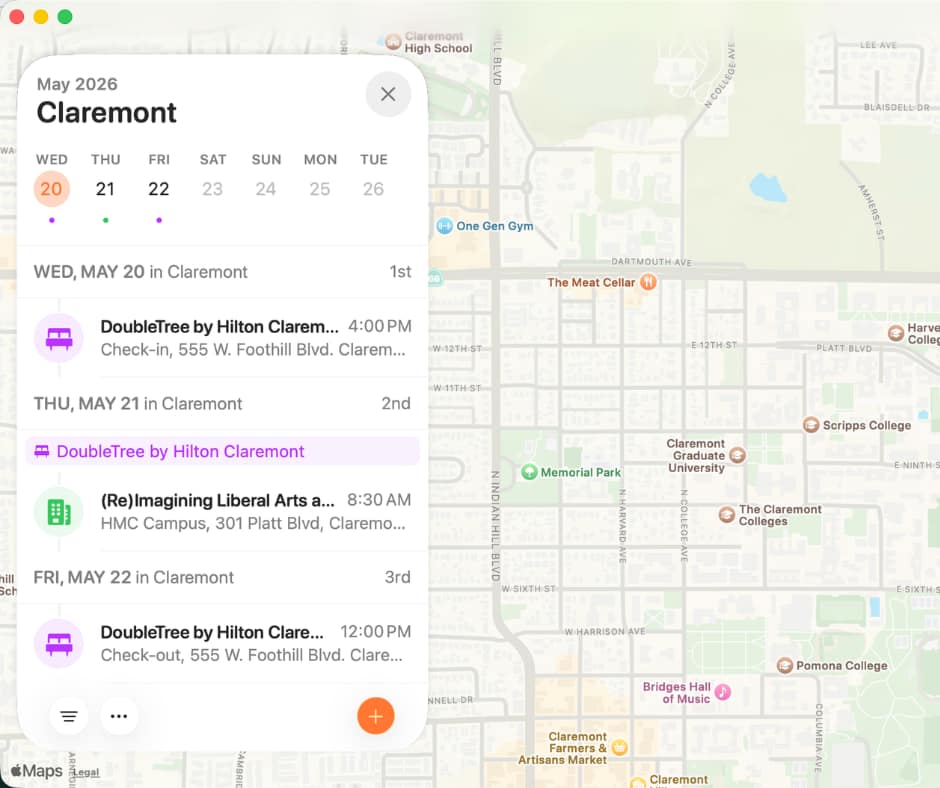
Traveling isn’t always easy for me, but I’ve developed some strategies to make the process smoother. I prefer trips that don’t involve flying, allowing me to pack everything I need in my suitcase and car. Recently, I drove to Claremont, California, for the (Re)Imagining Liberal Arts and STEM Education in the Age of Generative AI conference at Harvey Mudd College. Josh Brake, a past guest on Teaching in Higher Ed, informed me about it. I’ve previously written about AI insights from the conference and its value in an AI-driven world, but here I’ll focus on my travel preparations.
For packing, I’ve long used the Drafts app as my checklist, which both Dave and I frequently recommend. Over time, my list became cluttered with duplicates and disorganized categories. I enlisted Claude Cowork to tidy it up, identifying duplicates and suggesting essentials like band-aids and antiseptic wipes. My list, originally created by Dave, includes typical categories such as clothing and electronics but also features an “on person” section for items often forgotten when leaving home.
The “on person” section ensures I don’t overlook essentials like my iPhone, glasses, or wallet. I rarely forget these, but I prefer checking them off rather than relying on memory. I’ve also added a “travel day items” section for last-minute items like cold snacks, reducing my stress. My favorite new feature, discovered from Dave, is the Toggle Shopping Mode in Drafts. This keeps the checklist active on my phone’s Dynamic Island, preventing it from disappearing when the screen locks, making it easier to keep track of packing as I go.
Another preparation involved creating a conference hub in Obsidian, my main note-taking tool. This app allows me to store plain text files locally, with sync capabilities for access on different devices. The conference offered a wealth of AI perspectives, from keynotes to breakout sessions. Overwhelmed by choices and a scheduling conflict, I used Claude Cowork to organize the schedule and my thoughts. In Obsidian, I built a hub linking to essential information such as the event details, personal and full schedules, and session notes, easily accessible even offline.
These two adjustments, Toggle Shopping Mode and the Obsidian hub, freed my mind for creativity and learning, reducing the hassle of packing and note-taking. David Allen’s principle that the mind is for creating ideas, not storing them, resonates with me. Though it took a month to document this, I’m still processing the knowledge gained. I anticipate further learning through future podcast discussions and appreciate the conference organizers for a rewarding experience, as well as Dave for his ongoing insights.
Original Source: teachinginhighered.com