


In 2003, photographer Roger Marshutz offered the Peabody Museum of Archaeology and Ethnology over 3,000 photographs he took in Pusan, South Korea, after the Korean War. Unsure of the significance, Rubie Watson, the museum’s first Howells Director, consulted Carter Eckert, then a Korean History professor at Harvard. Sean Kim, co-author of a book featuring Marshutz’s work, highlighted the collection’s value to Harvard and Korean studies.
Ilisa Barbash, co-author and Peabody Museum curator, called Marshutz an underappreciated photographer. The Korean War, which claimed 37,000 American lives, is often overshadowed by World War II and the Vietnam War. Despite Pusan being undamaged by the war, fires caused by overcrowding were prevalent, and American soldiers aided in firefighting and rebuilding efforts. The conflict had a lasting impact on Korea’s economy, politics, and culture, with about 3 million Koreans killed, wounded, or missing, and approximately 5 million displaced. Many sought refuge in Pusan, the only area not overtaken by North Korean forces.
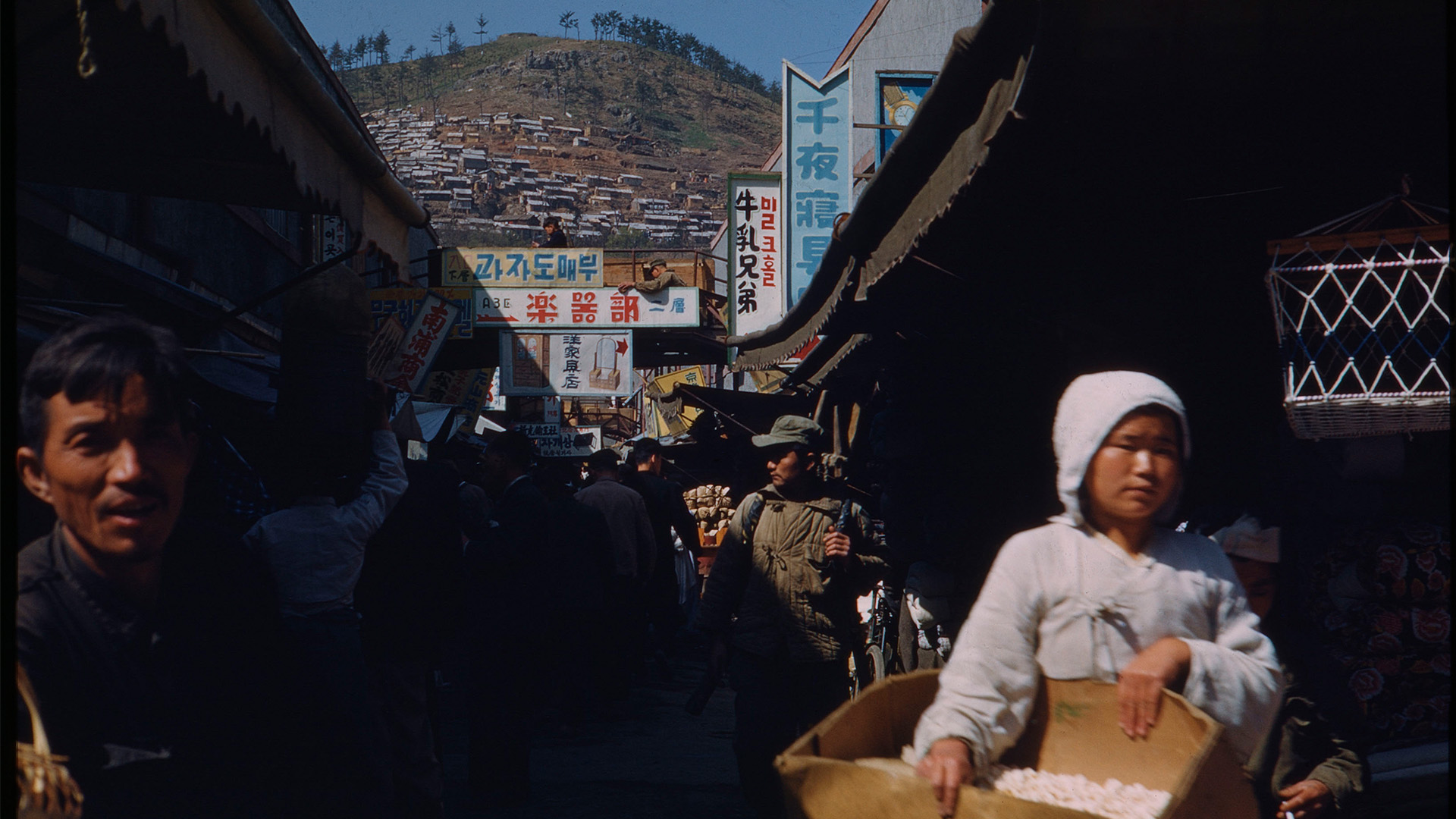
Marshutz’s images depict everyday life in Pusan, capturing scenes like boys playing near an Army jeep and people at street restaurants. Though conditions were tough, with little privacy, Marshutz’s outsider perspective allowed him to capture intimate moments. His work focused on the indirect effects of war rather than combat itself, according to Barbash.
Born in Los Angeles in 1929, Marshutz gained fame photographing Hollywood stars but developed his skills as an Army photographer in Pusan. In his spare time, he documented the city’s transition and American cultural influence. He captured images of children and the integration of American goods, like a boy studying a language book near canned goods. He also photographed a Korean Evangelist band in a parade.
Marshutz, who didn’t speak or read Korean, often used signs as visual elements. He captured joyful moments amid chaos, showing Americans and Koreans interacting on military bases. Barbash and Kim hope their book, available in English and Korean, will help reconnect people with images of their past. Kim, now a history professor, noted that Marshutz’s photos reflect a country recovering from war, with scenes of refugee camps and orphanages. Despite the grim conditions, the photos convey a sense of vitality and hope, showcasing a resumed daily life as the war ended.
Original Source: news.harvard.edu