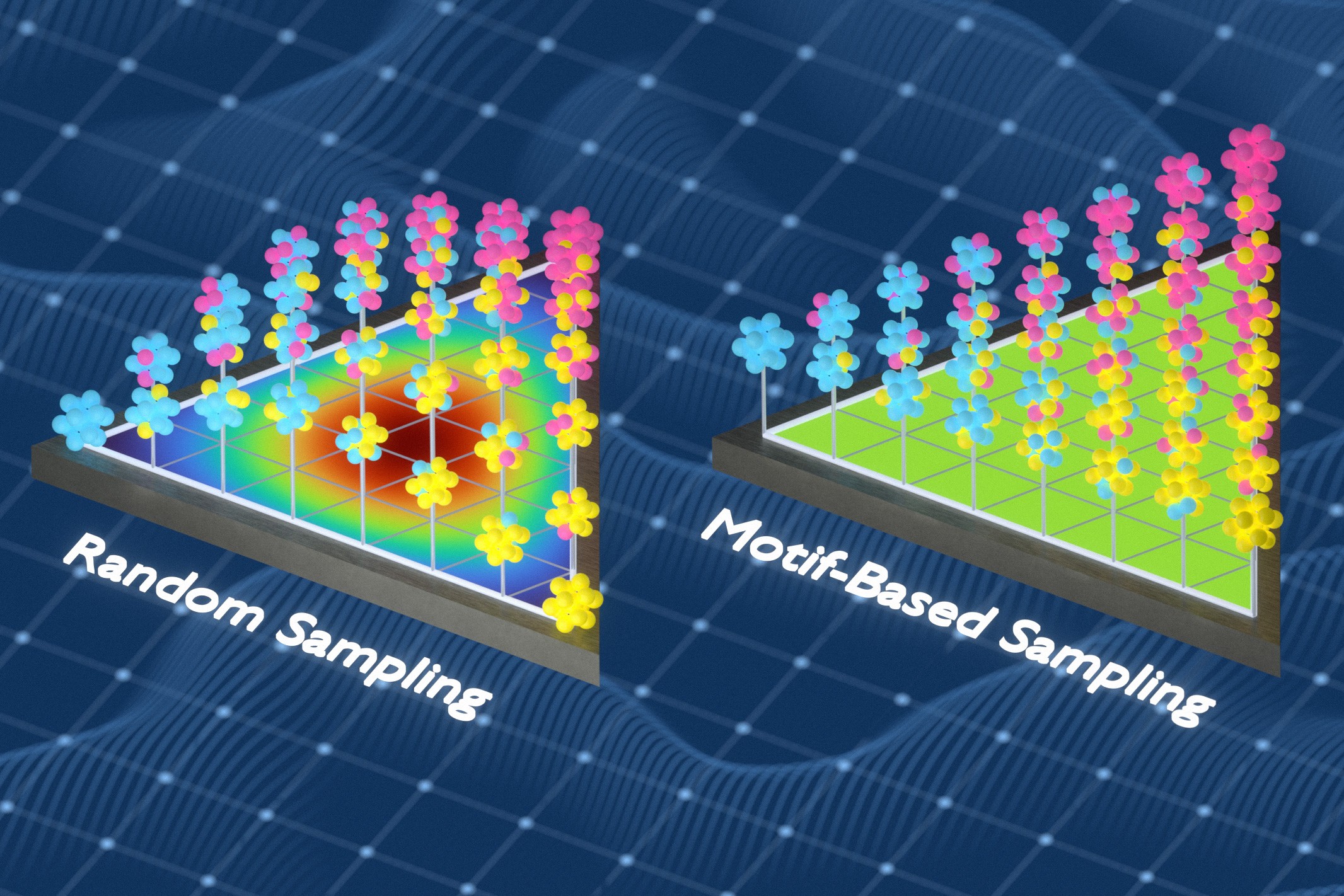






MIT researchers, along with colleagues, have created a more efficient and user-friendly method for networking engineers to detect potential system failures before they result in significant issues, such as cloud service outages affecting millions of users. This approach reveals hidden vulnerabilities that could cause a shortcut algorithm to unexpectedly fail during deployment.
The new method identifies worst-case scenarios that engineers might overlook if they rely on traditional techniques comparing algorithms against a set of human-designed test cases. It is less labor-intensive than other tools that require engineers to rewrite algorithms in complex mathematical code for testing. Instead, this approach directly reads the algorithm’s source code and automatically searches for scenarios leading to maximum underperformance.
By facilitating quick and easy stress-testing of networking algorithms before deployment, this method can catch failure modes that might only appear during actual outages. It could also evaluate the risks associated with deploying AI-generated code. “We need good tools to measure the worst-case scenario performance so we know what could happen before deploying,” states Pantea Karimi, an EECS graduate student and the lead author of the study.
Karimi co-authored the paper with senior authors Mohammad Alizadeh, an associate professor at MIT, and Behnaz Arzani from Microsoft Research, among others. Their research will be presented at the USENIX Symposium on Networked Systems Design and Implementation.
In large systems like cloud servers, traditional algorithms that route data are often too computationally demanding to run feasibly. Engineers develop suboptimal algorithms, known as heuristics, which can run faster but may fail unexpectedly under certain conditions. A heuristic can route millions of data requests swiftly, but during unusual traffic patterns or demand spikes, it might malfunction in ways not anticipated by designers.
When such issues arise, companies might have to drop unprocessed requests or allocate more resources in advance to prevent disasters, incurring higher costs and energy waste. “This is detrimental for a company, as they risk losing money if a scenario wasn’t previously tested,” Karimi explains.
Stress-testing heuristics generally involves running new algorithms in simulations with human-designed test cases, a method that is time-consuming and can miss certain situations. Verification tools offer a more systematic evaluation but require encoding algorithms into complex mathematical formulas, a process that can be lengthy and doesn’t suit all heuristics.
The researchers developed a more user-friendly tool, MetaEase, which analyzes heuristic implementation code directly to identify deployment risks. “This reduces the friction of using heuristic analysis tools,” Karimi says. She initiated this project during an internship at Microsoft Research, building on previous work to create a tool that doesn’t require formal optimization models.
MetaEase introduces two innovations: symbolic execution, which maps decision points in heuristic code, and guided search, which seeks inputs causing the worst performance compared to optimal algorithms. This approach finds starting points that cover distinct heuristic behaviors and systematically identifies inputs that maximize performance gaps.
In simulated tests, MetaEase often pinpointed inputs with larger performance gaps than traditional methods, identifying more severe worst-case scenarios more efficiently. It also analyzed a recent networking heuristic that other state-of-the-art methods couldn’t handle.
Looking ahead, the researchers aim to enhance MetaEase to process more data types and improve its scalability and adaptability for complex heuristics. “Reasoning about worst-case performance is a challenging problem. MetaEase advances by analyzing heuristics directly from source code,” comments Ratul Mahajan from the University of Washington, who was not involved in the research. This work was partially funded by a Microsoft Research internship and the U.S. NSF.
Original Source: news.mit.edu