






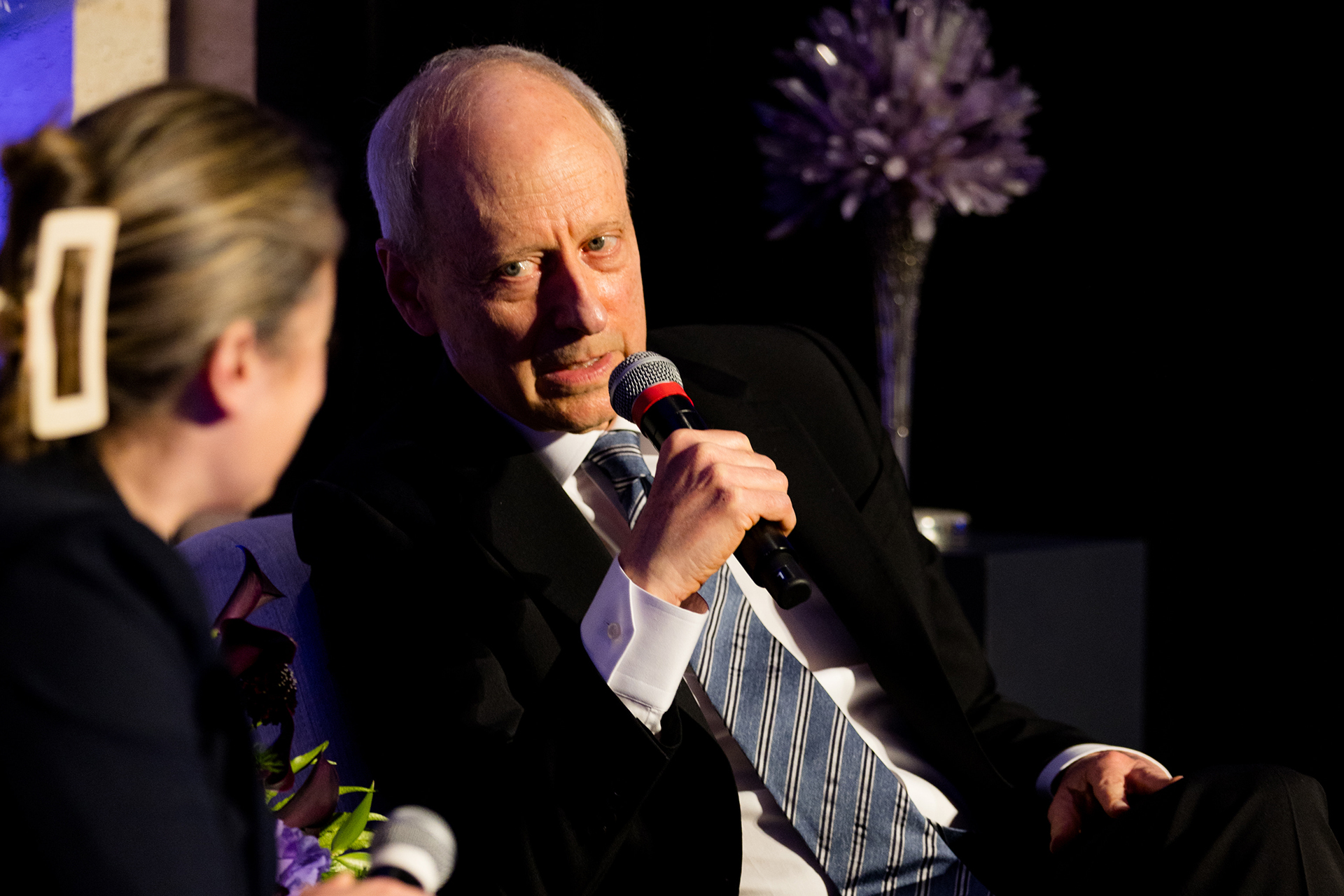
Michael Sandel engaged in a conversation with Chrystia Freeland. Sandel, a professor known for his work on justice, accepted the Berggruen Prize for Philosophy & Culture, highlighting the importance of philosophy in addressing significant questions. In his 1996 book “Democracy’s Discontent,” Sandel foresaw how globalization might reinforce divisions and prompt a politics focused on reclaiming culture and sovereignty.
Sandel reflected on the dismissive attitude towards community concerns at the time. He shared these insights while receiving the Berggruen Prize, which honors influential thinkers. Freeland, who has served in prominent Canadian government roles and will soon lead the Rhodes Trust, joined the discussion.
A professor at Harvard, Sandel has extensively explored topics such as justice, democracy, and meritocracy. His online “Justice” course has reached millions worldwide, covering diverse subjects. During the prize ceremony, Freeland and Sandel reminisced about his early years in Los Angeles, where he challenged Ronald Reagan to a debate in 1971, showcasing his early talent for questioning authority.
Sandel recalled that Reagan’s respectful engagement left a lasting impression, teaching him the value of listening. His latest book, “The Tyranny of Merit,” critiques the belief that success is solely personal, emphasizing the influence of external factors like educators and peers.
He advocates for imparting to youth the importance of hard work alongside recognizing the role of luck in success. Sandel believes this perspective could ease current political tensions, as many feel that educated elites disregard the dignity of non-college-educated workers.
The Harvard event concluded with Sandel expressing optimism about young people’s eagerness for public debate. He stressed that philosophy should be grounded in real-life discussions about essential issues. The Berggruen Prize, with past recipients like Ruth Bader Ginsburg and Martha Nussbaum, recognizes thinkers whose work impacts a rapidly changing world.
Original Source: news.harvard.edu