


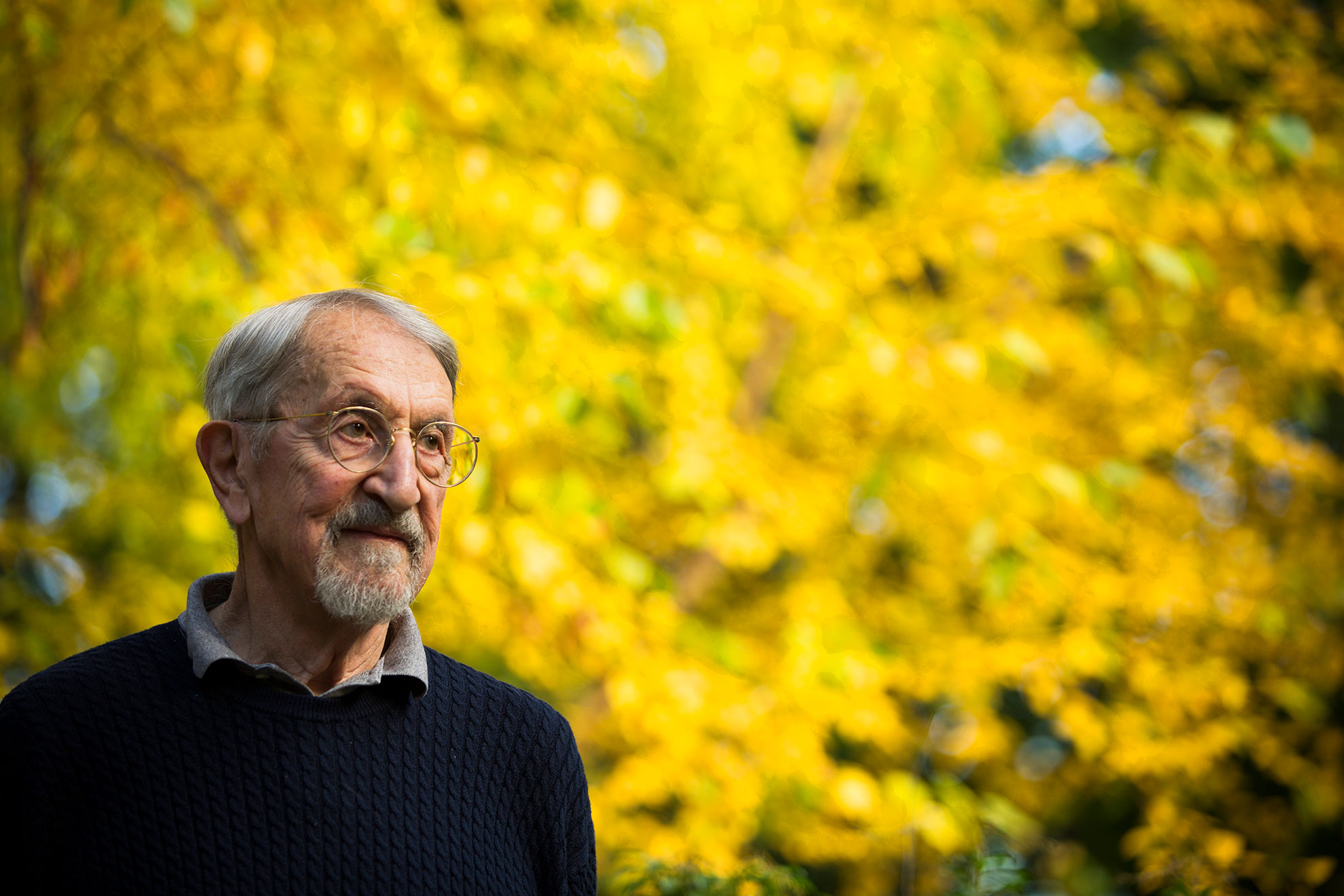
Martin Karplus, the Theodore William Richards Professor of Chemistry, Emeritus, at Harvard University, passed away on December 29, 2024, at 94. A Nobel Laureate in Chemistry in 2013, his pioneering work in computational modeling advanced the understanding of molecular systems across chemistry, physics, and biology. His career spanned over half a century and included nearly 900 publications.
Born on March 15, 1930, in Vienna, Austria, Karplus hailed from a family with a distinguished medical background. His early life in Vienna’s Grinzing district was disrupted by the rise of Nazism and the Anschluss in 1938. Fleeing to Switzerland with his mother and brother, while his father remained imprisoned in Vienna, the family eventually migrated to the United States, arriving in New York on October 1, 1938.
Settling in Boston, Karplus adapted to his new environment, playing street games and avoiding speaking German. His passion for science emerged through birdwatching, leading to a study on nesting birds that made him a Westinghouse Science Talent Search finalist. He entered Harvard in 1947, completing his undergraduate degree in chemistry and physics in three years, before earning his Ph.D. at Caltech under Linus Pauling.
Karplus began his independent academic career at the University of Illinois in 1955, where he formulated the Karplus Equation, a key tool in determining molecular structures through NMR. Moving to Columbia University in 1960 and later returning to Harvard in 1966, his work in reaction kinetics and protein dynamics challenged conventional views, proposing that proteins’ internal motions are crucial to their functions.
In 1977, Karplus and his colleagues published the first molecular dynamics simulation of a protein. He developed the CHARMM software, a standard in simulating molecular motions, which contributed to his Nobel Prize win alongside Michael Levitt and Arieh Warshel. Karplus also pursued photography and culinary arts, often working in French kitchens during summers.
Survived by his wife Marci and his children, Karplus’s influence extended globally, mentoring many who became leaders in computational biology and chemistry. He was a member of the National Academy of Sciences, the American Academy of Arts and Sciences, and the Royal Society. His legacy is carried on by the “Karplusians,” his students and postdocs. As he reflected in his memoir, “contributing to the education of so many people in their formative years is a cardinal aspect of university life.”
Original Source: news.harvard.edu